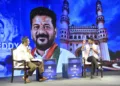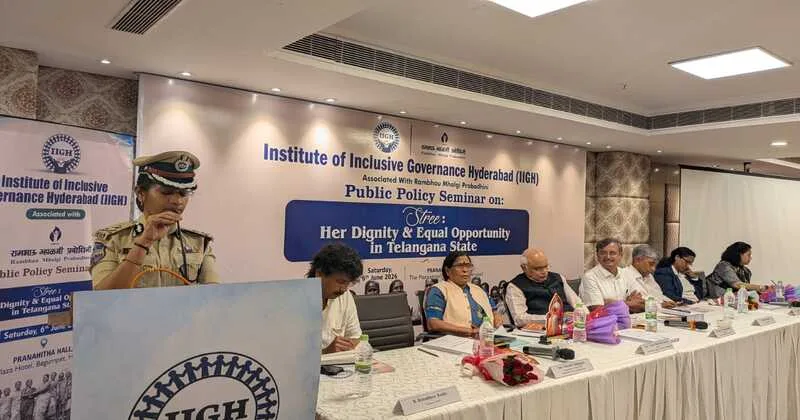
Hyderabad, June 6: The Institute of Inclusive Governance Hyderabad (IIGH) associated with Rambhau Mhalgi Prabodhini, organised a public policy seminar titled “Stree – Her Dignity & Equal Opportunity in Telangana State” at Pranahita Hall, The Plaza Hotel, Begumpet. The seminar brought together policymakers, jurists, administrators, academicians, corporate leaders, psychologists, social activists and public representatives to deliberate on issues concerning women’s dignity, safety, empowerment and equal opportunity.
The programme commenced with introductory remarks by Randheer Reddy, who briefed the gathering about the activities of the Institute of Inclusive Governance (IIG), Hyderabad and its efforts in promoting public policy awareness, leadership development, good governance and citizen engagement through various initiatives and training programmes.
Murali Manohar, President of IIG Hyderabad, delivered the opening address and provided an overview of the seminar. He set the tone for the day’s deliberations by emphasising the importance of meaningful discussions on women’s dignity, safety and equal opportunity in contemporary society. He noted that women today are making significant contributions across various fields and stressed the need to create an enabling environment that supports their aspirations, leadership and participation in nation-building.
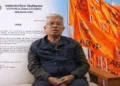
Delivering the keynote address, former Rajya Sabha MP and former President of the Indian Council for Cultural Relations (ICCR) Dr Vinay Sahasrabuddhe said that discussions on women’s dignity and equal opportunity must be rooted in India’s civilisational values and cultural traditions. Referring to the coronation anniversary of Chhatrapati Shivaji Maharaj, he highlighted the Maratha ruler’s progressive outlook towards women and recalled historical instances demonstrating respect for womanhood.
Dr Sahasrabuddhe said Indian civilisation has always recognised the complementary role of men and women and cited concepts such as Ardhanarishwara as evidence of the country’s long-standing commitment to gender equality. He rejected the notion that gender justice is a Western import and argued that Indian society had historically acknowledged the dignity and rights of women. According to him, true gender justice rests on three pillars — equality of security, equality of opportunity and equality of dignity.
Drawing upon studies of women’s participation in local governance in Maharashtra in the 1990s, he observed that political representation helped women assert their independent identity and self-respect. He stressed that issues relating to women and child development should not be treated as concerns of women alone and called for greater involvement of men in promoting gender justice. He also urged men to share household and caregiving responsibilities, noting that lasting change would require transformation in social attitudes and everyday behaviour.
National Human Rights Commission (NHRC) Member Vijaya Bharathi Sayani said that in the Bharatiya worldview, men and women are equal and complementary parts of creation. She observed that this understanding had weakened over the centuries due to various historical developments, external influences and manufactured narratives.
Drawing from her experience at the NHRC, she narrated several cases involving women facing exploitation, violence and discrimination in different parts of the country, particularly Sandeshkali issue. She noted that while crimes against women remain a serious concern, there have also been instances where women themselves were involved in offences such as human trafficking and exploitation. She stressed that society must adopt a conscious and collective approach towards protecting women’s dignity and safety and highlighted the role of the family system in shaping responsible social behaviour.
Former IAS officer and Foundation for Democratic Reforms founder Dr Jayaprakash Narayan said that India’s family system remains one of the nation’s greatest strengths. He stressed that discussions on women’s empowerment should not be limited to girls alone and that boys must also be educated and sensitised from an early age to respect women and embrace gender equality.
He observed that many social problems arise from attitudes that treat women as subordinate and called for a greater focus on raising boys with values of dignity, equality and mutual respect. He advocated safe public transport, stronger institutional support systems for women and a more efficient justice delivery mechanism in cases involving crimes against women. He emphasised that swift and certain punishment would act as a deterrent and help build confidence among women. He also underlined the importance of shared responsibilities within families as an essential component of gender equality.
Commissioner of Police, Malkajgiri Commissionerate, Sumathi Badugula, IPS, highlighted the challenges faced by women during travel, in educational institutions, workplaces and public spaces. She stressed that women should feel safe and secure in all spheres of life and elaborated on initiatives undertaken by the Telangana Police to strengthen women’s safety.
She explained the role of Bharosa Centres in supporting women and children affected by violence and abuse and highlighted the services provided through Sakhi Centres for women in distress. The Police Commissioner also shared practical safety measures and urged women to remain aware of available support mechanisms and police services. She emphasised that ensuring women’s safety requires not only law enforcement efforts but also active participation from families, educational and civil institutions and society.
Speaking on women’s participation in professional spaces, Krishna Kumari Palle, Senior Vice-President, Tech Mahindra, highlighted the growing role of women in leadership positions and stressed the importance of creating supportive workplace environments. She spoke about the need to encourage women to pursue careers without having to choose between professional aspirations and family responsibilities and called for greater institutional support to help women achieve work-life balance.
Vishakha Samir Mashankar of Bharatiya Stree Shakti said that society often glorifies women symbolically while failing to provide them with the genuine respect and recognition they deserve. She observed that women are natural managers, whether in households, workplaces or society, yet homemakers frequently remain invisible in policy discussions.
Questioning what specific policy support exists for homemakers, she said that many women shoulder unavoidable domestic responsibilities that often go unrecognised. She urged policymakers not to view women merely as a vote bank and called for meaningful engagement with issues affecting women. Stressing the need for greater political participation, she advocated leadership and political training programmes for women and expressed concern over the absence of women-centric facilities and support systems in many political party offices. She said the issue requires serious introspection by political organisations.
Session 2: Cultural perspective to her dignity: The role of mass media and social media
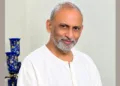
The Keynote Speaker, Ch. Vidyasagar Rao, the former Governor of Maharashtra, suggested that the cultural traditions of Telangana like Bathukamma should be encouraged because it engages the people in a positive way while also promoting social harmony. He also suggested Open Public Gym Infrastructure for women, particularly in rural areas.
Justice (Retd) L. Narasimha Reddy said that one needs to adopt a wisdom-centric approach to usage of the digital services and observe due care in believing the content that is popularised. Dr GC Kavita, Psychologist, emphasised that psychological impact is subtle but powerful and thus proactive approach to development of public policy is the need of the hour. She questioned the self-worth that a girl child would develop with her continuous exposure to the content in today’s digital space and social media.
She suggested a 4-P model – Prevention with a focus on respectful online behaviour and rewarding positive content, Platform Responsibility, Protection (Easy reporting, etc.) and Prosecution that is timely. She said that technology in itself is not the problem but the absence of values guiding technology is the core issue. The concluded by saying that innovation and ethics need to go hand-in-hand.
Dr J. Lalitha, Asst Professor at the Department of Education, OU, emphasised on the need for dharma-centred media content Indian Knowledge System (IKS) in Modern Media. She said that holistic education that integrates wisdom with modernity is critical for securing women interests. Advocate N. Naga Prashanti from Samskruti Foundation said that Indian culture is attaches enormous importance to the dignity of women.