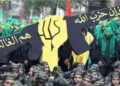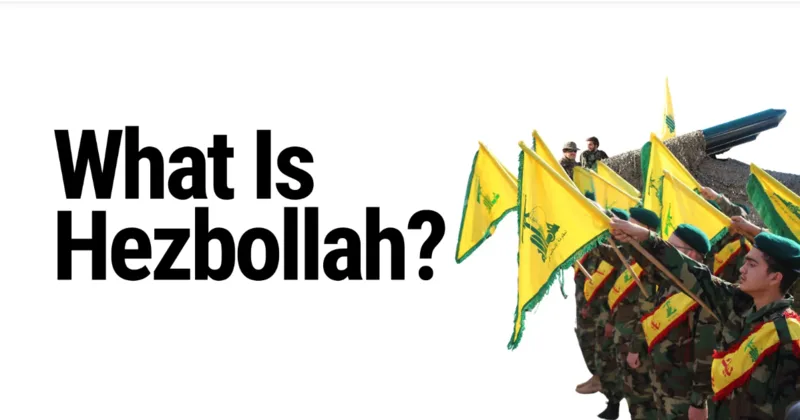
Hezbollah is a politico-terrorist organisation created by Iran to foment trouble in the state of Israel. After
the Islamic revolution in Iran in the year 1979, the said country openly challenged the existence
of Israel and deployed all ways and means to achieve its goal. Iran’s creation of Hezbollah and
active support to another terrorist organisation Hamas, are classic acts of state sponsored
terrorism.
Right from its creation in the decade of eighties, not even a day has passed when
Hezbollah has not been involved in one act of terror or another against Israel. Though the
organisation predominantly exists in Lebanon, it has a sizable presence in Syria also and keeps
its cadre in Iraq as well as in Yemen. Its global network has continental presence which
facilitates fund raising and arms procurement.
Hybrid composition
Around seventy percent of the Lebanese population is Muslim and it is equally divided among
the Sunni and the Shia segments. Hezbollah’s main support base comes from the Shia section
though sympathisers are there in Sunnis too. In Southern Lebanon and Beka valley of that
country the organisation has its main stronghold. The southern suburbs of Beirut often known as
Dahiyeh can be counted as the other bastions. Both the political and the militant wing of the
organisation complement each other. By registering its presence in the parliament, the political
wing provides legitimacy to and facilitates the terrorist activities of it; whereas by using strong
arm tactics, terrorists create a voter base for the former.
Weapons in its possession
Hezbollah is widely regarded as the world’s most heavily armed non-state military, better said, a
terrorist organisation. Much of its arsenal is believed to have been supplied or financed by
Islamic Revolutionary Guard Corps, with additional support historically coming through Syria.
Its reported weapons inventory includes:
● Rockets and ballistic missiles
○ Large numbers of short-range Katyusha/Grad-type rockets.
○ Medium-range systems such as Fajr-3, Fajr-5, Raad, and Khaibar-1 (M-302).
○ Smaller numbers of more accurate guided missiles, including variants related to
the Fateh-110/M-600 family. Estimates of total rocket and missile stocks before
recent conflicts ranged from roughly 130,000 to 200,000 projectiles, though many
analysts believe the arsenal has been substantially reduced by recent fighting.
● Anti-tank guided missiles (ATGMs)
○ RPG-7 and RPG-29 rocket launchers.
○ Guided missiles such as AT-3 Sagger, Konkurs, Metis-M, and the highly
regarded Kornet system, which has been used effectively against armored
vehicles.
● Drones (UAVs)
○ Reconnaissance drones.
○ One-way attack (“suicide”) drones.
○ More recently, low-cost FPV drones using fiber-optic guidance to reduce
vulnerability to electronic jamming.
● Air-defense weapons
○ Primarily man-portable air-defense systems (MANPADS) such as Misagh-1/2,
SA-7 Strela, and Igla variants.
○ There have also been reports of possession of some larger air-defense systems,
although the extent of their operational deployment is uncertain.
● Anti-ship missiles
○ Hezbollah is believed to possess anti-ship cruise missiles, including systems
related to the C-802 family, which gained attention after an attack on an Israeli
naval vessel during the 2006 conflict.
● Conventional infantry weapons
○ AK-series assault rifles, M16/M4 rifles, machine guns, sniper rifles, mortars,
heavy machine guns, and various explosives and improvised munitions.
The exact size and composition of Hezbollah’s arsenal are difficult to verify independently
because much of it is concealed, dispersed, or has been affected by ongoing military
operations. Most publicly available estimates come from intelligence agencies, research
institutes, and defense analysts rather than official disclosures.
It can be safely surmised that more than half the nations on this earth don’t have that amount of
weaponry which Hezbollah boasts of.
And what is the target of this mammoth inventory? State of Israel.
History of terrorist attacks
Hezbollah and Israel have been in conflict since the early 1980s, after Israel’s intervention in
Lebanon in 1982. Hezbollah is designated as a terrorist organization by countries including the
United States, the United Kingdom, Germany, Canada, and several others, while some states
distinguish between its military and political wings.
Some of the most significant attacks attributed to Hezbollah against Israel or Israeli targets
include:
1. South Lebanon Guerrilla Campaign (1982–2000)
● Hezbollah conducted a long insurgency against Israeli forces and the Israeli-backed
South Lebanon Army in southern Lebanon.
● Tactics included roadside bombs, ambushes, rocket attacks, and anti-tank missile
strikes.
● Hundreds of Israeli soldiers were killed during this period.
● The conflict contributed to Israel’s withdrawal from southern Lebanon in May 2000.
2. 1992 Attack on Israeli Embassy in Buenos Aires
● A suicide bombing destroyed the Israeli Embassy in Buenos Aires, killing 29 people.
● Argentine investigators and several international intelligence agencies have linked the
attack to Hezbollah, allegedly with Iranian support, though Hezbollah has denied
involvement.
3. 1994 AMIA Jewish Community Center Bombing
● The bombing of the AMIA Building killed 85 people.
● Argentine prosecutors accused Hezbollah operatives of carrying out the attack.
● Hezbollah has consistently denied responsibility.
4. 2006 Cross-Border Raid
● On 12 July 2006, Hezbollah fighters crossed the Israel-Lebanon border, attacked an
Israeli patrol, killed eight soldiers, and captured two others.
● Israel responded with a large-scale military operation, leading to the 2006 Lebanon War,
which lasted 34 days.
● During the war, Hezbollah fired roughly 4,000 rockets into northern Israel, causing
civilian and military casualties.
5. Rocket and Missile Campaigns (2006–2024)
● Hezbollah has periodically launched rockets, missiles, and drones toward Israeli territory
during periods of heightened tension.
● Following the outbreak of the Israel–Hamas war, Hezbollah opened a northern front
against Israel, carrying out near-daily attacks on military positions and border
communities.
● Israel responded with extensive airstrikes and targeted operations inside Lebanon.
6. Anti-Tank Missile and Drone Attacks
● Hezbollah has used advanced anti-tank guided missiles against Israeli military vehicles
and border posts.
● In recent years, it has also employed reconnaissance and explosive drones targeting
Israeli military infrastructure.
Casualties and Impact
● Over four decades, thousands of rockets and missiles have been launched from
Lebanon into Israel.
● Both Israeli civilians and military personnel have been killed or injured, and large
populations on both sides of the border have experienced displacement during major
escalations.
Current Scenario
Now when Israel’s IDF’s operations are afoot in Lebanon to incapacitate Hezbollah, Iran is
blackmailing the whole world by blocking the strait of Hormuz through which twenty percent of
the global energy requirements are transported. Its designs are very explicit: it wants Hezbollah
to exist in full power so that the terrorist activities against the state of Israel are continued in full
throttle. Iran is holding the peace talks between it and the USA to ransom and is demanding
cessation of hostilities against Hezbollah as precondition for the permanent ceasefire.
The peace loving world community has to make up its mind that should the terrorist outfits like
Hamas, Hezbollah, ISIS, Lashkar-e-Tayaba and Jaish-e-Mohammed be allowed to exist and
flourish? Shouldn’t the comity of the nations come together and seek answers from the nations
like Iran and Pakistan which are directly supporting the said outfits and nations like China which
are supplying technology and materials to such nations?