When the COVID-19 pandemic disrupted livelihoods across the country in 2020, few communities were hit as hard as India’s street vendors. The vegetable seller in a crowded market, the tea vendor serving office-goers, the roadside cobbler, fruit seller, flower vendor, and countless others who form the backbone of India’s informal urban economy suddenly found themselves facing an unprecedented crisis. With savings exhausted and access to formal finance almost non-existent, many struggled simply to keep their businesses alive.
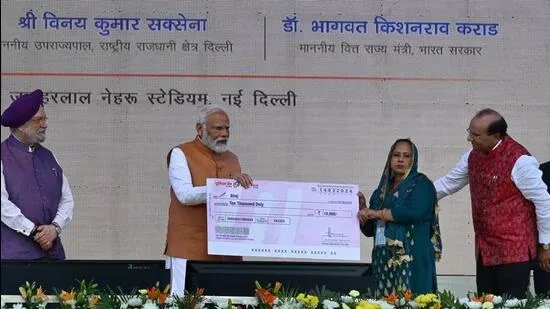
Recognising both the economic contribution and vulnerabilities of this vast workforce, the Narendra Modi-led government launched the Prime Minister Street Vendor’s AtmaNirbhar Nidhi (PM SVANidhi) scheme in June 2020. Conceived as a first-of-its-kind micro-credit initiative for street vendors, the scheme aimed to provide affordable institutional credit and free beneficiaries from dependence on informal moneylenders charging exorbitant interest rates.
Six years later, PM SVANidhi has evolved far beyond a loan programme. It has become a nationwide movement promoting financial inclusion, entrepreneurship, digital adoption and social security for millions of Indians. The scheme’s journey reflects a broader transformation in India’s approach to welfare, where beneficiaries are not merely recipients of assistance but active participants in economic growth.
A landmark achievement in financial inclusion
The scale of PM SVANidhi’s success is reflected in its impressive numbers. Since its launch, the scheme has benefited more than 75 lakh street vendors across cities and towns throughout the country. More than 1.12 crore loans have been sanctioned and disbursed under the programme, amounting to over Rs 17,800 crore.
These figures represent far more than financial transactions. For many beneficiaries, the loans marked their first-ever engagement with formal banking institutions. The initiative has helped integrate millions into the formal financial system, enabling them to build credit histories and access larger financial opportunities in the future.
The government has also focused on ensuring that the benefits of the scheme reach vendors in both metropolitan centres and smaller urban settlements. The widespread acceptance and measurable impact of the programme prompted the government to extend PM SVANidhi until March 2030, ensuring continued support for urban livelihoods in the years ahead.
From loans to economic empowerment
Unlike traditional welfare programmes, PM SVANidhi was designed to encourage growth and entrepreneurship. The scheme offers collateral-free working capital loans in progressive stages, enabling vendors to expand their businesses gradually.
Beneficiaries initially receive a loan of Rs 15,000. Upon timely repayment, they become eligible for a second loan of Rs 25,000, followed by a third tranche of Rs 50,000. The structure rewards responsible financial behaviour while helping vendors steadily increase their business capacity.
The scheme also includes interest subsidies and government-backed credit guarantees, reducing the financial burden on borrowers and encouraging lenders to extend credit confidently.
One of the most notable aspects of PM SVANidhi is its success in bringing previously excluded individuals into the formal credit ecosystem. Independent impact studies conducted in 2023 and 2025 found that nearly 95 per cent of beneficiaries accessed formal institutional credit for the first time through the scheme.
Even more significant is the finding that approximately 30 per cent of beneficiaries later secured additional credit beyond PM SVANidhi loans. This indicates growing confidence among financial institutions in lending to street vendors and demonstrates the programme’s success in enhancing beneficiaries’ creditworthiness.
Driving India’s digital revolution from the ground up
PM SVANidhi has also become an important vehicle for promoting digital payments among small businesses. While India’s digital payment revolution is often associated with large retailers and urban consumers, the scheme has ensured that street vendors are equally included in this transformation.
More than 55 lakh beneficiaries have been digitally onboarded under the programme. Together, they have carried out over 841 crore digital transactions worth nearly Rs 8.96 lakh crore.
To encourage digital adoption, the government introduced cashback incentives of up to Rs 1,600 for vendors conducting retail and wholesale transactions digitally. These incentives not only reward digital participation but also improve financial literacy and transparency.
Additionally, vendors who successfully repay their second loan tranche become eligible for UPI-linked RuPay Credit Cards with limits of up to Rs 30,000. These cards further strengthen financial inclusion while allowing vendors to access working capital through modern payment infrastructure.
The success of these measures demonstrates how digital technology can empower even the smallest entrepreneurs when accompanied by supportive policy interventions.
Strengthening social security through SVANidhi se Samriddhi
The scheme’s vision extends beyond credit and business growth. Through the “SVANidhi se Samriddhi” initiative, beneficiaries and their families are linked to a wider social security ecosystem.
The programme undertakes socio-economic profiling of beneficiaries and connects them with eight major central welfare schemes. This integrated approach ensures that street vendors gain access to insurance, pension schemes, healthcare support and other welfare benefits.
By addressing multiple dimensions of vulnerability simultaneously, the government has sought to create a more comprehensive support framework for families dependent on informal-sector livelihoods.
Further strengthening this approach, PM SVANidhi beneficiaries are provided training in financial literacy, digital literacy, entrepreneurship and food safety practices through collaborations with agencies including FSSAI.
Measurable improvements in livelihoods and welfare
Independent assessments of PM SVANidhi reveal significant improvements in the economic and social conditions of beneficiaries.
According to the studies, average beneficiary incomes increased by nearly 20 per cent annually. Higher incomes translated into better living conditions, improved nutrition, enhanced healthcare access and greater educational opportunities for children.
The programme has also contributed to housing stability and reduced economic vulnerability among beneficiary families.
Importantly, PM SVANidhi has demonstrated strong social inclusion outcomes. Nearly 46 per cent of beneficiaries are women, highlighting the scheme’s contribution to women’s economic empowerment.
Around 70 per cent of beneficiaries belong to marginalised communities, reflecting the scheme’s extensive outreach among sections traditionally underserved by formal financial institutions.
These outcomes reinforce the scheme’s role as both an economic and social empowerment initiative.
Babita Sharma: Expanding a small temple stall into a growing business
Among the many success stories emerging from PM SVANidhi is that of Babita Sharma from Nandgram in Ghaziabad.
Babita operates a small shop near a temple, selling puja materials such as incense sticks, flowers, coconuts, diyas and other devotional items. Although her business provided a source of livelihood, limited capital frequently restricted her ability to maintain inventory and meet customer demand.
After learning about PM SVANidhi through local urban body officials in 2020, she applied for assistance under the scheme.
The first loan enabled her to expand her stock and diversify her product range. As customer footfall increased, her earnings improved significantly. Timely repayment qualified her for the next tranche, which she used to purchase a cart and further strengthen her business operations.
Today, Babita’s journey illustrates how access to affordable credit can convert a modest enterprise into a more stable and profitable venture.
Santhi R: Building a stronger future through entrepreneurship
In Thiruvananthapuram, Kerala, Santhi R spent more than a decade supporting her family through a dry fish business.
Before PM SVANidhi, she relied heavily on microfinance loans carrying high interest rates and rigid repayment schedules. These financial constraints limited her ability to expand and manage inventory effectively.
Through PM SVANidhi, Santhi gained access to affordable institutional credit. Beginning with the initial loan, she steadily progressed through successive loan tranches, eventually receiving ₹50,000 under the third stage of the programme.
The improved financial stability enabled her to diversify into dry fish packaging and local retail supply operations. In January 2026, she also received a SVANidhi Credit Card, further strengthening her business.
Her experience highlights how women entrepreneurs are leveraging the scheme not merely to sustain existing livelihoods but to expand and modernise their enterprises.
Sewali Kalita: Turning adversity into opportunity
Another remarkable story comes from Guwahati’s Noonmati area, where Sewali Kalita once struggled to support her family through a small pan stall.
Financial hardships often forced her to borrow from neighbours just to meet daily expenses. Her turning point came after municipal officials introduced her to PM SVANidhi.
With an initial loan of Rs 10,000, Sewali identified growing demand for organic vegetables during the pandemic and expanded her business accordingly. As profits increased, she enrolled her children back in school and continued building her enterprise.
Subsequent loans of Rs 20,000 and Rs 50,000 helped her clear debts, increase inventory and establish a dedicated vegetable stall. Today, she runs a thriving business alongside her husband and earns approximately Rs 8,000 in monthly profits.
Her journey exemplifies the transformative impact that timely financial assistance can have on entrepreneurial families.
Yograj Mali: A new beginning after the pandemic
For Yograj Mali, a young commerce student from Gandhinagar, the pandemic threatened to derail both his education and livelihood.
His street food business selling Cholaphali suffered severe setbacks during the lockdown period. PM SVANidhi provided a crucial lifeline through affordable credit, allowing him to restart operations and regain financial stability.
Yograj embraced digital payment systems and benefited from cashback incentives offered under the scheme. He also connected with additional welfare initiatives, including insurance and pension programmes.
His experience demonstrates how PM SVANidhi serves not only as a credit programme but also as a gateway to broader social and financial empowerment.
A new vision for urban development
The success of PM SVANidhi reflects a significant shift in how urban governance and economic development are being approached in India.
For decades, street vendors often operated on the margins of policy discussions despite their substantial contribution to urban economies. The scheme has helped change that perception by recognising vendors as entrepreneurs and important stakeholders in India’s growth story.
By combining affordable credit, digital empowerment, social security and capacity-building initiatives, PM SVANidhi has created pathways for sustainable economic advancement among millions working in the informal sector.
As the scheme enters its next phase with an extension until 2030, it stands as one of the Modi government’s most significant interventions aimed at strengthening grassroots entrepreneurship. For millions of vendors across India’s bustling streets and marketplaces, PM SVANidhi has become more than a financial programme, it has become a symbol of opportunity, dignity and self-reliance.