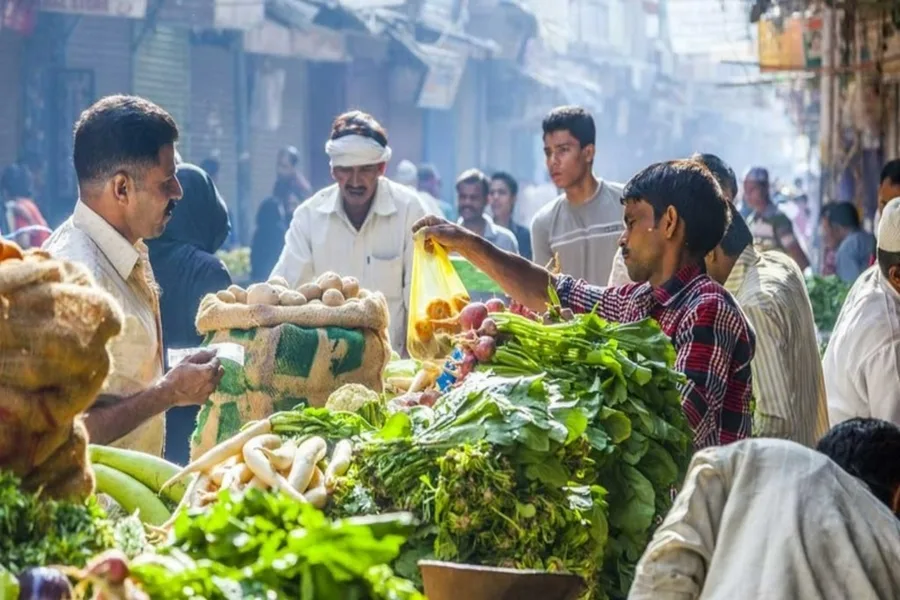
When the pandemic swept through India in early 2020, the country’s busiest bazaars and markets turned eerily quiet. For millions of street vendors, from chai sellers and cobblers to vegetable hawkers and snack vendors, it was not just silence; it was devastation. Their livelihoods, dependent on daily cash flow, evaporated almost overnight.
Most of them lived hand-to-mouth, earning barely enough each day to support their families. When the lockdowns hit, they lost not only customers but also their working capital. With their carts and stalls lying idle, they faced the grim prospect of hunger and debt.
As cities began to reopen months later, they were ready to work again. But capital was gone. With no savings, no collateral, and no access to formal banking, restarting was almost impossible. Informal lenders filled the gap, charging punishing interest rates that often pushed vendors deeper into poverty.
That’s when the government stepped in, not with subsidies, but with a doorway to dignity.
The birth of PM SVANidhi
In June 2020, the Ministry of Housing and Urban Affairs launched the Prime Minister Street Vendor’s AtmaNirbhar Nidhi (PM SVANidhi), a special microcredit scheme designed to help street vendors restart their livelihoods after the economic shock of Covid-19.
But PM SVANidhi was more than a relief measure. It was a structural bridge between India’s vast informal economy and the formal financial system, a recognition that millions of small entrepreneurs deserved access to credit, not charity.
The scheme offered working capital loans of Rs 10,000, expandable to Rs 20,000 and Rs 50,000 for those who maintained good repayment records. The idea was simple yet transformative: trust the borrower, and they will trust the system back.
This philosophy created a self-reinforcing cycle, banks that had long hesitated to lend to vendors began to see them as credible borrowers, while vendors who once avoided banks learned to see themselves as part of India’s formal financial story.
The ladder of empowerment
Unlike many welfare programmes, PM SVANidhi was not a one-time benefit or free handout. It was designed as a ladder of empowerment, one that rewarded discipline, digital literacy, and growth.
Step 1: A collateral-free Rs 10,000 working capital loan to restart business operations.
Step 2: A 7 per cent interest subsidy is credited directly to the borrower’s account for timely repayments.
Step 3: Cashback rewards for using digital payment platforms like UPI, BHIM, or Paytm, encouraging vendors to enter the digital ecosystem.
Step 4: Gradual access to larger formal loans as borrowers built repayment credibility and digital records.
Municipal bodies and banks worked together to identify vendors using surveys and records under the Street Vendors (Protection of Livelihood and Regulation of Street Vending) Act, ensuring inclusion even for those without formal addresses or documents.
The results have been striking: in just four years, over 70 lakh street vendors have benefited from the scheme, with more than Rs 9,000 crore disbursed.
From survival to self-reliance
For most vendors, the first Rs 10,000 loan meant survival, restocking their carts, repairing pushcarts, or paying off debts to moneylenders. But as their businesses revived, something deeper began to change.
An independent 2024 analysis of bank data found that nearly 40 percent of PM SVANidhi borrowers went on to secure larger formal loans, often three to four times the value of their first loan.
Also, an SBI research paper titled “PM SVANidhi: Strengthening the Country’s Social Fabric by Empowering Grassroot Market Mavericks” published in 2023, highlighted the transformative impact of the PM SVANidhi Scheme, launched by the Modi government.
According to the report, nearly 75 percent of beneficiaries belong to non-general categories, demonstrating the scheme’s inclusivity and social reach, with OBCs accounting for 44 percent, SCs/STs 22 percent, and women making up 43 percent of total beneficiaries.
The study further reveals strong repayment behaviour: 68 percent of borrowers who repaid their first Rs 10,000 loan advanced to a second loan of Rs 20,000, while 75 percent of second-loan repayers proceeded to take the third and highest loan of Rs 50,000. Financially, beneficiaries also recorded a 50 percent surge in debit card spending, reaching Rs 80,000 in FY23 compared to FY21, reflecting enhanced digital and financial literacy.
The report added that the scheme has encouraged digital inclusion, as at least 9.5 percent of Jan Dhan-linked borrowers who previously made fewer than ten transactions became regular digital users. With over 70 lakh loans disbursed, benefiting 53 lakh street vendors and amounting to Rs 9,100 crore.
That transition marks the true success of the scheme: it turned informal, cash-dependent workers into formal borrowers with credit histories and digital footprints. Many of these vendors are now expanding operations, purchasing new trolleys, renting small shops, or even hiring assistants.
In short, the programme has transformed small, survival-oriented ventures into sustainable micro-enterprises, breathing life into India’s street economy.
What made it work
There are several reasons for PM SVANidhi’s effectiveness, its timing, design, and behavioural incentives.
1. Addressing a Real Gap: Street vendors are among India’s most self-reliant yet financially excluded groups. They earn daily, maintain high turnover, and operate in cash. But without collateral or paperwork, they were invisible to banks. PM SVANidhi filled that gap, extending credit where traditional finance never reached.
2. Incentives that Encourage Discipline: The scheme’s 7 percent interest subsidy and digital transaction cashbacks weren’t freebies; they were rewards for good financial behaviour. By tying benefits to repayment and digital adoption, the scheme promoted responsibility and future creditworthiness.
3. Digital Inclusion and Financial Identity: By nudging vendors toward UPI and QR-based payments, PM SVANidhi introduced them to India’s expanding digital economy. For many, this was the first time they had a verifiable transaction trail, a foundation for accessing future loans and services.
4. Timely Implementation During Crisis: The scheme was launched precisely when vendors needed it most, just as lockdowns lifted and cities reopened. This timely intervention ensured maximum impact, offering immediate liquidity when traditional credit avenues were shut.
The second phase: PM SVANidhi 2.0
Encouraged by the programme’s success, the government launched PM SVANidhi 2.0, an upgraded version aimed at scaling up coverage and deepening empowerment.
The second phase expands loan limits, simplifies application processes, and integrates skill development modules for vendors who want to diversify their businesses. It also seeks to reach those left out in the first round, especially migrant vendors and women entrepreneurs.
By combining credit access with capacity building, SVANidhi 2.0 transforms what began as an emergency measure into a long-term strategy for micro-entrepreneurship.
A model for inclusive policy
Many increasingly see PM SVANidhi as a model for inclusive governance. It balances compassion with fiscal prudence, empowering the poor without promoting dependency.
By making every incentive performance-linked, the scheme encourages accountability and self-reliance. At the same time, it strengthens banking systems, promotes digital transactions, and feeds valuable data into India’s financial inclusion ecosystem.
Unlike older subsidy-driven models, PM SVANidhi shows that the government does not have to spend large sums to drive big impact. It simply has to design schemes that build trust and reward effort.
The spirit of ‘Viksit Bharat’
At its heart, PM SVANidhi represents the idea of empowerment over entitlement, a cornerstone of the vision of Viksit Bharat. It did not just offer money; it offered recognition, dignity, and identity.
For millions of vendors once invisible to the system, it meant their first bank account, their first digital payment QR code, and their first formal credit record. It gave them confidence that they too are part of India’s economic growth story.
And for the country, it proved a powerful truth, that a small, well-designed intervention can ignite a massive transformation. A Rs 10,000 loan, when backed by trust and good policy, can create ripples of prosperity across India’s streets, one stall and one vendor at a time.