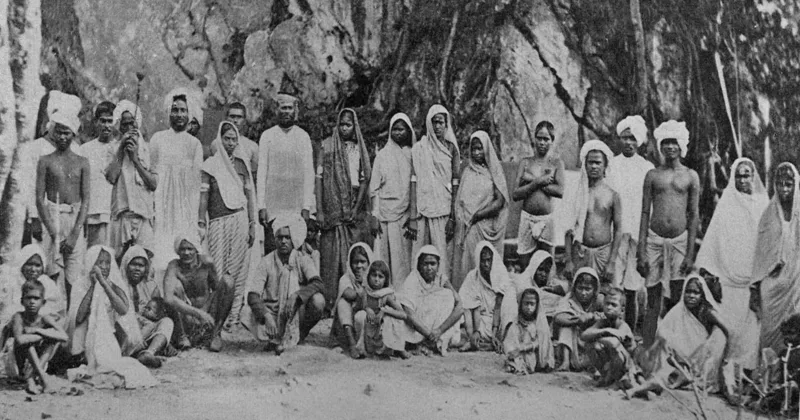
Trinidad and Tobago, a Caribbean country with a vibrant ethnic Indian population who has kept the culture, traditions and rich civilisational values alive across thousands of miles. The Indian community in Trinidad, who form the largest ethnic group of the country, making up over a third of the country’s population, are the living testament for survival beyond suppression. They reflect an untold saga of slavery, oppression and the struggle to sustain the Indian identity amidst vicious British imperialism. Today, Indian communities form the epicentre of the social, political and economic landscape of Trinidad. Honouring their massive contribution to the Caribbean country, Trinidad and Tobago commemorates May 30 as the Indian Arrival day, the day Indians landed in the country.
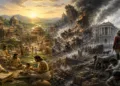
May 30, is the day when a large population of Indians were exported to Trinidad as slaves by the British imperialists to serve their colonial deeds. The Indians were exploited mercilessly by the Britishers in the plantations of the Caribbean region. More than 70,000 Indians who formed the lifeline of the First War of Indian Independence were deported to Trinidad and were victims of the inhumane treatment. They were chained, dead bodies were hanged and treated in the most cruel form. Today, millions of Indians in Trinidad who cherish and flourish their Indian roots also empathise with the dark past of their ancestors, the arrival to the country and the cruel treatment by the British.
Countering the colonial propaganda; Exposing British brutality
The British exported a large population of Indians to Trinidad with a wicked agenda. It was to curb the rising wave of nationalism and anti-imperial emotions psot the First War of Indian Independence. Nearly 70,000 nationalists and freedom fighters, predominantly from the region of Uttar Pradesh and Bihar, who were the pillars of the 1857 war were forcefully taken to Trinidad and were pushed to slavery across the dying plantations of the Caribbean country.
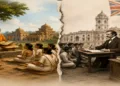
However, the colonial propaganda manipulated the truth and said that Indians left the country and flew to Trinidad with their own will in order to escape caste oppression, discrimination, poverty and other social evils that persisted in India. However, history and facts speaks something antithetical to the illicit and fake British narrative. Indians were forcefully taken to Trinidad, compelled to work in the plantations, pushed to slavery and treated inhumanely.
As per the historical documents, then Secretary of State of the colonies exclaimed that if the Indian families protested they were ordered to be killed and the dead bodies should be hanged headless, entangled in chains. The chopped head had to be planted in a clearly visible public space or near the people’s habitations, as a warning against violating the British imperial orders. In many islands, Indian labourers were chained and their movement was restricted.
The hairstyle and dresses of the Indian labourers were dictated in a particular pattern in order to distinguish them from the free natives. These were the signs that Indians were transported labourers and can be used for slavery. They were mercilessly exploited and harassed. According to the historical accounts mentioned by Philip Wodehouse, a British colonial administrator, the Indian soldiers transported to Trinidad in 1857 post the First War of Indian Independence, were subjected to heaviest punishment. Their simplest actions were considered equivalent to murder and other heinous crimes and translated it into intense punishment.
Thus, the Indians whom the British deported to Trinidad were warriors. These brave souls for centuries have stood firmly against oppression, persecution and other atrocities and have successfully kept the Indian culture and civilisational ethos alive thousands of miles apart, across the oceans. The British aimed to cut the veins of rising nationalism in India by deporting the people and soldiers to far away Trinidad. But, the brave Indian community sustained imperial oppression and today, Indian culture is flying high in the Caribbean country as a living example of the cultural legacy and civilisational strength.
The present Prime Minister of Trinidad is an Indian-origin woman with Hindu roots. Also, as a tribute to the brave souls who sacrificed their lives during the First War of Indian Independence, the towns in Trinidad are named after Indian cities. Accordingly, Barrackpore, Fyzabad, Calcutta Settlement, Delhi Settlement, Hindustan, Matura (Mathura), Patna Village, Meerut exist in Trinidad, echoing the nerve centres of the First War of Independence.
The date 30th May, thus is a reminder to the eternal fact that how Indian festivals are celebrated, Indian culture is embraced and the Indians in Trinidad uphold their ancestral heritage and roots with much fervour and accomplishment amidst the ruins of British imperialism and oppression.