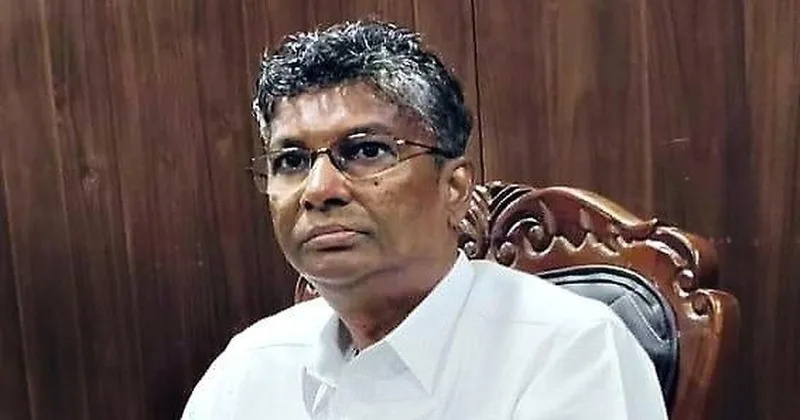
Bengaluru: In a move that has triggered sharp criticism and public debate, the Karnataka government has reportedly promoted Karnataka Residential Educational Institutions Society (KREIS) Superintendent Engineer H.M. Janardhan to the post of Chief Engineer barely two-and-a-half months after he came under the scanner in a major Lokayukta raid.
Janardhan had landed in controversy after Lokayukta police allegedly recovered Rs 1.70 crore in cash hidden at a friend’s residence during raids conducted in February this year in connection with disproportionate assets allegations.
What has now raised eyebrows is that instead of facing suspension or disciplinary action following the raid, the officer has allegedly been rewarded with an upgraded post by the Congress-led state government.
Post upgraded after raid
According to official transfer orders issued by the Public Works Department on May 26, 2026, Janardhan has been appointed as Chief Engineer after the very post he was holding as Superintendent Engineer in KREIS was upgraded.
The development has become a major talking point within administrative and political circles, with critics questioning how an officer facing serious corruption allegations could be elevated to a higher position within months of a Lokayukta investigation.
Sources said Janardhan was among 15 engineers transferred by the department under the latest reshuffle order. However, unlike routine transfers, his case has attracted attention because the upgraded post was reportedly created around the same role he had already been occupying.
Lokayukta raid had exposed huge cash haul
The controversy dates back to February 12, 2026, when Lokayukta police carried out simultaneous raids at six locations linked to Janardhan after receiving complaints alleging that he had amassed assets disproportionate to his known sources of income.
Teams led by Lokayukta officials conducted searches in Bengaluru and other places connected to the engineer. During the operation, investigators also raided a flat belonging to Janardhan’s close associate Sujay Shetty.
It was during this search that officials allegedly discovered cash worth nearly Rs 1.70 crore hidden inside the premises. According to investigators, the money was suspected to be illegally acquired wealth that may have been shifted to the friend’s residence to avoid detection during the raids.
Lokayukta officials reportedly used currency-counting machines to verify the total amount seized during the operation. Apart from the cash haul, officials had also examined property documents, bank passbooks, jewellery and details of luxury vehicles allegedly linked to the officer.
Questions over government’s stand
The promotion has now triggered questions regarding the state government’s approach toward officers facing corruption allegations.
Generally, officials trapped or investigated in Lokayukta cases involving disproportionate assets are subjected to departmental inquiry, suspension or legal proceedings if charges are substantiated. However, in Janardhan’s case, critics point out that the government has instead elevated him to a higher rank even before the investigation reaches a conclusion.
Political observers and activists argue that such decisions could send a wrong message within the bureaucracy and weaken public confidence in anti-corruption institutions.
KREIS, which functions under the Social Welfare Department, oversees several Morarji Desai residential schools and PU colleges across Karnataka. Given the department’s role in handling large-scale infrastructure and educational projects, allegations involving senior engineering officials are considered highly sensitive.
No major punishment in recent years
The controversy has also revived discussions about the effectiveness of corruption investigations in Karnataka. Critics claim that despite multiple high-profile Lokayukta raids over the past three years, very few officials have faced strict punishment or dismissal from service.
With Janardhan’s promotion now coming under scrutiny, opposition voices and anti-corruption activists are likely to intensify demands for greater transparency and accountability in administrative appointments and promotions within the state government.