Pune: In a case that has shaken Maharashtra’s conscience, a special court in Pune on May 28 framed charges against a 65-year-old man accused of raping and murdering a three-year-old girl in Nasrapur village, setting the stage for a fast-tracked trial under intense public scrutiny.
The accused, a 65-year-old man named Bhimrao Kambli, brought from Yerwada Central Jail under heavy police security, stood in court and pleaded not guilty. But the courtroom mood was far from routine. After reviewing the prosecution’s material, the judge observed that there were sufficient grounds to proceed, ordering daily hearings from May 29 and directing that the trial be conducted in camera given the extreme sensitivity of the case.
Courtroom tension as evidence laid bare
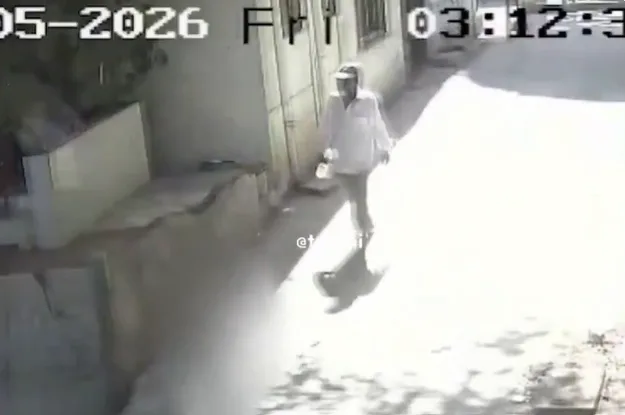
The prosecution presented what it described as a “complete and unbroken chain” of evidence. Special Public Prosecutor Ajay Misar pointed to CCTV footage that allegedly captures the accused leading the child away, along with witness statements placing them together shortly before the crime.
The evidence list is formidable: DNA reports, forensic analysis, medical examinations, postmortem findings, and material recovered based on the accused’s own disclosures. As many as 82 witnesses are expected to depose.
The defence attempted to punch holes in the case, arguing that the “last seen together” theory and forensic links were unreliable. But the court was unconvinced at this stage.
According to sources, the proceedings took a disturbing turn when the accused allegedly claimed he had “done nothing wrong,” even trivialising the incident as a “minor assault.” The remark triggered visible anger in court, reflecting the outrage that continues to ripple far beyond it.
A crime that scarred a village
The crime itself has left deep scars on Nasrapur, a quiet village in Bhor taluka.
On May 1, the child, visiting her grandmother during the summer holidays, was playing near a temple when the accused allegedly lured her to a nearby cattle shed under the pretext of showing her a calf. Innocent as the young one was, neither she suspected nor feared anything sinister and ran along in delight.
Investigators say she was sexually assaulted and then killed, reportedly with a stone. Her body was concealed beneath a heap of cow dung.
The timeline is as chilling as it is tragic: A child goes missing in the afternoon, a frantic search begins, anxiety spreads through the village, and hours later, the devastating discovery.
What followed was an eruption of grief and rage. Villagers blocked the Pune-Satara highway, surrounded officials, and demanded immediate justice. The accused was eventually caught by locals and handed over to the police.
A past that raises troubling questions
Police say the accused is a habitual offender, an assertion that has intensified public anger.
He had previously been booked in two separate molestation cases: one involving an elderly woman in 1998 and another involving his teenage niece in 2015. In both cases, he was acquitted on technical grounds.
Now, those past allegations have returned to haunt the present, raising uncomfortable questions about systemic gaps that allowed a repeat offender to remain free.
Sources indicate that even members of his family have distanced themselves following the current charges, refusing to support him as the case unfolds.
Swift action under pressure
If the crime exposed horror, the response has underscored urgency.
Police filed a detailed chargesheet, running over 1,100 pages, within just 15 days of the incident. Within 28 days, the court has framed charges, an unusually swift progression that reflects both administrative push and public pressure.
The decision to conduct day-to-day hearings signals a clear intent: no delays, no procedural drift.
Across Maharashtra, the case has become a litmus test of how quickly and firmly the justice system can respond to crimes against children.
A family’s unbearable loss
Amid the legal developments, the human tragedy remains overwhelming.
The child’s family has retreated into silence, shattered by the brutality of what happened. She had come to her grandmother’s house for what should have been a carefree summer break.
Instead, the home now stands as a site of grief.
Neighbours speak of a lingering heaviness, of a village that cannot forget the frantic search, the gathering dread, and the moment hope gave way to horror.
Justice awaited
As daily in camera hearings begin, the state watches closely.
The speed of the proceedings has brought some measure of reassurance, but the demand across Maharashtra is clear: a strict, time-bound verdict that reflects the gravity of the crime.
For Nasrapur, closure remains distant. For a grieving family, justice cannot come soon enough.
Until then, the trial moves forward, day by day.