Sanskrit at Sastra University: Where shastra meets statutes
July 21, 2026
  • Read Ecopy
  • Circulation
  • Advertise
  • Careers
  • About Us
  • Contact Us
Android AppiPhone AppArattai
Organiser
  • ‌
  • Bharat
    • Assam
    • Bihar
    • Chhattisgarh
    • Jharkhand
    • Maharashtra
    • View All States
  • World
    • Asia
    • Europe
    • North America
    • South America
    • Africa
    • Australia
  • Editorial
  • International
  • Opinion
  • RSS @ 100
  • More
    • Op Sindoor
    • Analysis
    • Sports
    • Defence
    • Politics
    • Business
    • Economy
    • Culture
    • Special Report
    • Sci & Tech
    • Entertainment
    • G20
    • Azadi Ka Amrit Mahotsav
    • Vocal4Local
    • Web Stories
    • Education
    • Employment
    • Books
    • Interviews
    • Travel
    • Law
    • Health
    • Obituary
  • Subscribe
    • Subscribe Print Edition
    • Subscribe Ecopy
    • Read Ecopy
  • ‌
  • Bharat
    • Assam
    • Bihar
    • Chhattisgarh
    • Jharkhand
    • Maharashtra
    • View All States
  • World
    • Asia
    • Europe
    • North America
    • South America
    • Africa
    • Australia
  • Editorial
  • International
  • Opinion
  • RSS @ 100
  • More
    • Op Sindoor
    • Analysis
    • Sports
    • Defence
    • Politics
    • Business
    • Economy
    • Culture
    • Special Report
    • Sci & Tech
    • Entertainment
    • G20
    • Azadi Ka Amrit Mahotsav
    • Vocal4Local
    • Web Stories
    • Education
    • Employment
    • Books
    • Interviews
    • Travel
    • Law
    • Health
    • Obituary
  • Subscribe
    • Subscribe Print Edition
    • Subscribe Ecopy
    • Read Ecopy
Organiser
  • Home
  • Bharat
  • World
  • Operation Sindoor
  • Editorial
  • Analysis
  • Opinion
  • Culture
  • Defence
  • International Edition
  • RSS @ 100
  • Magazine
  • Read Ecopy
Home Bharat

Sanskrit at Sastra University: Where shastra meets statutes

Bharat’s legal system still carries the imprint of Sanskritic jurisprudence, even if most law students never encounter its original sources. SASTRA’s Sanskrit programmes seek to reconnect legal education with the civilisational traditions that once shaped ideas of justice, duty and governance

Shailendar KShailendar K
May 26, 2026, 09:00 pm IST
in Bharat, Analysis
Follow on Google News
FacebookTwitterWhatsAppTelegramEmail

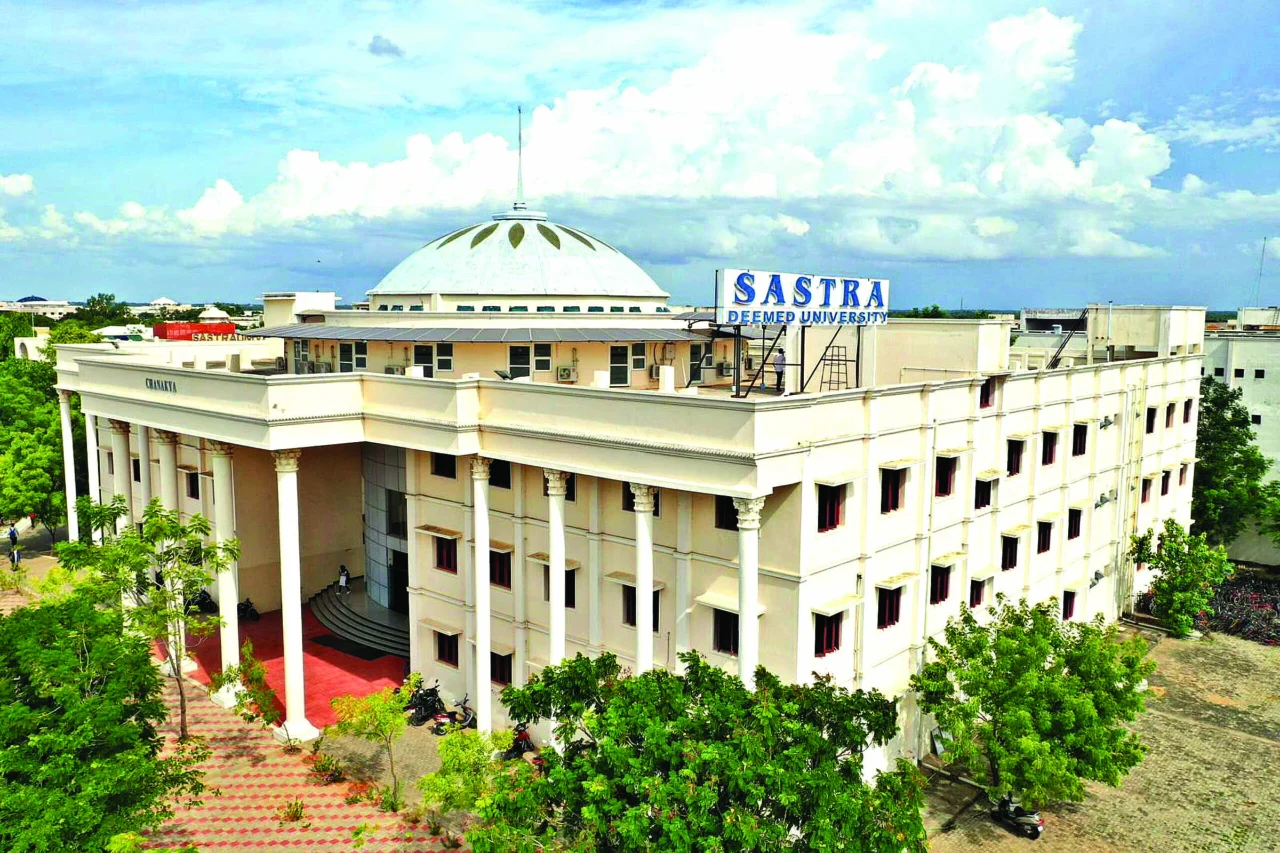
SASTRA Deemed University’s engagement with Sanskrit is not merely a language programme. It is an academic attempt to reconnect Bharatiya higher education with a body of knowledge that shaped law, ethics, governance, philosophy, literature and social life for centuries. Through the Department of Oriental Studies and Research, SASTRA has offered MA Sanskrit and related programmes while also taking Sanskrit learning beyond traditional boundaries by connecting it with law, Bharatiya Knowledge Systems, jurisprudence and public reasoning.

The Department of Oriental Studies and Research was established in 2010. It first offered elective programmes for BTech students and diploma programmes, and later introduced MA Sanskrit and MA Divyaprabandham through distance mode. According to SASTRA’s own department profile, it has also offered or facilitated learning in areas such as Vedic Mathematics, Vedic studies, Manuscriptology, Advaita Vedanta, Ayurveda, Epigraphy, Yoga, Jyotirvigyan and Science and Technology in Sanskrit. The Sanskrit course must therefore be seen as part of a broader intellectual  ecosystem rather than as a narrow literary degree.

For law students, the importance of such a course is obvious. Bharatiya legal education is usually dominated by English common law, colonial statutes and Western jurisprudential thinkers. That training is necessary, but it is incomplete if students remain unfamiliar with indigenous legal and ethical traditions. Sanskrit legal texts, including Dharmashastras, Smritis, commentaries and allied works, discuss duties, dispute resolution, evidence, governance, punishment, family relations, inheritance and the moral obligations of rulers. Studying them does not mean replacing the Constitution with ancient texts. It means understanding the historical sources through which Bharatiya society once thought about justice, obligation and governance.

The course is particularly useful because many modern legal subjects still carry the imprint of Sanskritic legal literature. Hindu law relating to marriage, adoption, succession, maintenance, joint family property and religious endowments cannot be properly understood only through bare Acts. Their evolution involves an interaction between Sanskrit texts, custom, colonial interpretation and post-Constitutional reform. A student trained in Sanskrit gains access to primary sources and is better placed to understand how ideas travelled from shastra to statute and from commentary to courtroom.

The relevance of this approach was recently echoed by Justice GR Swaminathan of the Madras High Court. In Malarvizhi at Kottaithai v. Secretary to Government of India, he observed that if Latin maxims can be quoted and judgements can rest on them, courts need not shy away from citing Bharat’s own heritage and sources in Sanskrit, Tamil or any Bharatiya language. That observation captures the larger point behind Sanskrit-and-law education: Bharatiya legal reasoning need not remain intellectually dependent only on borrowed categories.

SASTRA’s Sanskrit course is therefore not a nostalgic return to the past. It is a serious academic bridge between language, law and civilisation. When taught critically and constitutionally, Sanskrit can help future lawyers understand that law in Bharat has always been more than rules

Opportunities after completing Sanskrit with this orientation are wider than commonly assumed. Students can move into teaching, research, translation of legal and philosophical texts, manuscript studies, Indology, personal law research, temple and endowment law, heritage law, policy work, comparative jurisprudence and litigation involving religious institutions, customs and Hindu law. It can also strengthen preparation for higher studies in legal history, constitutional theory, Bharatiya Knowledge Systems and philosophy of law.

SASTRA’s Sanskrit course is therefore not a nostalgic return to the past. It is a serious academic bridge between language, law and civilisation. When taught critically and constitutionally, Sanskrit can help future lawyers understand that law in Bharat has always been more than rules. It has also been about Dharma, responsibility, social order and justice.

Topics: Justice GR SwaminathanBharatiya Knowledge SystemsSanskrit at Sastra UniversitySASTRA’s Sanskrit courseSanskrit and law
ShareTweetSendShareSend
✮ Subscribe Organiser YouTube Channel. ✮
✮ Join Organiser's WhatsApp channel for Nationalist views beyond the news. ✮
Previous News

Career after Strategic Studies: Power of demographic dividend

Next News

US-Iran-China-Taiwan: The paradox of conflicts

Related News

Bharatbodh reflects Bharat's timeless civilisational consciousness and cultural identity

Bharatbodh Explained: Understanding Bharat’s civilisational consciousness and cultural identity

The Supreme Court has directed the Tamil Nadu government to consult the Union government on setting up Jawahar Navodaya Vidyalayas

Tamil Nadu: Supreme Court stays Madras HC order directing state govt to ensure no cow slaughter

Thiruparankundram Row: Court questions State’s interpretation of ‘Stay Order’ Karthigai Deepam case

Thiruparankundram Row: Court questions Tamil Nadu State govt’s interpretation of ‘Stay Order’ Karthigai Deepam case

Thiruparankundram deepam row: Madras HC rejects Counsel’s argument, warns of charges if no response by March 18

Thiruparankundram Deepam Case: High Court dissatisfied with DM apology, orders additional affidavit

Tamil Nadu Governor R N Ravi

Tamil Nadu: Governor RN Ravi warns of forces undermining confidence in judiciary,

Load More

Latest News

Keralam Minister moves to stop free food distribution by NGOs in government hospitals, sparks backlash

NEET 2026 | Abhay Yadav Case: NTA warns against AI generated OMR sheets & scorecards; Reiterates strict legal action

Former Aam Aadmi Party (AAP) councillor Tahir Hussian with AAP leader and former Delhi Chief Minister Arvind Kejriwal. Notably, Delhi court convicted Tahir Hussain and four others for the 2020 murder of Intelligence Bureau (IB) staffer Ankit Sharma, who was brutally killed and his body was dumped into a drain in the Chand Bagh area during anti-Hindu Delhi riots

Anti-Hindu Delhi Riots 2020: When evidence outlasted narratives

NCUI Elections: Sahakar Bharati–BJP registers historic victory; Wins 19 of 20 seats & 10 candidates elected unopposed

Representative Image

Tamil Nadu: Authorities ‘demolish’ Annadaana Satram in Thiruvannamalai; Sparks outrage from public

India's BioE3 Policy aims to build a $2.6 trillion bioeconomy by 2047 through biotechnology-driven innovation, jobs and growth

India’s Bioeconomy Revolution: How NITI Aayog’s roadmap seeks to make the country a global biotechnology leader by 2047

Tri-Services Exercise 2025 was led by the Western Naval Command of the Indian Navy along with the Southern Command of the Indian Army and the South Western Air Command of the Indian Air Force as the principal participating formations

Theatre Command: Military reforms for integrated Actions

Court-Ordered Demolition: Periyar Arch Removed in Madurai Overnight

Tamil Nadu: Madurai authorities demolish EV Ramaswamy arch to ease traffic, acting on High Court orders

The then Prime Minister Atal Bihari Vajpayee with the soldiers in Kargil, June, 1999

Theatre Command: Review, revision and reforms

Pakistan tops the Global Terrorism Index and faces EU scrutiny over its human rights record, risking key trade benefits

GSP+ status review: EU wants Pakistan to improve human rights record, end enforced disappearances, or lose it

Load More
  • Privacy
  • Terms
  • Cookie Policy
  • Refund and Cancellation
  • Delivery and Shipping

© Bharat Prakashan (Delhi) Limited.
Tech-enabled by Ananthapuri Technologies

  • Home
  • Search Organiser
  • Bharat
    • Assam
    • Bihar
    • Chhattisgarh
    • Jharkhand
    • Maharashtra
    • View All States
  • World
    • Asia
    • Africa
    • North America
    • South America
    • Europe
    • Australia
  • Editorial
  • Operation Sindoor
  • Opinion
  • Analysis
  • Defence
  • Culture
  • Sports
  • Business
  • RSS @ 100
  • Entertainment
  • More ..
    • Sci & Tech
    • Vocal4Local
    • Special Report
    • Education
    • Employment
    • Books
    • Interviews
    • Travel
    • Health
    • Politics
    • Law
    • Economy
    • Obituary
  • Subscribe Magazine
  • Read Ecopy
  • Advertise
  • Circulation
  • Careers
  • About Us
  • Contact Us
  • Policies & Terms
    • Privacy Policy
    • Cookie Policy
    • Refund and Cancellation
    • Terms of Use

© Bharat Prakashan (Delhi) Limited.
Tech-enabled by Ananthapuri Technologies