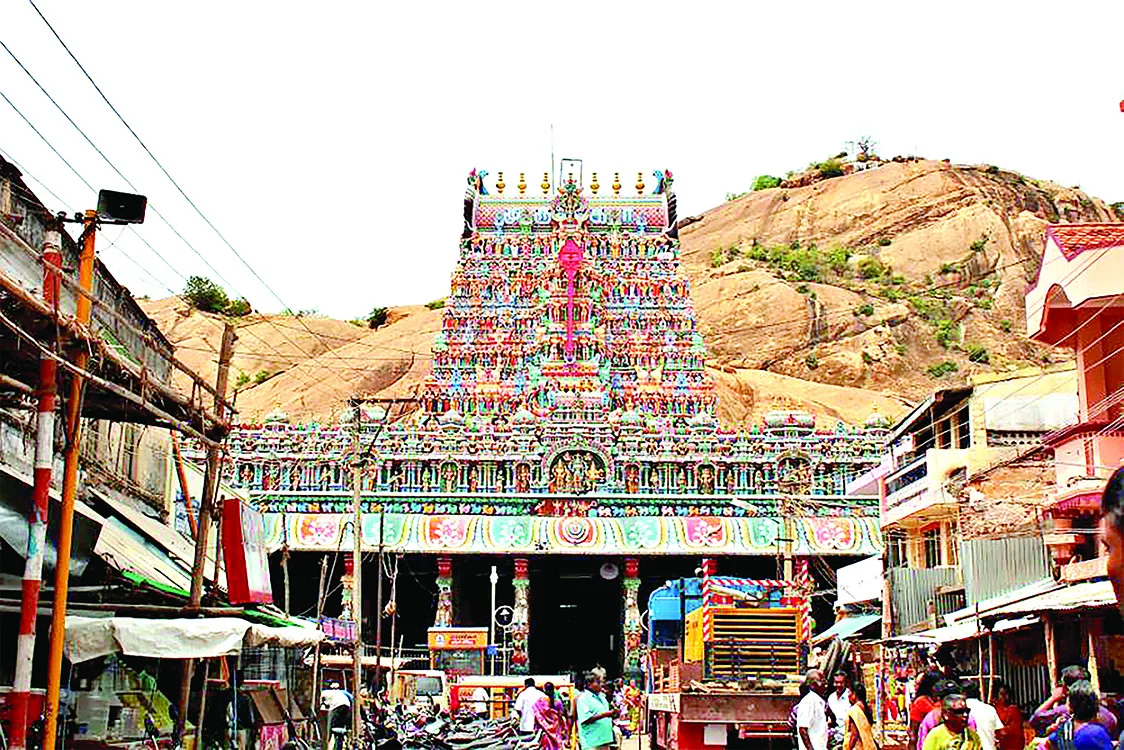
Not satisfied with the reasons and unconditional apology offered by the Madurai District Magistrate in the lighting of Deepam at Thiruparankundram case, the Madurai Bench of the Madras High Court has directed the District Magistrate to file an additional affidavit and posted the matter to March 2, before questioning how the Collector passed prohibitory orders that frustrated the Court’s directions.
The Court was hearing contempt proceedings against Madurai District Collector K.J. Praveen Kumar, Commissioner of Police J. Loganathan, Deputy Commissioner of Police A.G. Inigo Divyan, and Executive Officer of Thiruparankundram Subramanya Swamy Temple, Yagna Narayanan. All the officers appeared in person before the Court on February 2.
The Collector and others filed affidavits offering unconditional apology. In his affidavit, the District Collector stated that he had passed the prohibitory orders on December 3, 2025, taking into account the ground situation in Thiruparankundram and to maintain law and order.
The Temple EO and the Deputy Commissioner of Police also filed similar affidavits. Senior counsel for the officers, V. Giri, submitted that the District Magistrate had passed the prohibitory orders under Section 163 of the BNSS, 2023, taking into account the prevailing ground situation.
He argued before Justice G.R. Swaminathan that the Collector had received several intelligence and administrative inputs indicating a possible threat to public peace, which necessitated the promulgation of the prohibitory order.
The affidavit further clarified that the prohibitory order was never intended to stop or interfere with the implementation of any judicial order.
Giri stated that Justice Swaminathan had later quashed the Collector’s prohibitory order. He pointed out that the affidavits filed by the officials clearly showed that there was no intention to disobey or undermine the Court’s directions.
The senior counsel urged the Court to drop the contempt case, stating that the actions of the officers were driven by administrative necessity and public safety concerns, and not by defiance of judicial authority.
Justice Swaminathan observed that he regularly reads newspapers and magazines and had come across a media report quoting a police officer at Thiruparankundram who had “calmly” said that they were “ready to face any consequences.”
The Judge directly asked whether any officer had actually made such a statement. Responding to this, Giri submitted that if any officer had indeed made such a statement, that officer should be identified, brought before the Court, and made to face the consequences.
He sought a four-week extension of time for the District Collector to file an additional affidavit, adding that the Collector had no intention whatsoever to interfere with or disobey the Court’s order.
Giri stated, “Contempt is a serious thing. He is a young man, in the beginning of his career. He is not even from the State. His conduct might have been stupid, but there was no intention.”
Accepting this request, Justice Swaminathan granted a four-week extension. The Court decided to separate the contempt proceedings against the District Collector from those against the other officials and dispensed with the personal appearance of all officers except the District Collector.
The Judge questioned why the Temple EO had filed an appeal and orally indicated that he would proceed with the contempt case against the Collector alone.
Justice Swaminathan asked the Tamil Nadu counsel to give a straight answer, adding that he might even close the contempt proceedings if the State had no plans to approach the Supreme Court in appeal. “If you are not going to file an appeal, take it from me, I am closing the contempt. If you say you are willing to abide, I will close it,” he said.
In response, the Additional Advocate General submitted, “Things are being discussed and contemplated, but a decision is yet to be taken. At this stage, I cannot say whether we are or we are not.”
The Judge observed, “There are four parties. One is the dargah (located near the Deepa thoon site, at the same hillock); the temple; the police; and the administration. All four parties are entitled to go to the Supreme Court, but I would think it is ridiculous if the temple goes to the Supreme Court. That would be my perception, because they cannot be said to be aggrieved by this order. Going on appeal by the temple, according to me, would be atrocious. They are there to uphold the rights of devotees, not subvert them. Others can go — their rights are at stake.”
Commenting on the developments, an observer Badri Seshadri said, “Judicial contempt by government officials must result in some punishment. Letting them go with just an unconditional apology is not right. It will only encourage more government officials to not follow orders, willingly dodge them, and then, when pulled up for contempt, escape with an unconditional apology. This is not fair to the people who approached the Court in the first place.”
Judicial contempt by Government officials must result in some punishment. Letting them go with just an unconditional apology is not right.
It will only encourage more Government officials to not follow the orders, willingly dodge forever, then when pulled for contempt, escape…
— Badri Seshadri (@bseshadri) February 2, 2026
He added, “In the above case, the petitioner Rama Ravikumar has every reason to feel disappointed. His purpose has not been served despite supposedly ‘winning’ the case.”