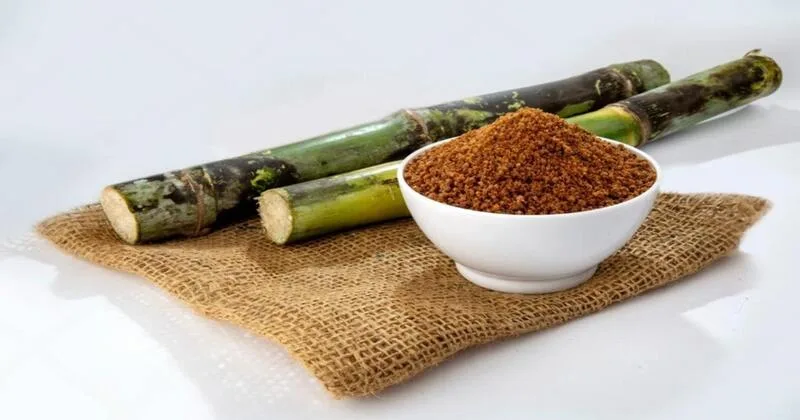
The world is rediscovering what India has known for millennia. As global consumers turn away from chemically refined sugars, demand for natural sweeteners is surging. At the centre of this shift, India has its most ancient gift to the world of food: jaggery or gur.
India today accounts for over 70 per cent of global jaggery production. This is not a coincidence of geography. It is the fruit of a civilisational relationship with sugarcane that stretches back more than three thousand years.
Rooted in Civilisation
Madhor asmi madhutaro madughān madhumattaraḥ |
Mām it kila tvaṃ vanāḥ śākhāṃ madhumatīm iva || AV. 1.34.5
The story of Gur begins in the Vedic period. Early references to sugarcane cultivation appear in the Atharvaveda. Scholars suggest that early varieties of sugarcane first evolved in the moist regions of north-eastern India.
Sugarcane (Ikṣu) is specifically referenced in Atharvaveda 1.34.5, making it one of the oldest known Vedic mentions. The verse uses the image of sugarcane sweet juice as a metaphor for love and attraction, reflecting how familiar and cherished sugarcane sweetness was in Vedic daily life.
From the origins, cultivation spread across tropical and subtropical regions worldwide. The very word “sugar” derives from the Sanskrit root word sarkara. The linguistic trail is a quiet but powerful reminder of India’s foundational role in the global sweetener story.
The depth of Indian knowledge was internationally recognised early. In 647 AD, a Chinese mission travelled to Magadha specifically to learn Indian sugarcane processing techniques. Knowledge of Indian sweetener production was, in effect, being formally imported by other civilisations. That tradition accumulated over millennia is precisely what powers India’s dominance today.
Scale of Indian Jaggery Economy
India’s position atop global jaggery production rests on a vast agricultural foundation. In 2024–25, India’s total sugarcane output was estimated at 444.9 million tonnes. Uttar Pradesh alone contributed 48.5 per cent of this total.
Maharashtra followed at 24.1 per cent and Karnataka at 10.5 per cent. States such as Gujarat, Tamil Nadu, Bihar, Uttarakhand, Punjab, Madhya Pradesh and Haryana contribute further. Nearly 20 per cent to 30 per cent of this national sugarcane output is diverted towards jaggery production. The sector supports approximately 2.5 million livelihoods across rural India. It operates through decentralised processing, low transport costs and small-scale cottage industries. This model keeps economic value close to the farmer rather than concentrating it in large industrial units.
From Farm to Export: A Rising Global Story
India’s jaggery export performance tells a story of growth. In 2015–16, exports stood at USD 197 million with a volume of 292.8 metric tonnes. By 2024–25, exports had reached its highest to USD 406.8 million and 471.9 metric tonnes. That represents a rise of 106.5 per cent in value and 61.2 per cent in volume over the decade.
The momentum has continued. During April to January of 2025–26, exports reached 450.1 metric tonnes valued at USD 384.4 million. This marks a 16.5 per cent increase in volume and a 15.9 per cent increase in value as compared to the same period the year prior. The top destinations for Indian jaggery in 2024–25 were Indonesia, USA, UAE, Nigeria and Nepal. They represent a broad and growing international appetite for what India produces naturally.
Domestic demand has also grown sharply. In the sweetener segment, jaggery and honey together recorded a compound annual growth rate of 15 per cent to 20 per cent during 2021–24. Jaggery sales in domestic markets reached approximately 5,000 metric tonnes annually by August 2024.
Why the World is Turning to Gur
The global shift towards natural sweeteners is not a trend. It reflects a deeper reconsideration of what refined industrial food processing has cost in terms of nutrition. Jaggery is produced by concentrating sugarcane juice without the use of chemicals. Because it undergoes no chemical refining, it retains the minerals and micronutrients that are stripped away when white sugar is produced. These include calcium, magnesium, potassium, phosphorus, sodium, iron, zinc, copper and manganese.
A good-quality of jaggery typically contains more than 70 per cent sucrose, small amounts of glucose and fructose and approximately 5 per cent minerals. Its total mineral content is significantly higher than that of refined sugar, which contains only about 0.05 grams of minerals per 100 grams.
The iron content in jaggery is approximately 10 to 13 mg per 100 grams. This contributes meaningfully to improved haemoglobin levels. Potassium and magnesium support cardiovascular and muscle function. Jaggery also contains trace amounts of vitamins, including folic acid and B-complex vitamins, as well as vitamins A, C, D, and E. These make it especially relevant as a dietary supplement for undernourished populations. The energy it provides is sustained rather than spiked. Its complex sucrose structure is digested slowly, releasing energy gradually rather than causing sharp rises in blood glucose.
Ayurvedic Dimension of Jaggery
In the Ayurvedic tradition, jaggery has long been considered a therapeutic sweetener. Ayurvedic medicine identifies it as beneficial in treating throat and lung infections. Its cleansing properties are said to aid in detoxifying the respiratory tract and gastrointestinal system. This makes it particularly valued for individuals exposed to dust and environmental pollutants. Its thermogenic or warming effect is associated with relief from cough, congestion and respiratory discomfort.
Beyond this, jaggery is regarded as a natural detoxifying agent supporting blood purification. It is also believed to reduce fatigue, promote muscular and neural relaxation and help maintain blood pressure. The presence of calcium, phosphorus and zinc supports bone health. Its reported anti-toxic and potential anti-carcinogenic properties contribute to overall physiological well-being.
Nutrition Meets National Policy
The nutritional power of jaggery has already been incorporated into public health programmes by the government. Tamil Nadu provides complementary weaning foods under the Integrated Child Development Services. Jaggery constitutes approximately 27% of this supplementary food mix, known as Sathumavu. This is distributed as Take-Home Rations to beneficiaries for 300 days each year.
According to NITI Aayog, the programme provides nutritious food to nearly 32.75 lakh beneficiaries across Tamil Nadu. Procurement is sourced from 25 women-run weaning food manufacturing cooperative societies and two private manufacturers in a 65:35 ratio. These cooperatives include approximately 1,450 members, a significant proportion of whom are widows, deserted or economically vulnerable women. In this way, jaggery becomes both a nutritional tool and a vehicle for women’s economic empowerment.
GI Tags: Protecting Regional Excellence and Value-adding
Indian jaggery diversity is as rich as its geography. Several varieties have received Geographical Indication recognition, which provides formal protection for their traditional character and regional identity.
The Kolhapur variety of jaggery produced in Maharashtra boasts of its rich yellow colour and high sucrose content. Muzaffarnagar gur produced in Uttar Pradesh has an export edge and is produced using a superior variety of sugarcane. Marayoor jaggery and Central Travancore jaggery in Kerala are distinguished by their purity, medicinal properties and processing methods. The geographical indication designation goes beyond merely preserving the name of the products. It enhances regional branding, promotes traditional processing methods and provides market access for rural farmers who could only compete through low prices.
The difference between raw sugarcane and processed jaggery itself leads to financial gain for farmers. Value addition by making jaggery results in much higher income than simply selling raw sugarcane to millers. Another leap that can be made is the production of organic jaggery, and this approach has been very rewarding for Ajay Singh, who is a farmer from Ghazipur District in Uttar Pradesh. His product comes at a cost of about Rs 75 per kg, while conventional jaggery is priced at about Rs 50 per kg.
The profit differential is Rs 45 per kg versus Rs 20 per kg. It is transformative for a small-scale rural producer. Building on this, the farmer has diversified into jaggery-flavoured chocolate and coconut products, further expanding market reach and income streams. This model, backed by central government support, demonstrates how traditional knowledge, when combined with quality consciousness, creates sustainable rural enterprise.
Policy Architecture Supporting the Sector
The government has constructed a layered policy framework to support the jaggery value chain. The Ministry of Food Processing Industries has various important schemes, such as the Pradhan Mantri Kisan SAMPADA Yojana, Production Linked Incentive Scheme for the Food Processing Industry and the PM Formalisation of Micro Food Processing Enterprises Scheme.
Under the SAMPADA Yojana for Creation and Expansion of Food Processing and Preservation Capacities scheme, five jaggery processing plants have been sanctioned till December 31, 2025, with a grant-in-aid of Rs 17.07 crore. The PMFME Scheme has supported 3,528 jaggery-based micro food processing units with subsidies totalling Rs 102.31 crore. The scheme also provides branding and marketing assistance of up to 50 per cent to Farmer-Producer Organisations, Self-Help Groups and cooperatives.
Under the One District One Product initiative, jaggery and allied products have been identified in 19 districts. Jaggery is also a notified commodity under AGMARK certification, ensuring quality grading, market credibility and export readiness. India is not only producing jaggery. It is offering the world a product forged over three millennia of accumulated agricultural and nutritional wisdom.
As the global consumer moves away from the synthetic and towards the natural, India stands uniquely positioned. No other nation possesses the combination of scale, traditional knowledge, crop base and government support that India brings to this sector. The future of Gur is not just rural. It is global. And it was made in India long before the world knew it needed it.