Mangaluru: The hijab controversy has once again returned to the centre of Karnataka politics, with fresh tensions emerging in coastal districts after the state government permitted students to wear hijab in schools and colleges. Hindu organisations have strongly opposed the move, accusing the Congress-led government of pursuing “vote-bank appeasement politics” at the cost of communal harmony and educational discipline.
The renewed row has triggered concerns of another “Hijab vs saffron shawl” confrontation in Dakshina Kannada and Udupi districts, regions that had previously witnessed intense protests and communal polarisation during the earlier hijab dispute.
Leaders of VHP and Bajrang Dal have openly declared support for Hindu students who choose to wear saffron shawls to educational institutions in protest against the government’s decision.
The development has raised fears of fresh unrest in Mangaluru and other coastal areas just weeks before schools and colleges reopen for the academic year.
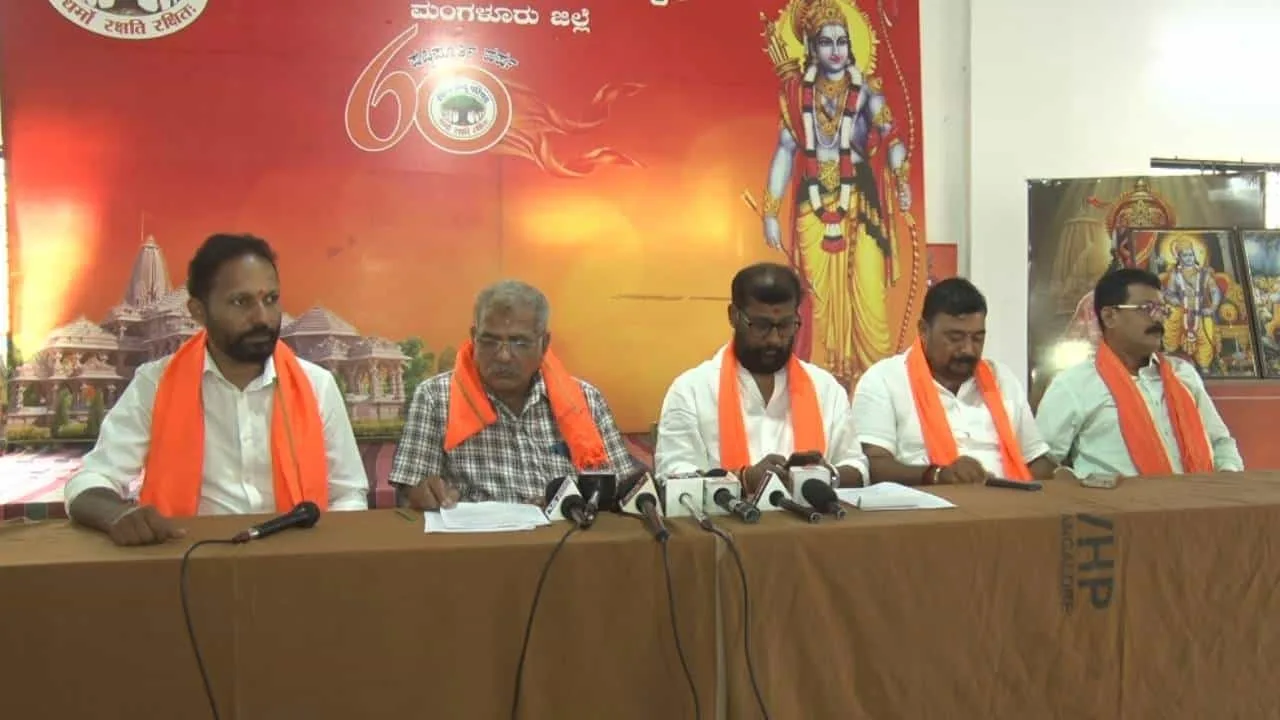
Speaking at a press conference in Mangaluru on May 20, VHP leaders alleged that the state government had unnecessarily reopened a sensitive issue that had already subsided, only to consolidate minority votes ahead of future elections.
According to Hindu organisations, the earlier controversy had gradually settled down, allowing educational institutions in coastal Karnataka to function peacefully.
VHP leader Sharan Pumpwell directly blamed the state government for any possible law-and-order problems arising from the issue.
“If law and order deteriorates, the state government will be directly responsible. The issue had cooled down, and districts like Dakshina Kannada and Udupi were witnessing good academic results and peaceful conditions. But by issuing such an order, the government has once again created conditions for unrest,” he said.
He further alleged that the Congress government was prioritising political appeasement over social harmony and student welfare.
The organisations stated that they would extend “complete support” to Hindu students protesting against hijab inside campuses and warned that they were prepared to launch statewide agitations if necessary.
Political observers say the issue has the potential to once again polarise coastal Karnataka, a region historically sensitive to communal issues. Several social media platforms have already witnessed heated debates, with supporters of both sides trading accusations over religious freedom, secularism and educational discipline.
Critics of the government argue that allowing visible religious symbols inside classrooms could damage the neutral atmosphere of educational institutions and encourage identity-based mobilisation among students.
Many opposition voices have accused the Congress government of deliberately reviving a dormant controversy for electoral calculations and minority appeasement. They claim that instead of focusing on infrastructure, unemployment and educational quality, the government is encouraging divisive identity politics.
The issue has also triggered sharp reactions among parents and educational circles. Some fear that schools and colleges could once again become battlegrounds for political and religious mobilisation, affecting studies and campus harmony.
Hindu organisations insist that if hijab is permitted, Hindu students should also be allowed to wear saffron shawls as an expression of faith.