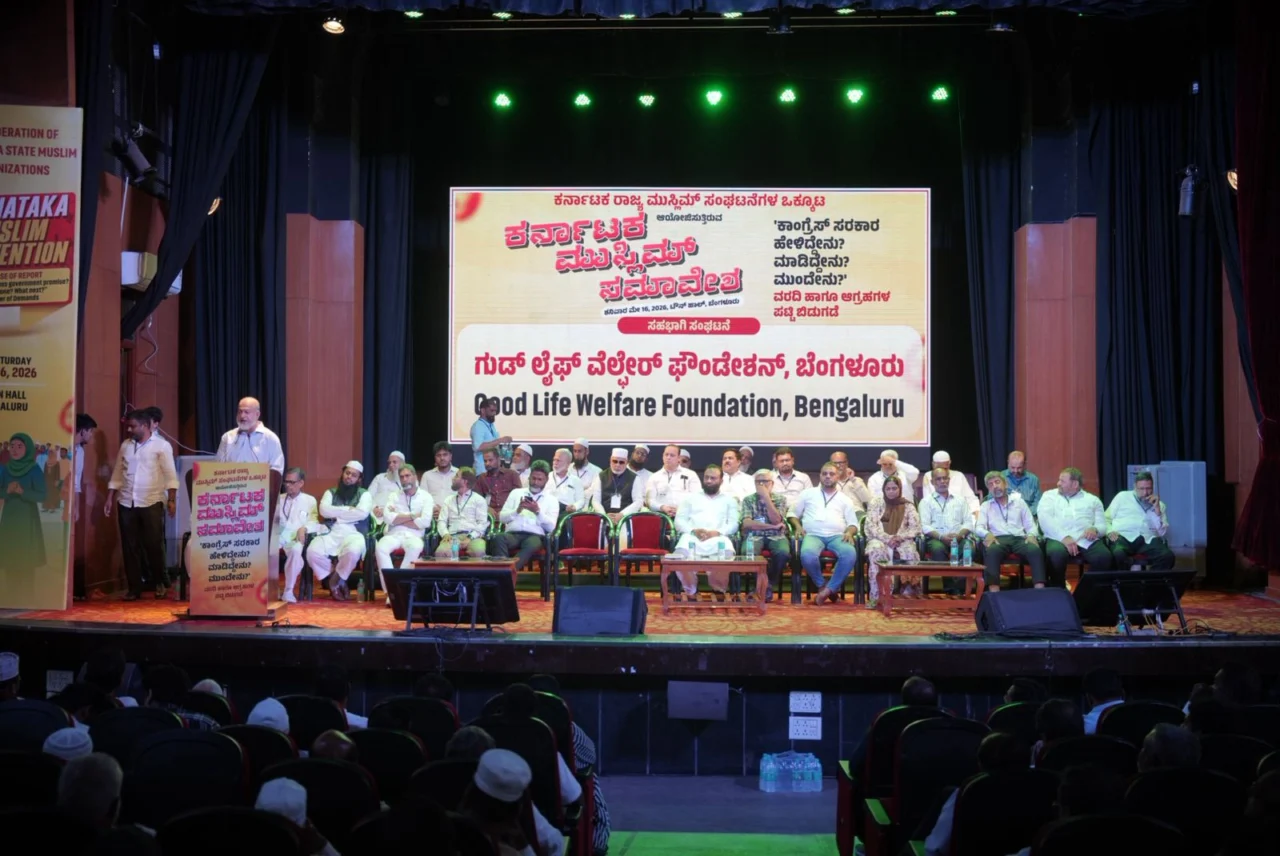
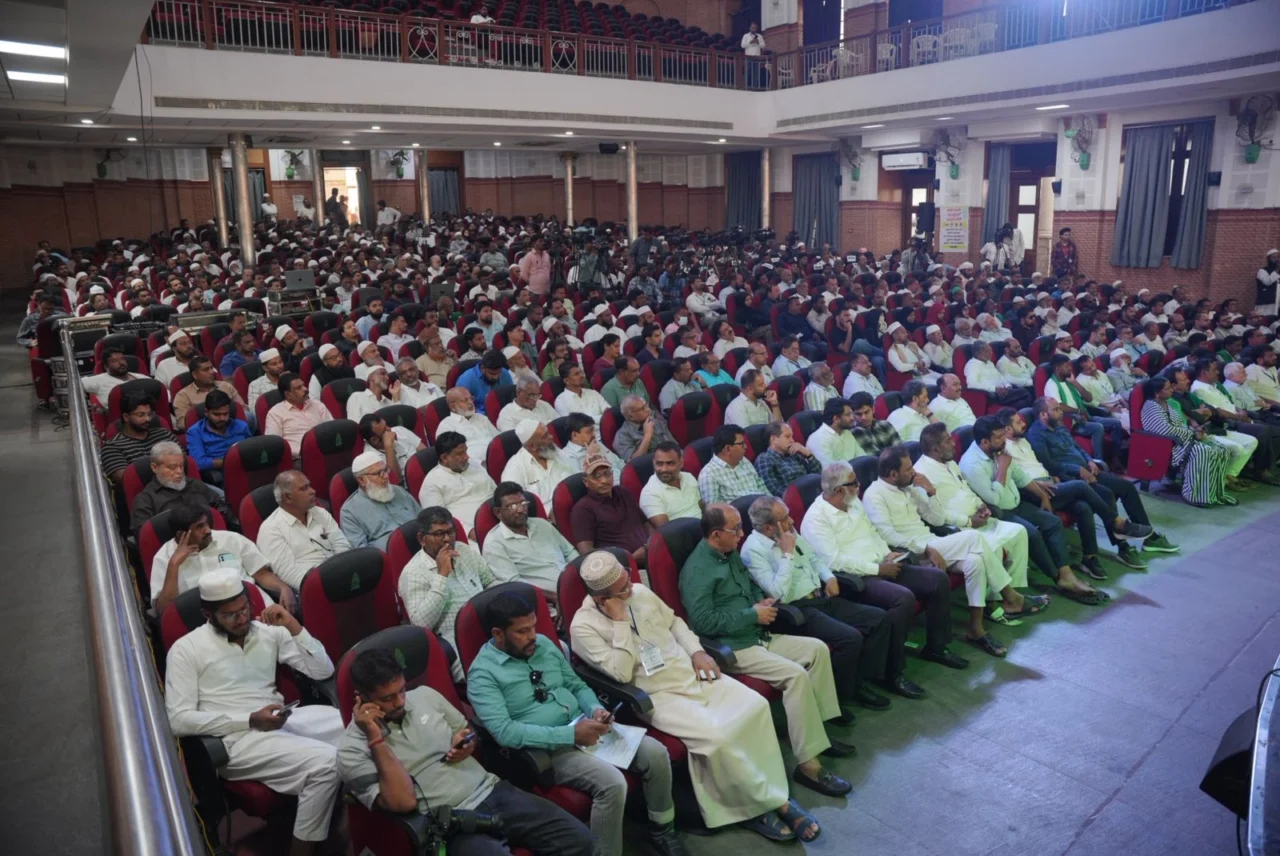
A major political controversy has erupted in Karnataka after 48 Muslim organisations gathered at Bengaluru’s Town Hall on May 17 and presented a charter of demands before the Congress-led state government, including a separate budget for Muslims, restoration and enhancement of reservation quotas, repeal of the anti-conversion and cattle slaughter laws, and increased political representation for the community.
The convention, organised under the banner of the Federation of Karnataka Muslim Organisations, accused the Congress government of practising “soft Hindutva” and failing to fulfil promises allegedly made to the Muslim community before the 2023 Karnataka Assembly elections.
Held under the slogan, “What did the Congress government promise? What has it done? What next?”, the event witnessed participation from activists, clerics, lawyers, social workers and representatives from districts across Karnataka, including Bidar, Kalaburagi, Yadgir, Hubballi, Davangere, Mandya and Hassan.
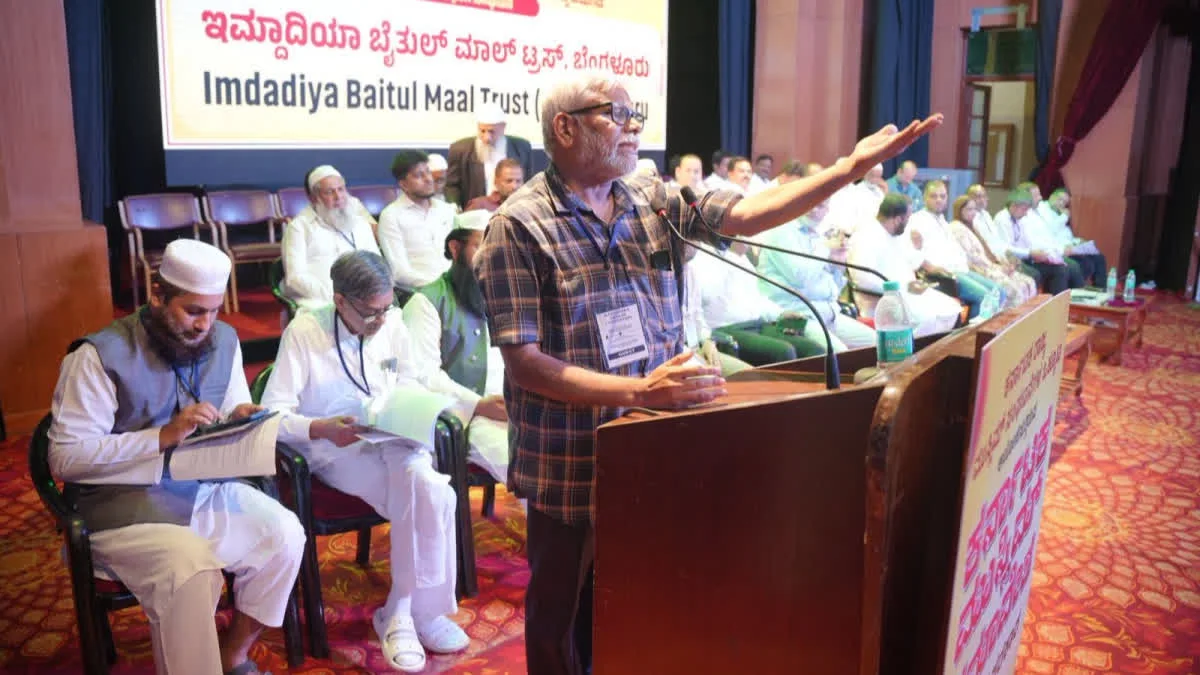
At the centre of the controversy is the demand for a separate budgetary allocation for Muslims and restoration of the Category 2B reservation quota for Muslims, with some organisers also calling for its increase from 4 per cent to 8 per cent. The report submitted at the convention claimed that despite Muslims constituting nearly 13 per cent of Karnataka’s population, their representation in the Legislative Assembly and Council remained disproportionately low.
The convention also demanded:
1. Restoration and legal defence of the 4 per cent Category 2B reservation for Muslims
2. Increased political representation in Assembly, Parliament and local bodies
3. A separate budget focused on Muslim welfare
4. Protection and strengthening of Waqf properties
5. Withdrawal of the Karnataka anti-conversion law
6. Repeal of the cattle slaughter prohibition law
7. Greater educational assistance and infrastructure for Muslim students
8. A grant of Rs 1000 crore for community welfare initiatives
9. Immediate implementation of caste census recommendations
10. A resolution against the Special Intensive Revision (SIR) of voter lists
Joint Convenor Tanveer Ahmed said the gathering reflected growing frustration within the community. He claimed the event was organised without political mobilisation or incentives and accused certain groups of attempting to derail the programme through “fake messages” and social media campaigns.
“This gathering happened organically. People came on their own without invitations or arrangements. That itself shows the concern within the community,” he said.
Ahmed also criticised what he described as token engagement by political leaders. According to him, meetings and photo opportunities with ministers were insufficient to address long-standing community concerns.
Another Joint Convenor, Hares Siddiqui, clarified that the convention was “not against Congress” but intended to highlight unresolved issues affecting Muslims in Karnataka. He said misinformation campaigns ahead of the event had impacted attendance.
Meanwhile, Joint Convenor Suhail Maroor stated that organisers had prepared a detailed report after consultations with activists, lawyers and community members. The document, published in Urdu, Kannada and English, discusses issues including reservation, education, Waqf administration and laws related to religious practices and cow slaughter.
The report alleged that several promises made in the Congress manifesto and post-election assurances remained incomplete even three years after the party came to power. It specifically referred to the anti-conversion law, cattle slaughter law and hijab-related restrictions introduced during the previous BJP government.
The organisers argued that these laws affected the “religious freedom, dignity and constitutional rights” of minorities and claimed the Congress government had failed to provide a clear legislative roadmap for repealing them.
The controversy comes at a politically sensitive time for the Congress government, particularly amid reported dissatisfaction among sections of Muslim leaders over representation in recent elections, including the Davanagere South bypoll.
The report also raised concerns regarding Muslim political representation, stating that Muslims account for roughly 4.4 per cent of MLAs in the 224-member Karnataka Assembly despite being around 13 per cent of the state’s population.
The convention concluded with organisers announcing plans to circulate the report at district and taluk levels to build public pressure on legislators and ministers for implementation of the demands.