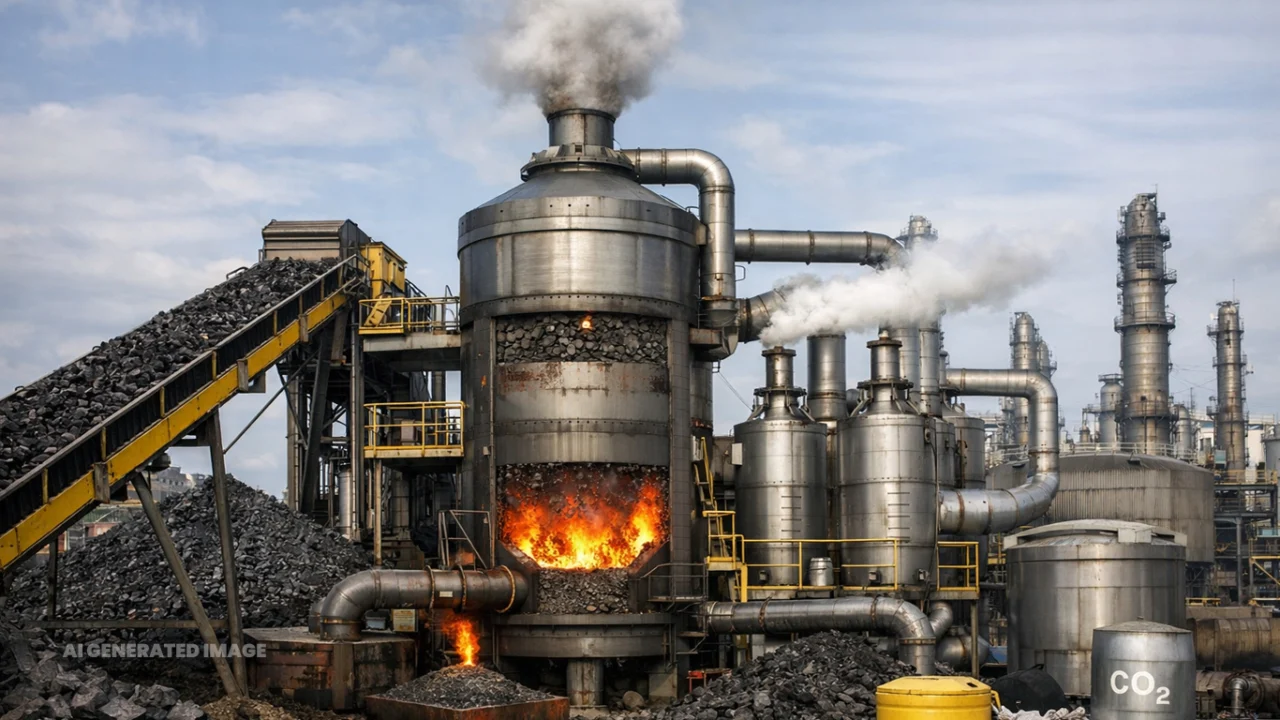
In a major push towards energy self-reliance and industrial transformation, the Union Cabinet chaired by Prime Minister Narendra Modi on Wednesday approved a massive Rs 37,500 crore scheme to promote coal and lignite gasification projects across the country. The initiative is aimed at reducing India’s dependence on imported fuels and chemicals while accelerating the nation’s transition towards cleaner and value-added utilisation of domestic coal resources.
The decision marks one of the most significant policy interventions in India’s coal sector in recent years and is expected to strengthen long-term energy security by reducing imports of products such as liquefied natural gas (LNG), urea, ammonia, methanol and coking coal.
According to the government, the scheme is designed to support India’s national target of gasifying 100 million tonnes of coal by 2030. Under the newly approved programme, around 75 million tonnes of coal and lignite are expected to be gasified through incentivised surface coal gasification projects.
Coal gasification is a process in which coal or lignite is converted into synthesis gas, commonly known as syngas, which can then be used to produce fuels, chemicals, fertilisers and other industrial products domestically. Officials say this technology will help India utilise its vast coal reserves more efficiently while reducing exposure to volatile international markets and supply chain disruptions.
India currently possesses nearly 401 billion tonnes of coal reserves and around 47 billion tonnes of lignite reserves. Coal continues to account for more than 55 per cent of the country’s total energy mix, making it a critical pillar of India’s energy infrastructure.
The government stated that the newly approved scheme would provide financial incentives covering up to 20 per cent of the cost of plant and machinery for eligible projects. These incentives will be awarded through a competitive bidding process, with funds disbursed in four equal instalments linked to project milestones and implementation progress.
To prevent concentration of benefits and ensure wider industrial participation, the Cabinet has imposed several caps under the scheme. The maximum financial incentive for a single project has been capped at Rs 5,000 crore. Similarly, incentives for any single product category, excluding synthetic natural gas and urea will be restricted to Rs 9,000 crore. The total incentive limit for a single entity group across all projects has been fixed at Rs 12,000 crore.
In another significant policy reform, the government has extended coal linkage tenure up to 30 years under the “Production of Syngas leading to Coal Gasification” category within the Non-Regulated Sector (NRS) linkage auction framework. Officials said this long-term assurance is expected to improve investor confidence and encourage large-scale participation from public and private sector industries.
The Centre estimates that the scheme could mobilise investments ranging from Rs 2.5 lakh crore to Rs 3 lakh crore over the coming years. Around 25 major projects are expected to emerge under the initiative, particularly in coal-bearing states and industrial regions.
Apart from industrial growth, the scheme is also expected to generate substantial employment opportunities. Government estimates suggest that nearly 50,000 direct and indirect jobs could be created through project construction, operations, logistics, downstream manufacturing and associated services.
The economic implications of the programme are also expected to be significant. The government projects annual revenue generation of approximately Rs 6,300 crore through the utilisation of 75 million tonnes of coal. Additional revenues are expected to flow through Goods and Services Tax (GST), royalties and other levies associated with downstream industries.
Officials highlighted that India’s import bill for products such as LNG, ammonia, urea, methanol and coking coal stood at nearly Rs 2.77 lakh crore during the financial year 2024-25. By boosting domestic production of these critical industrial inputs, the government aims to significantly cut foreign dependence and improve India’s trade balance.
The approval comes amid growing emphasis on achieving energy independence, strengthening manufacturing capabilities, and promoting the vision of an “Aatmanirbhar Bharat”. The government believes coal gasification can emerge as a strategic bridge technology that supports industrial expansion while enabling more efficient utilisation of India’s natural resources.