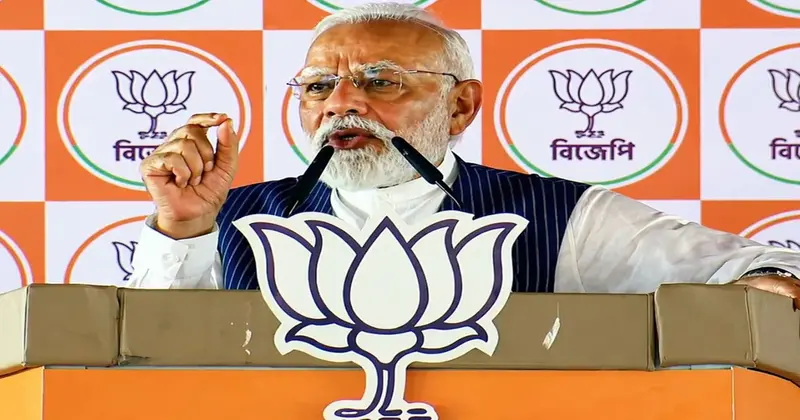
The recent appeal by Prime Minister Narendra Modi, urging citizens to reduce unnecessary gold purchases, minimise excessive petrol and diesel consumption, and promote greater adoption of EVs, is being criticised by opposition parties as a sign of economic weakness or governance failure. However, a deeper geopolitical and economic analysis reveals that this call is not rooted in panic, but in strategic foresight and responsible leadership during uncertain global times.
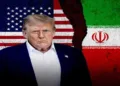
The world today stands at a dangerous crossroads. The growing tensions between the United States and Iran in the Gulf region, particularly around the strategically vital Strait of Hormuz, have once again exposed the vulnerability of the global economy. Nearly 20 per cent of the world’s crude oil supply passes through the Strait of Hormuz. Any disruption in this narrow maritime route can immediately send global oil prices soaring, disrupt supply chains, increase inflation, and trigger economic uncertainty across nations dependent on imported fuel, including India.
India imports nearly 85 per cent of its crude oil requirement. A sudden spike in oil prices affects transportation, agriculture, manufacturing, aviation, logistics, and eventually the common household. Petrol and diesel are not merely fuels; they are the lifeblood of economic activity. Therefore, PM Modi’s appeal is not an emotional slogan but a practical economic safeguard aimed at reducing pressure on national reserves during a potentially volatile period.
Similarly, India is one of the world’s largest consumers of gold. Indians purchase around 700–900 tonnes of gold annually, much of it through imports. Gold imports directly impact India’s current account deficit and foreign exchange reserves. During periods of geopolitical instability, gold prices rise sharply due to global panic buying. Excessive gold imports during such times can weaken the rupee and increase economic stress.
Interestingly, the very opposition criticising this appeal today conveniently forgets history. During the late 1960’s, in the tenure of Congress rule, there were strict Gold Control regulations implemented. Former Finance Minister P. Chidambaram had also advised restraint in gold buying during the UPA-2 era to control economic imbalance, while there was no looming global conflict comparable to the present Gulf tensions.
What makes the current situation more serious is the possibility of disruption in global shipping routes due to the Iran-US conflict. If the Strait of Hormuz faces blockade or military escalation, oil-exporting nations in the Gulf could face export difficulties. Insurance costs for shipping would rise. Freight rates would increase. Fuel shortages could emerge in vulnerable economies. Gold, diamonds, electronics, fertilisers, and industrial goods may all see price surges.
India, however, is far better prepared today than it was a decade ago
Under PM Modi’s leadership, India has diversified its energy procurement sources significantly. India now imports discounted crude oil from Russia and has strengthened partnerships with nations in Africa, Latin America, and the Caribbean, including Trinidad and Tobago and resource-rich African nations like Sierra Leone. India has also expanded its strategic petroleum reserves and accelerated renewable energy initiatives.
At the same time, India has strategically strengthened alternative trade and logistics corridors to reduce overdependence on vulnerable maritime choke points. India’s growing engagement with Greece and access to major Mediterranean ports, combined with connectivity through Saudi Arabia and the India–Middle East–Europe Economic Corridor (IMEC), is part of a larger long-term geopolitical vision. This corridor is designed not merely for trade expansion, but also as a strategic fallback mechanism if instability affects traditional Gulf shipping routes like the Strait of Hormuz.
The development of logistics connectivity linking India to Europe through the Arabian Peninsula and Mediterranean region demonstrates how India is quietly preparing contingency alternatives in advance. In the event of any catastrophic disruption in Hormuz, these alternate corridors could help maintain trade flows, energy partnerships, and supply-chain continuity with Europe and the West. Such moves reflect strategic statecraft and long-term planning rather than reactive governance.
The government’s strong push for EV adoption, ethanol blending, solar energy, green hydrogen, and domestic manufacturing through initiatives like “Make in India” and PLI schemes is now proving visionary. India’s EV market has grown rapidly in recent years, reducing long-term dependence on imported fossil fuels. Ethanol blending in petrol has crossed 20% targets in several regions, saving billions in foreign exchange.
Critics often misunderstand the difference between “preparedness” and “panic.” A wise government prepares before a crisis fully unfolds. PM Modi’s message reflects precisely that principle. In Indian culture, restraint during uncertainty is considered wisdom, not weakness.
There is a beautiful Odia saying: “ହାତେ ମାପି ଚାଖଣ୍ଡେ ଚାଲ” (Hatey Maapi Chakhande Chala) — meaning “Look Before You Leap”. It symbolises prudent living and disciplined resource management during uncertain times.
This philosophy is deeply relevant today
The COVID-19 pandemic already demonstrated how proactive leadership can save a nation from catastrophe. When PM Modi called for discipline, lockdowns, social distancing, “Janata Curfew,” and vaccination drives, many political opponents mocked those measures. Yet India emerged from the pandemic far stronger than many advanced economies. Despite having one of the world’s largest populations, India managed rapid vaccine production, free food distribution to millions, and economic recovery on a remarkable scale.
Today, India is among the fastest-growing major economies in the world. Global institutions such as the IMF and World Bank have repeatedly highlighted India’s resilience amid global slowdowns. This did not happen accidentally. It was achieved through a combination of disciplined governance, strategic planning, infrastructure expansion, digital reforms, and public participation. The Prime Minister’s current clarion call should therefore be viewed in the same spirit — as preventive national responsibility rather than restrictive economic advice.
A temporary reduction in luxury consumption or unnecessary fuel expenditure is not a sacrifice without purpose. It is strategic national cooperation. If millions of Indians reduce avoidable consumption even marginally, the cumulative national savings can be enormous. Reduced fuel dependency lowers import bills, stabilises inflation, protects the rupee, and strengthens economic resilience during global instability.
Moreover, such measures encourage long-term behavioural shifts toward sustainability. Increased EV adoption reduces pollution. Controlled consumption encourages savings and financial discipline. Reduced dependence on imported commodities strengthens India’s economic sovereignty.
History repeatedly shows that nations which act early during global crises emerge stronger afterwards. Nations that ignore warning signs suffer severe economic shocks later.
PM Modi’s message is therefore not merely about gold or petrol. It is about preparing India psychologically and economically for uncertain global conditions while ensuring that the country remains stable, self-reliant, and future-ready.
A small “त्याग (Sacrifice)” today can indeed secure a stronger tomorrow. In times of global uncertainty, responsible leadership is not about offering comforting illusions; it is about preparing citizens with honesty, discipline, and vision. And that is precisely what India is witnessing today.