Bhubaneswar: Odisha is set to undertake an ambitious redevelopment of the historic Khandagiri and Udayagiri twin hills, with the state government considering a comprehensive proposal to transform the iconic heritage site into a world-class tourism and cultural destination.
The proposed project, estimated at nearly Rs 100 crore, has been recommended by the Departmentally Related Standing Committee and is currently under examination by the Odisha Tourism Department, which has already prepared a detailed blueprint for the large-scale makeover.
At the heart of the proposal is the installation of a grand statue of legendary Kalinga emperor Mahameghavahana Aira Kharavela, aimed at honouring Odisha’s glorious historical and cultural legacy. Officials said the proposed monument is envisioned as a landmark attraction that would further strengthen the identity of the historic cave complex and promote Odisha’s ancient heritage at the national and international levels.
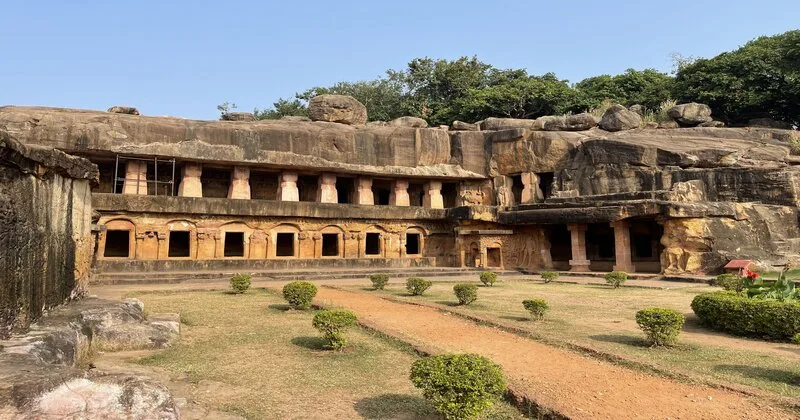
Khandagiri and Udayagiri, located on the outskirts of Bhubaneswar, are among Odisha’s most significant archaeological treasures. The twin hills are globally known for their ancient Jain caves, inscriptions, and historical association with Emperor Kharavela, whose reign is considered a defining chapter in the history of ancient Kalinga.
Under the proposed plan, the heritage complex will be developed as a “complete tourism destination” with modern infrastructure while maintaining its archaeological and historical significance.
Major Tourism Infrastructure and Beautification Planned
According to officials, the redevelopment proposal includes extensive beautification of the eastern side and foothill areas of Khandagiri. Visitor-friendly facilities such as landscaped walking parks stretching from the foothills to the hilltop, decorative illumination systems, and musical fountain installations have been proposed to enhance the overall tourist experience.
The plan also includes construction of an open-air amphitheatre and an interpretation centre aimed at promoting cultural activities, educational tourism, and awareness about Odisha’s rich historical traditions. Modern lighting systems are expected to improve both aesthetics and safety at the site, especially during evening hours.
Special emphasis has also been placed on accessibility and inclusive tourism. Authorities are considering installation of ramps and lift facilities to assist elderly visitors and differently-abled tourists in comfortably accessing the hilltop caves and surrounding areas.
In a significant move aimed at protecting the heritage value of the site, the committee has proposed permanent closure of the existing road passing between the two hills. Instead, a dedicated and regulated entry route may be developed to minimise structural and environmental impact on the ancient monuments while ensuring smoother tourist movement.
Officials said the proposal remains at the recommendation stage, and multiple aspects are currently being examined, including land acquisition requirements, financial planning, environmental clearances, and coordination with the Archaeological Survey of India (ASI).
The Tourism Department has sought Action Taken Reports from concerned departments and agencies regarding the feasibility and implementation of the proposed works. Authorities have been directed to submit detailed reports by the end of May 2026, after which the state government is expected to take a final decision on the project.
If approved, the redevelopment of Khandagiri and Udayagiri is expected to emerge as one of Odisha’s most significant heritage tourism initiatives in recent years, giving renewed prominence to the legacy of Emperor Kharavela while positioning the historic cave complex as a major global cultural destination.