Uttar Pradesh (UP), India’s most populous state, has undergone a remarkable transformation in its power sector over the past eight years. From severe shortages and unreliable supply in 2016–17 to near round-the-clock electricity availability today, the improvement in power infrastructure has become a cornerstone of the state’s economic resurgence.
In 2016–17, the peak power demand in Uttar Pradesh was approximately 16,000 MW. Even this demand could not be fully met, resulting in frequent outages across urban and rural areas. Rural regions often received barely 10–12 hours of electricity, while industries struggled due to unpredictable supply. This constrained economic growth and affected agricultural productivity.
By 2024–25, the state’s peak load demand has doubled to approximately 32,000 MW — reflecting rapid industrialization, urbanization, rural electrification, and rising household consumption. Unlike in 2016–17, Uttar Pradesh is now able to meet this demand. Most districts receive around 22 hours of electricity daily, with urban centers nearing 24-hour supply. This stability has significantly improved investor confidence, industrial output, and overall quality of life.
The improvement in law and order has played a crucial role in strengthening the power sector. Better governance, reduction in power theft, improved bill recovery, modernization of substations, and strengthening of transmission lines have reduced technical and commercial losses. These structural reforms have ensured financial stability for power distribution companies (DISCOMs).
Renewable energy has become central to Uttar Pradesh’s long-term energy security. The Uttar Pradesh Solar Energy Policy 2022 aims to position the state as a leading solar energy hub. The policy promotes utility-scale solar parks, rooftop solar systems, solarization of government buildings, and decentralized generation. Incentives such as capital subsidies, stamp duty exemptions, and transmission charge waivers are attracting private investment. The state is also encouraging hybrid renewable projects combining solar and storage solutions. Through this Policy , more than 10000 MW Solar Power is expected to be added to grid by 2027.
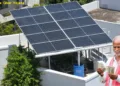
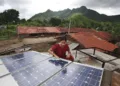
The implementation of the Pradhan Mantri Kisan Urja Suraksha evam Utthaan Mahabhiyan (PM-KUSUM) has further strengthened renewable energy penetration in rural areas. Under this scheme, farmers are being supported to install standalone solar pumps and grid-connected solar plants. Solarisation of agricultural feeders ensures reliable daytime power for irrigation, reducing dependence on diesel and lowering input costs. This initiative is directly contributing to increased farm productivity and rural income stability. In addition, the PM Surya Ghar: Muft Bijli Yojana (PM Free Bijlee Yojana) is accelerating rooftop solar adoption in households. The scheme provides substantial subsidies to encourage residential solar installations, enabling families to generate their own power and reduce electricity bills. Uttar Pradesh has prepared district-level implementation plans, simplified net-metering procedures, and strengthened coordination between DISCOMs and solar vendors to ensure smooth rollout.
The state budget has made a significant provision for solarizing 50 lakh (5 million) agricultural pumps in a phased manner. This ambitious plan will dramatically reduce the subsidy burden on conventional electricity, promote clean energy, and ensure reliable irrigation. The implementation strategy includes centralized procurement, cluster-based installation, financial assistance through subsidies and soft loans, and monitoring through digital dashboards.
As Uttar Pradesh aims to become a one trillion-dollar economy by 2029–30, peak load demand is expected to rise to 40,000–45,000 MW or beyond. To meet this requirement, the state is undertaking the following measures:
1. Expansion of thermal and renewable generation capacity.
2. Development of ultra-mega solar parks and hybrid projects.
3. Strengthening transmission corridors and smart grids.
4. Large-scale solarization of agricultural pumps.
5. Promotion of rooftop solar under PM Surya Ghar Yojana.
6. Energy efficiency and demand-side management programs.
In conclusion, Uttar Pradesh’s journey from power deficit to energy security reflects strong governance, renewable focus, and structured implementation of central and state schemes. Reliable electricity, combined with improved law and order, is positioning the state firmly on the path of sustained economic growth and its trillion-dollar aspiration by 2030.