 On April 22, Pakistan sponsored terrorist outfit The Resistance Front (TRF), an offshoot of Lashkar-E-Taiba (LeT) perpetrated a heinous terror attack in Baisaran valley, Pahalgam in Jammu & Kashmir in which 26 innocent tourists were killed in cold blood after segregating them based on their religion. Post the attack, TRF claimed responsibility for this attack not once but twice within a few hours.
India’s Response
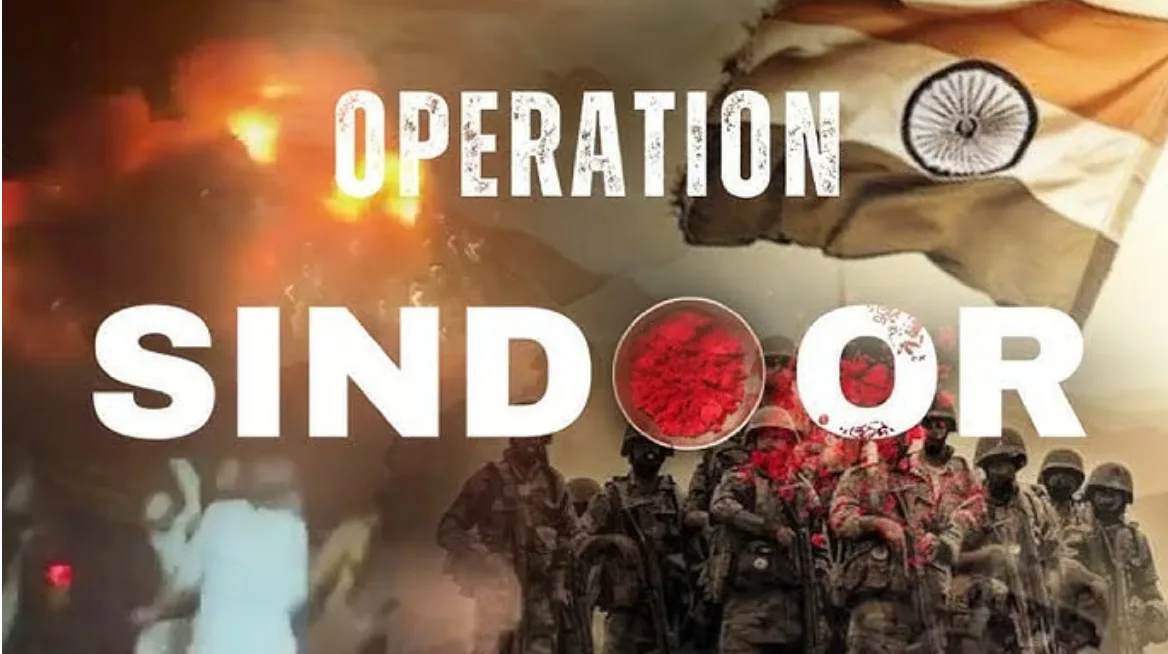
In response, on the night of 6–7 May 2025, the Government of India executed “Operation Sindoor,”. The response was non escalatory, precise and targeting terror camps at nine different locations within Pakistan and Pakistan Occupied Jammu Kashmir (POJK). During Operation Sindoor, no military installation & civilian areas of Pakistan were engaged by the Indian security forces because it was aimed at counter-terror objectives to neutralise the terrorist infrastructure.
The Claim of Victory
On May 10, 2025, Pakistan’s Director General of Military Operations (DGMO) initiated a call to the Indian DGMO at 15:35 IST, resulting in an agreed ceasefire to stop all cross-border firing and military operations (land, air, sea) effective 17:00 IST, following intense escalations and India’s “Operation Sindoor”.
On the other hand, Pakistan’s military media wing ISPR (Inter-Services Public Relations) & its affiliated social media teams & their diaspora outside Pakistan portrayed the ceasefire as a position of strength, even framing it as its victory celebrated as Youm-E-Tashakur (Day of Gratitude), propagating a narrative of resilience & victory among Pakistani awaam. The speed and scale of these narratives by ISPR indicate a coordinated effort to shape perception management rather than purely reflect facts.
The pattern of competing narrative is not new. A similar pattern can be seen in the Bangladesh liberation war in 1971, which led to the creation of a new nation from what was then East Pakistan. In Pakistan’s official discourse till now, the events of 1971 war were often framed as the result of external interference by India, rather than its internal political, social & military failures. Pakistani school curriculum & its state narrative emphasized Indian involvement ignoring the grievances in East Pakistan, including the political alienation in 1970 elections and widespread human rights violations during military operations.
What Actually Happened
During Operation Sindoor, Indian security forces successfully destroyed nine major terror camps & their launchpads in Pakistan and Pakistan-occupied Jammu and Kashmir (PoJK), targeting Lashkar-e-Taiba (LeT), Jaish-e-Mohammed (JeM) and Hizbul Mujahideen (HM) in which over 100 terrorists were killed in action. Several high-profile terrorists on India’s most wanted list were neutralized in a single night i.e.,Yusuf Azhar, Abdul Malik Rauf, Mudassir Ahmad. These individuals were linked to the IC-814 hijack (1999) and Pulwama terror (2019) attack also. However, Pakistani Armed Forces retaliated with a barrage of drones and missiles targeting Indian military and civilian infrastructure. The whole episode quickly turned into an escalatory spiral. In the meanwhile, India redefined the rules of engagement, striking deep into Pakistan’s heartland, including Punjab province which was once considered out of bounds even for USA drones. India made it clear that neither the LoC nor Pakistani territory will remain untouched if terror originates from there on India soil.
During the escalation phase of the conflict on 9–10 May 2025, Indian strikes expanded beyond terror infrastructure to include Pakistani military airbases, as corroborated by satellite imagery, open-source intelligence, and limited Pakistani admissions. The most clearly confirmed target was Nur Khan Airbase, where commercial satellite imagery revealed visible structural damage to hangars and support facilities, and Pakistan’s Prime Minister Shehbaz Sharif publicly acknowledged that the base had been struck. Additional corroboration emerged for PAF Base Murid, where imagery showed impact craters near sensitive installations, suggesting targeting of UAV or operational infrastructure. PAF Base Rafiqui was also reported as targeted in multiple strike assessments, although confirmation remains less definitive. Broader satellite-based analyses by international observers further indicated damage across several Pakistani airfields, reinforcing the assessment that India conducted coordinated counter-force strikes aimed at degrading Pakistan Air Force operational capability, marking a significant escalation from the initial counter-terror phase.
Contradictions and Gaps
Pakistan’s claim of victory reveals multiple contradictions when examined against observable events and available evidence. The most immediate inconsistency lies in the fact that the ceasefire was initiated through a call by Pakistan’s DGMO, which indicates a desire to halt escalation rather than the posture of a side in a position of dominance. This is further reinforced by reports that Pakistan reached out to external actors, including the United States and Saudi Arabia, seeking diplomatic intervention, which again suggests concern over the trajectory of the conflict rather than strategic confidence.
A more substantive gap emerges from the physical impact of the escalation phase. Despite official narratives projecting resilience and success, satellite imagery and independent analyses indicated that several Pakistani airbases, including Nur Khan Airbase, PAF Base Murid, and PAF Base Rafiqui, sustained varying degrees of damage. The acknowledgement by Prime Minister Shehbaz Sharif regarding the strike on Nur Khan further complicates the narrative of outright success. If key military installations were indeed hit and operational capabilities temporarily degraded, the framing of the outcome as a decisive victory becomes difficult to sustain.
Additionally, the speed and scale at which Pakistan’s information apparatus projected a victory narrative point toward a pre-emptive perception management strategy rather than a reflection of battlefield realities. This creates a clear gap between narrative construction and empirical evidence. Taken together, these contradictions highlight a pattern where strategic communication appears to prioritize domestic and psychological objectives, even when such narratives diverge from verifiable developments on the ground.
Why Narratives Matter
Narratives in modern conflict are central to shaping strategic outcomes, public perception, and long-term legitimacy. In the aftermath of kinetic operations such as Operation Sindoor, the contest increasingly shifts from the physical domain to the information and cognitive domains, where perception often competes with reality. Pakistan’s military media wing ISPR, along with its diaspora networks, has consistently demonstrated a high degree of coordination in constructing and disseminating state aligned narratives that frame events in a manner favourable to domestic morale and international positioning.
As the first anniversary of Operation Sindoor approaches, the reactivation of these narrative mechanisms through seminars, cultural events, and orchestrated campaigns such as the “Decade of Solidarity” in Pakistan occupied Jammu and Kashmir (PoJK) reflects a deliberate effort to institutionalize a version of events that portrays Pakistan as resilient and victorious. This effort serves multiple strategic purposes. It reinforces internal cohesion. It deflects scrutiny from military setbacks. It also seeks to influence international opinion in spaces where ambiguity still exists.
For India, the implications are significant. If such narratives remain uncontested, they can distort global understanding, weaken the legitimacy of counter terror actions, and create false equivalence between state sponsored terrorism and counter terror responses. Managing narratives is therefore not about propaganda. It is about ensuring factual clarity, strategic signaling, and preservation of deterrence credibility. In contemporary warfare, success is not defined only by targets destroyed. It is also defined by who shapes the story that endures.
Conclusion
India’s response to the Pahalgam terror attack through Operation Sindoor reflects a calibrated blend of strategic restraint and decisive action, grounded in both legal justification and moral clarity. By initially limiting strikes to terrorist infrastructure, India demonstrated adherence to principles of proportionality and responsible state behavior. The subsequent escalation phase, marked by precision strikes on Pakistani airbases, conveyed a clear doctrinal shift. Persistent cross border terrorism would invite cost imposition not only on non-state actors but also on enabling state structures. This dual phase approach highlights a broader transformation in India’s security posture. It reflects a move from reactive defence to proactive deterrence with escalation control. It redefined operational thresholds and expanded the geographical scope of response. It also conveyed that sanctuaries in Pakistan occupied territories as well as mainland Pakistan are no longer beyond reach.
At the same time, the post conflict narrative contest highlights a critical reality. Military outcomes alone do not define victory. The divergence between ground realities and propagated narratives underscores the importance of sustained strategic communication. Over time, history tends to favour evidence-based assessments rather than perception driven claims. In that context, Operation Sindoor is likely to be remembered as a moment where India demonstrated precision in execution and clarity in intent, thereby reshaping deterrence dynamics in the subcontinent.