World Bank’s MENAAP Pivot: Pakistan’s exit from South Asia
October 10, 2026
  • Read Ecopy
  • Circulation
  • Advertise
  • Careers
  • About Us
  • Contact Us
Android AppiPhone AppArattai
Organiser
  • ‌
  • Bharat
    • Assam
    • Bihar
    • Chhattisgarh
    • Jharkhand
    • Maharashtra
    • View All States
  • World
    • Asia
    • Europe
    • North America
    • South America
    • Africa
    • Australia
  • Editorial
  • International
  • Opinion
  • RSS @ 100
  • More
    • World Hindu Congress 2026
    • Op Sindoor
    • Analysis
    • Sports
    • Defence
    • Politics
    • Business
    • Economy
    • Culture
    • Special Report
    • Sci & Tech
    • Entertainment
    • G20
    • Azadi Ka Amrit Mahotsav
    • Vocal4Local
    • Web Stories
    • Education
    • Employment
    • Books
    • Interviews
    • Travel
    • Law
    • Health
    • Obituary
  • Subscribe
    • Subscribe Print Edition
    • Subscribe Ecopy
    • Read Ecopy
  • ‌
  • Bharat
    • Assam
    • Bihar
    • Chhattisgarh
    • Jharkhand
    • Maharashtra
    • View All States
  • World
    • Asia
    • Europe
    • North America
    • South America
    • Africa
    • Australia
  • Editorial
  • International
  • Opinion
  • RSS @ 100
  • More
    • World Hindu Congress 2026
    • Op Sindoor
    • Analysis
    • Sports
    • Defence
    • Politics
    • Business
    • Economy
    • Culture
    • Special Report
    • Sci & Tech
    • Entertainment
    • G20
    • Azadi Ka Amrit Mahotsav
    • Vocal4Local
    • Web Stories
    • Education
    • Employment
    • Books
    • Interviews
    • Travel
    • Law
    • Health
    • Obituary
  • Subscribe
    • Subscribe Print Edition
    • Subscribe Ecopy
    • Read Ecopy
Organiser
  • Home
  • Bharat
  • World
  • Operation Sindoor
  • Editorial
  • Analysis
  • Opinion
  • Culture
  • Defence
  • International Edition
  • RSS @ 100
  • Magazine
  • Read Ecopy
Home World

World Bank’s MENAAP Pivot: What Pakistan’s exit from South Asia signals for its economic and strategic sovereignty

Pakistan’s shift from South Asia to the World Bank’s new MENAAP bloc signals a major geopolitical and economic downgrade, placing the country alongside war-hit and debt-ridden West Asian states instead of fast-growing Asian economies. Far from being a mere technical reclassification, the move reshapes how Pakistan is viewed by investors, lenders and global institutions, with Islamabad now increasingly compared to crisis-ridden economies such as Egypt, Jordan and Tunisia rather than rising South Asian powers like India

Dr Vishnu AravindDr Vishnu Aravind
May 6, 2026, 04:00 pm IST
inWorld, South Asia, Asia, International Edition
Follow on Google News
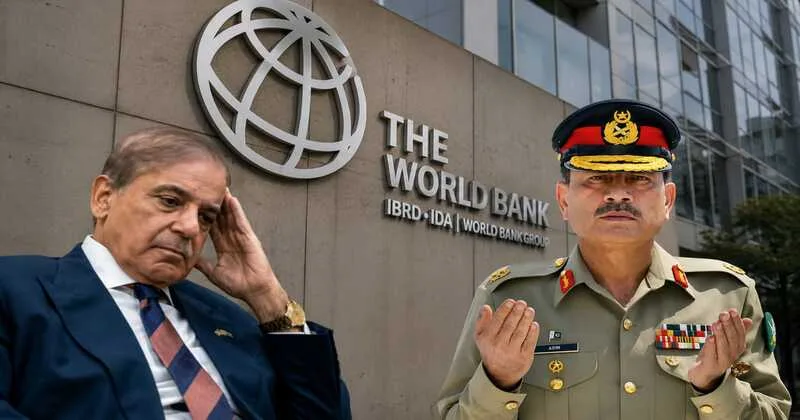
Pakistan’s shift from the world’s fastest-growing South Asian bloc to the World Bank’s MENAAP group reflects growing economic fragility, Gulf dependence and regional isolation

Pakistan’s shift from the world’s fastest-growing South Asian bloc to the World Bank’s MENAAP group reflects growing economic fragility, Gulf dependence and regional isolation

Facebook
Twitter
WhatsAppTelegramEmail

The decision by the World Bank to move Pakistan out of its South Asia category and place it in a newly created MENAAP grouping, Middle East and North Africa, Afghanistan and Pakistan, is being described officially as an administrative reclassification. Yet the implications go far beyond statistics. The move reflects how Pakistan is increasingly viewed not as part of the fast-growing South Asian economic story, but as a politically unstable and economically fragile state tied to the volatility of the Gulf and wider West Asia.

The change took effect in July last year and has now become more significant as Islamabad attempts to position itself as a mediator in the United States-Iran cease-fire talks. With those negotiations stalled, Pakistan has been exposed diplomatically as a country seeking relevance in crises it cannot shape, even while struggling with severe economic dependence and declining global standing at home. Until recently, Pakistan was assessed alongside South Asian economies growing at some of the fastest rates in the world. The World Bank’s April 2026 forecast projected South Asia to grow at 6.3 per cent, making it the strongest-performing emerging-market region globally. By contrast, the newly formed MENAAP region is expected to grow at only 1.8 per cent this year after a sharp 2.4 percentage-point downgrade linked directly to instability in West Asia and the war involving Iran.  For Pakistan, this is not merely a technical shift. It changes how the country is judged by investors, lenders, rating agencies and international institutions. A state once compared with rising economies such as Bangladesh and India will now increasingly be measured against debt-ridden and crisis-hit economies such as Egypt, Jordan and Tunisia.

From South Asian growth story to West Asian instability

Pakistan’s reclassification effectively removes it from the economic narrative of South Asia and embeds it within a region defined by geopolitical tensions, oil insecurity and economic stagnation. Every future World Bank country review, programme design and benchmark will now draw from MENAAP experiences rather than South Asian development models. This matters because the World Bank’s regional divisions are not symbolic. They shape lending frameworks, development priorities, donor coordination systems and investment perceptions. Pakistan’s $40 billion World Bank partnership running until 2035 will now operate inside a regional architecture heavily influenced by Gulf priorities and financing structures managed from Riyadh.

The shift also affects global financial perceptions. Pakistan currently holds sovereign ratings of B- from S&P Global and Fitch Ratings, while Moody’s ranks it at Caa1, deep in junk territory and several notches below investment grade.

Under the South Asia framework, Pakistan was seen as an underperformer within a rapidly growing region. Under MENAAP, however, it becomes part of a bloc already associated with economic distress, political uncertainty and dependence on external bailouts.

The comparison that international markets once made with Sri Lanka or Bangladesh is now likely to shift toward Egypt, another state surviving through IMF programmes, currency liberalisation measures and Gulf financial support. Analysts pricing Pakistan’s future Eurobonds are expected to use these new regional comparisons, potentially increasing borrowing costs by tens of millions of dollars over time.

Gulf dependence replaces regional integration

The World Bank’s decision also underlines how deeply Pakistan’s economy now depends on the Gulf rather than South Asia. In fiscal 2025, Pakistan received a record $38.3 billion in remittances, exceeding its approximately $32 billion in exports and massively overshadowing foreign direct investment, which stood at only $2.5 billion. Saudi Arabia and the United Arab Emirates alone contributed $17.2 billion in remittances, while the broader Gulf Cooperation Council accounted for $20.9 billion, more than half the total. In addition, Saudi and Emirati central-bank deposits continue to support Pakistan’s foreign-exchange reserves on a rolling basis.

These figures reveal a structural reality that Pakistan increasingly survives through external financial lifelines rather than domestic economic productivity. The long-delayed Pakistan-GCC free trade agreement now appears central to Islamabad’s economic future, further reducing the country’s integration with the South Asian economic space.

The World Bank itself acknowledged the scale of this transformation. According to a December 2025 data blog by four of the institution’s statisticians, Pakistan’s addition pushes MENAAP’s population from 519 million to 813 million, reduces per-capita GDP by over 30 per cent, and raises the region’s young-age dependency ratio by around 15 per cent.

Also Read: The Death of a Dying Dream: Communist ideology finally vanishes from the soul of the Indian mainstream

Far from strengthening Pakistan’s position, these numbers reinforce its image as a state bringing demographic pressure, low productivity and economic fragility into an already unstable regional bloc.

Diplomatic isolation and a new strategic identity

Pakistan’s inclusion in MENAAP also signals a broader diplomatic repositioning. The country is no longer being viewed primarily through the lens of South Asian development or Asian economic integration. Instead, it is increasingly associated with the security crises and political instability of West Asia. This carries major consequences. Future regional shocks, whether refinery attacks in the Gulf, Houthi missile strikes near shipping lanes or wider tensions around the Strait of Hormuz, will directly affect perceptions of Pakistan’s economic environment. For a country already operating under a $7 billion IMF Extended Fund Facility and facing repeated bailout cycles, such exposure creates additional uncertainty.

The comparison with the OECD’s admission of Mexico in 1994 is revealing. That move altered the identity of the organisation itself. Similarly, Pakistan’s entry into MENAAP changes the analytical framework of the World Bank’s West Asian region. Recent reports already examine Pakistan, Egypt and Jordan as a single cohort on issues such as female labour-force participation, something that would have been unlikely only a few years ago. Ultimately, the World Bank did not push Pakistan into West Asia so much as formally recognise where the country’s political and economic trajectory had already led it. Islamabad has traded association with one of the world’s fastest-growing regions for inclusion in a bloc shaped by war, debt crises and Gulf dependency. The shift exposes a state struggling to maintain economic sovereignty, dependent on remittances and external rescues, and increasingly defined internationally not by growth or regional leadership, but by instability and strategic vulnerability.


 

Topics: Gulf dependenceIMF bailout Pakistanregional reclassificationgeopolitical shift PakistanPakistanWorld Bank MENAAPSouth Asia exit
Dr Vishnu Aravind
Dr Vishnu Aravind
Dr Vishnu Aravind is a researcher, political commentator and writer based in New Delhi, with a PhD from Jawaharlal Nehru University (JNU). His areas of interest include international politics, Indian foreign policy, electoral politics, election analysis, political developments, and cultural affairs. [Read more]
Share
Tweet
SendShareSend
✮ Subscribe Organiser YouTube Channel. ✮
✮ Join Organiser's WhatsApp channel for Nationalist views beyond the news. ✮
Previous News

West Bengal Poll Results: Kolkata police cracks down on misinformation, urges public to maintain peace

Next News

Midnight Kidnapping in Raichur: Ishappa killed by Aslam & Hussain for questioning abduction of minor Hindu girl

Related News

Raghoo Puri, the Indian delegate at the UN

Indian delegate at UN Raghoo Puri mauls Pakistan over terrorism: Calls Shehbaz Govt as illegitimate ‘Form 47’ regime

Pakistan Denies NYT Report on PAF Jet Deployment Against Houthis in Saudi Arabia

Pakistan debunks NYT Report on PAF Jets used against Houthis attacking Saudi Arabia amid Makkah Defence Pact

Imran Khan at 74: From cricket glory to a prison cell, Pakistan’s decades-old Military dictatorship continues…

Choudhri obtained a Talaq divorce in Pakistan without Azhar’s knowledge; the Texas Supreme Court later rejected its recognition over lack of notice and due process

Secret Sharia Talaq Divorce in US: Texas Supreme court rejects divorce over lack of notice, upholds wife’s due process

Image courtesy- @IndiaCoastGuard

Drugs worth Rs 3,000 crore seized from Iranian boat in Arabian Sea; five Pakistanis detained

EAM Jaishankar reiterates that lack of empathy in US regarding India's cross-border terrorism concerns is an impediment to bilateral ties

EAM Jaishankar flags lack of empathy in US over India’s terrorism concerns as an impediment to bilateral relations

Load More

Latest News

Union Health Minister J P Nadda

Combatting Tuberculosis: JP Nadda launches JOSH teams under TB Mukt Bharat Abhiyaan to strengthen youth-led fight

Republicans and Democrats redraw maps across 10 US states in a battle for control of Congress in the 2026 midterms.

Delimitation in America: How gerrymandering across 10 states could reshape control of Congress in 2026 US midterms

(From Left To Right) Alexandra Leeper, Carolyn Hull, Ruth Schilling, Tom Pickerell, Anusha Kesarkar Gavankar Hem Kaur Saroya

Sagarmanthan 2026: Global experts call for systemic shift to drive women into top maritime leadership positions

DWWA President Mahalakshmi Subramani meets women trainees at NSG Training Academy

From Resilience to Leadership: DWWA President encourages women trainees at NSG academy to embrace ‘Mahila Shakti’

National Investigation Agency

Kishtwar Terror Attack Case: NIA chargesheets OGW Maneer Ahmed; Traces plot directly to Pakistan

Telangana Row: Journo Jalli Rekha Detained With Sick Infant Over Post on CM Revanth Reddy’s Daughter

Outrage as Hyderabad Police grill journalist with sick baby for hours over post on CM Revanth’s daughter’s business

Raghoo Puri, the Indian delegate at the UN

Indian delegate at UN Raghoo Puri mauls Pakistan over terrorism: Calls Shehbaz Govt as illegitimate ‘Form 47’ regime

Indian Knowledge Systems:Adding Ātma to Ātmanirbhar Bhārat

Tamil Nadu and Puducherry Bypolls: TVK wins 2 seats, Dharapuram and Madurantakam; NDA secures Thattanchavady

Five new projects were inaugurated and two major projects were announced at Gau-Vigyan Anusandhan Kendra, Gauteerth, Deolapar by Param Pujaniya Sarsanghchalak Dr. Mohan Bhagwat Ji

Gau-mata is not merely a matter of faith but deeply connected with rural life, environment and economy: Dr Bhagwat

Load More
  • Privacy
  • Terms
  • Cookie Policy
  • Refund and Cancellation
  • Delivery and Shipping

© Bharat Prakashan (Delhi) Limited.
Tech-enabled by Ananthapuri Technologies

  • Home
  • Search Organiser
  • Bharat
    • Assam
    • Bihar
    • Chhattisgarh
    • Jharkhand
    • Maharashtra
    • View All States
  • World
    • Asia
    • Africa
    • North America
    • South America
    • Europe
    • Australia
  • Editorial
  • Operation Sindoor
  • Opinion
  • Analysis
  • Defence
  • Culture
  • Sports
  • Business
  • RSS @ 100
  • Entertainment
  • More ..
    • Sci & Tech
    • Vocal4Local
    • Special Report
    • Education
    • Employment
    • Books
    • Interviews
    • Travel
    • Health
    • Politics
    • Law
    • Economy
    • Obituary
  • Subscribe Magazine
  • Read Ecopy
  • Advertise
  • Circulation
  • Careers
  • About Us
  • Contact Us
  • Policies & Terms
    • Privacy Policy
    • Cookie Policy
    • Refund and Cancellation
    • Terms of Use

© Bharat Prakashan (Delhi) Limited.
Tech-enabled by Ananthapuri Technologies