World Bank’s MENAAP Pivot: Pakistan’s exit from South Asia
June 21, 2026
  • Read Ecopy
  • Circulation
  • Advertise
  • Careers
  • About Us
  • Contact Us
Android AppiPhone AppArattai
Organiser
  • ‌
  • Bharat
    • Assam
    • Bihar
    • Chhattisgarh
    • Jharkhand
    • Maharashtra
    • View All States
  • World
    • Asia
    • Europe
    • North America
    • South America
    • Africa
    • Australia
  • Editorial
  • International
  • Opinion
  • RSS @ 100
  • More
    • Op Sindoor
    • Analysis
    • Sports
    • Defence
    • Politics
    • Business
    • Economy
    • Culture
    • Special Report
    • Sci & Tech
    • Entertainment
    • G20
    • Azadi Ka Amrit Mahotsav
    • Vocal4Local
    • Web Stories
    • Education
    • Employment
    • Books
    • Interviews
    • Travel
    • Law
    • Health
    • Obituary
  • Subscribe
    • Subscribe Print Edition
    • Subscribe Ecopy
    • Read Ecopy
  • ‌
  • Bharat
    • Assam
    • Bihar
    • Chhattisgarh
    • Jharkhand
    • Maharashtra
    • View All States
  • World
    • Asia
    • Europe
    • North America
    • South America
    • Africa
    • Australia
  • Editorial
  • International
  • Opinion
  • RSS @ 100
  • More
    • Op Sindoor
    • Analysis
    • Sports
    • Defence
    • Politics
    • Business
    • Economy
    • Culture
    • Special Report
    • Sci & Tech
    • Entertainment
    • G20
    • Azadi Ka Amrit Mahotsav
    • Vocal4Local
    • Web Stories
    • Education
    • Employment
    • Books
    • Interviews
    • Travel
    • Law
    • Health
    • Obituary
  • Subscribe
    • Subscribe Print Edition
    • Subscribe Ecopy
    • Read Ecopy
Organiser
  • Home
  • Bharat
  • World
  • Operation Sindoor
  • Editorial
  • Analysis
  • Opinion
  • Culture
  • Defence
  • International Edition
  • RSS @ 100
  • Magazine
  • Read Ecopy
Home World

World Bank’s MENAAP Pivot: What Pakistan’s exit from South Asia signals for its economic and strategic sovereignty

Pakistan’s shift from South Asia to the World Bank’s new MENAAP bloc signals a major geopolitical and economic downgrade, placing the country alongside war-hit and debt-ridden West Asian states instead of fast-growing Asian economies. Far from being a mere technical reclassification, the move reshapes how Pakistan is viewed by investors, lenders and global institutions, with Islamabad now increasingly compared to crisis-ridden economies such as Egypt, Jordan and Tunisia rather than rising South Asian powers like India

Dr Vishnu AravindDr Vishnu Aravind
May 6, 2026, 04:00 pm IST
in World, South Asia, Asia, International Edition
Follow on Google News
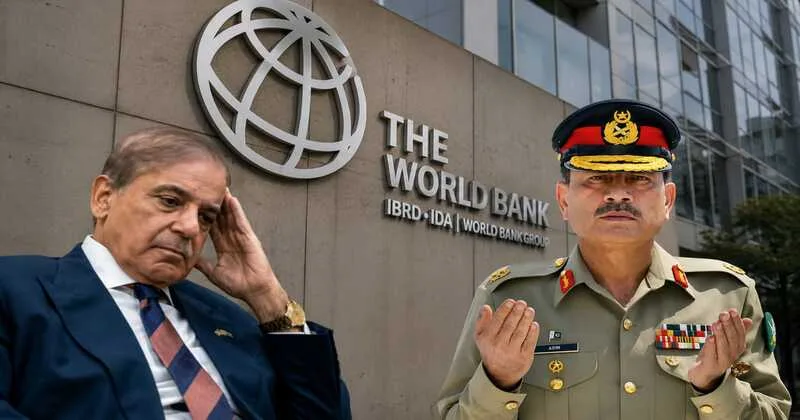
Pakistan’s shift from the world’s fastest-growing South Asian bloc to the World Bank’s MENAAP group reflects growing economic fragility, Gulf dependence and regional isolation

Pakistan’s shift from the world’s fastest-growing South Asian bloc to the World Bank’s MENAAP group reflects growing economic fragility, Gulf dependence and regional isolation

FacebookTwitterWhatsAppTelegramEmail

The decision by the World Bank to move Pakistan out of its South Asia category and place it in a newly created MENAAP grouping, Middle East and North Africa, Afghanistan and Pakistan, is being described officially as an administrative reclassification. Yet the implications go far beyond statistics. The move reflects how Pakistan is increasingly viewed not as part of the fast-growing South Asian economic story, but as a politically unstable and economically fragile state tied to the volatility of the Gulf and wider West Asia.

The change took effect in July last year and has now become more significant as Islamabad attempts to position itself as a mediator in the United States-Iran cease-fire talks. With those negotiations stalled, Pakistan has been exposed diplomatically as a country seeking relevance in crises it cannot shape, even while struggling with severe economic dependence and declining global standing at home. Until recently, Pakistan was assessed alongside South Asian economies growing at some of the fastest rates in the world. The World Bank’s April 2026 forecast projected South Asia to grow at 6.3 per cent, making it the strongest-performing emerging-market region globally. By contrast, the newly formed MENAAP region is expected to grow at only 1.8 per cent this year after a sharp 2.4 percentage-point downgrade linked directly to instability in West Asia and the war involving Iran.  For Pakistan, this is not merely a technical shift. It changes how the country is judged by investors, lenders, rating agencies and international institutions. A state once compared with rising economies such as Bangladesh and India will now increasingly be measured against debt-ridden and crisis-hit economies such as Egypt, Jordan and Tunisia.

From South Asian growth story to West Asian instability

Pakistan’s reclassification effectively removes it from the economic narrative of South Asia and embeds it within a region defined by geopolitical tensions, oil insecurity and economic stagnation. Every future World Bank country review, programme design and benchmark will now draw from MENAAP experiences rather than South Asian development models. This matters because the World Bank’s regional divisions are not symbolic. They shape lending frameworks, development priorities, donor coordination systems and investment perceptions. Pakistan’s $40 billion World Bank partnership running until 2035 will now operate inside a regional architecture heavily influenced by Gulf priorities and financing structures managed from Riyadh.

The shift also affects global financial perceptions. Pakistan currently holds sovereign ratings of B- from S&P Global and Fitch Ratings, while Moody’s ranks it at Caa1, deep in junk territory and several notches below investment grade.

Under the South Asia framework, Pakistan was seen as an underperformer within a rapidly growing region. Under MENAAP, however, it becomes part of a bloc already associated with economic distress, political uncertainty and dependence on external bailouts.

The comparison that international markets once made with Sri Lanka or Bangladesh is now likely to shift toward Egypt, another state surviving through IMF programmes, currency liberalisation measures and Gulf financial support. Analysts pricing Pakistan’s future Eurobonds are expected to use these new regional comparisons, potentially increasing borrowing costs by tens of millions of dollars over time.

Gulf dependence replaces regional integration

The World Bank’s decision also underlines how deeply Pakistan’s economy now depends on the Gulf rather than South Asia. In fiscal 2025, Pakistan received a record $38.3 billion in remittances, exceeding its approximately $32 billion in exports and massively overshadowing foreign direct investment, which stood at only $2.5 billion. Saudi Arabia and the United Arab Emirates alone contributed $17.2 billion in remittances, while the broader Gulf Cooperation Council accounted for $20.9 billion, more than half the total. In addition, Saudi and Emirati central-bank deposits continue to support Pakistan’s foreign-exchange reserves on a rolling basis.

These figures reveal a structural reality that Pakistan increasingly survives through external financial lifelines rather than domestic economic productivity. The long-delayed Pakistan-GCC free trade agreement now appears central to Islamabad’s economic future, further reducing the country’s integration with the South Asian economic space.

The World Bank itself acknowledged the scale of this transformation. According to a December 2025 data blog by four of the institution’s statisticians, Pakistan’s addition pushes MENAAP’s population from 519 million to 813 million, reduces per-capita GDP by over 30 per cent, and raises the region’s young-age dependency ratio by around 15 per cent.

Also Read: The Death of a Dying Dream: Communist ideology finally vanishes from the soul of the Indian mainstream

Far from strengthening Pakistan’s position, these numbers reinforce its image as a state bringing demographic pressure, low productivity and economic fragility into an already unstable regional bloc.

Diplomatic isolation and a new strategic identity

Pakistan’s inclusion in MENAAP also signals a broader diplomatic repositioning. The country is no longer being viewed primarily through the lens of South Asian development or Asian economic integration. Instead, it is increasingly associated with the security crises and political instability of West Asia. This carries major consequences. Future regional shocks, whether refinery attacks in the Gulf, Houthi missile strikes near shipping lanes or wider tensions around the Strait of Hormuz, will directly affect perceptions of Pakistan’s economic environment. For a country already operating under a $7 billion IMF Extended Fund Facility and facing repeated bailout cycles, such exposure creates additional uncertainty.

The comparison with the OECD’s admission of Mexico in 1994 is revealing. That move altered the identity of the organisation itself. Similarly, Pakistan’s entry into MENAAP changes the analytical framework of the World Bank’s West Asian region. Recent reports already examine Pakistan, Egypt and Jordan as a single cohort on issues such as female labour-force participation, something that would have been unlikely only a few years ago. Ultimately, the World Bank did not push Pakistan into West Asia so much as formally recognise where the country’s political and economic trajectory had already led it. Islamabad has traded association with one of the world’s fastest-growing regions for inclusion in a bloc shaped by war, debt crises and Gulf dependency. The shift exposes a state struggling to maintain economic sovereignty, dependent on remittances and external rescues, and increasingly defined internationally not by growth or regional leadership, but by instability and strategic vulnerability.


 

Topics: World Bank MENAAPSouth Asia exitGulf dependenceIMF bailout Pakistanregional reclassificationgeopolitical shift PakistanPakistan
ShareTweetSendShareSend
✮ Subscribe Organiser YouTube Channel. ✮
✮ Join Organiser's WhatsApp channel for Nationalist views beyond the news. ✮
Previous News

West Bengal Poll Results: Kolkata police cracks down on misinformation, urges public to maintain peace

Next News

Midnight Kidnapping in Raichur: Ishappa killed by Aslam & Hussain for questioning abduction of minor Hindu girl

Related News

Illegally constructed mosque in Japan

The Threat of Islamisation: A Japanese case study

7 killed and 3 injured in a twin blast at Khyber Pakhtunkhwa

Pakistan: 7 killed, 3 injured in twin blasts in Wazir sub-division of Khyber Pakhtunkhwa

Government employess of Balochistan begin indefinite strike against Pakistan

Balochistan on Boil: Govt employees start indefinite strike against Pakistan; 400 LPG bowsers stranded in Tuftan

Prestige Denim Mills' $20 million project marks India's industrial entry into one of Africa's fastest-growing textile hubs

India enters Egypt’s textile battlefield, challenging Chinese, Turkish and Pakistani dominance in Africa

Elderly caretaker Sikh couple killed inside the Gurdwara in pakistan

Pakistan: Elderly caretaker Sikh couple shot dead inside gurdwara at Mardan in Khyber Pakhtunkhwa province

PoJK Protests: 2 JAAC activists killed, 8 injured in Rawalakot; Pakistani security forces crackdown on civilians

Load More

Latest News

Indian Navy performs yoga underwater

International Yoga Day: From Siachin to Indian Ocean, Dal Lake to Brahmaputra; India celebrated yoga in a unique way!

Rani Avantibai, Jhalkari Bai & Uda Devi: Uttar Pradesh is empowering its daughters with the memory of warrior-queens

Representative Image

Europe’s Supremacy: A manufactured narrative imposed via colonial power is counterd by India’s civilizational memory

The real question Kharge’s letter avoids: Where does Indian law require RSS to register? 

Yoga Day celebrations in Shanghai, China

International Yoga Day: Global celebrations echo the message of health, well-being and timeless ancient Indian wisdom

The Alchemy of Autarky: How India rewrote its economic destiny

Janjatiya Sanskriti Samagam at the Red Fort: A powerful celebration of India’s tribal heritage

Every rape victim of 2021 post-poll violence must come forward; govt is committed to deliver justice: Agnimitra Paul

FACT CHECK | Ajmer NEET Burqa Row: NTA permits religious attire; Student allowed post screening; Fake claims debunked

Rejuvenation of Yamuna is a cultural and national responsibility: Delhi CM Rekha Gupta

Load More
  • Privacy
  • Terms
  • Cookie Policy
  • Refund and Cancellation
  • Delivery and Shipping

© Bharat Prakashan (Delhi) Limited.
Tech-enabled by Ananthapuri Technologies

  • Home
  • Search Organiser
  • Bharat
    • Assam
    • Bihar
    • Chhattisgarh
    • Jharkhand
    • Maharashtra
    • View All States
  • World
    • Asia
    • Africa
    • North America
    • South America
    • Europe
    • Australia
  • Editorial
  • Operation Sindoor
  • Opinion
  • Analysis
  • Defence
  • Culture
  • Sports
  • Business
  • RSS @ 100
  • Entertainment
  • More ..
    • Sci & Tech
    • Vocal4Local
    • Special Report
    • Education
    • Employment
    • Books
    • Interviews
    • Travel
    • Health
    • Politics
    • Law
    • Economy
    • Obituary
  • Subscribe Magazine
  • Read Ecopy
  • Advertise
  • Circulation
  • Careers
  • About Us
  • Contact Us
  • Policies & Terms
    • Privacy Policy
    • Cookie Policy
    • Refund and Cancellation
    • Terms of Use

© Bharat Prakashan (Delhi) Limited.
Tech-enabled by Ananthapuri Technologies