Sabarimala Women Entry Case: “What good came from this PIL?”
September 20, 2026
  • Read Ecopy
  • Circulation
  • Advertise
  • Careers
  • About Us
  • Contact Us
Android AppiPhone AppArattai
Organiser
  • ‌
  • Bharat
    • Assam
    • Bihar
    • Chhattisgarh
    • Jharkhand
    • Maharashtra
    • View All States
  • World
    • Asia
    • Europe
    • North America
    • South America
    • Africa
    • Australia
  • Editorial
  • International
  • Opinion
  • RSS @ 100
  • More
    • World Hindu Congress 2026
    • Op Sindoor
    • Analysis
    • Sports
    • Defence
    • Politics
    • Business
    • Economy
    • Culture
    • Special Report
    • Sci & Tech
    • Entertainment
    • G20
    • Azadi Ka Amrit Mahotsav
    • Vocal4Local
    • Web Stories
    • Education
    • Employment
    • Books
    • Interviews
    • Travel
    • Law
    • Health
    • Obituary
  • Subscribe
    • Subscribe Print Edition
    • Subscribe Ecopy
    • Read Ecopy
  • ‌
  • Bharat
    • Assam
    • Bihar
    • Chhattisgarh
    • Jharkhand
    • Maharashtra
    • View All States
  • World
    • Asia
    • Europe
    • North America
    • South America
    • Africa
    • Australia
  • Editorial
  • International
  • Opinion
  • RSS @ 100
  • More
    • World Hindu Congress 2026
    • Op Sindoor
    • Analysis
    • Sports
    • Defence
    • Politics
    • Business
    • Economy
    • Culture
    • Special Report
    • Sci & Tech
    • Entertainment
    • G20
    • Azadi Ka Amrit Mahotsav
    • Vocal4Local
    • Web Stories
    • Education
    • Employment
    • Books
    • Interviews
    • Travel
    • Law
    • Health
    • Obituary
  • Subscribe
    • Subscribe Print Edition
    • Subscribe Ecopy
    • Read Ecopy
Organiser
  • Home
  • Bharat
  • World
  • Operation Sindoor
  • Editorial
  • Analysis
  • Opinion
  • Culture
  • Defence
  • International Edition
  • RSS @ 100
  • Magazine
  • Read Ecopy
Home Bharat

Sabarimala Case: “What good came from this PIL?” Supreme Court questions NGO over entry of women in the mandir

The Supreme Court sharply questioned the NGO behind the Sabarimala entry PIL, calling its filing process flawed and raising doubts about its intent and locus

Kirti PandeyKirti Pandey
May 6, 2026, 08:00 am IST
inBharat, Law, Kerala
Follow on Google News
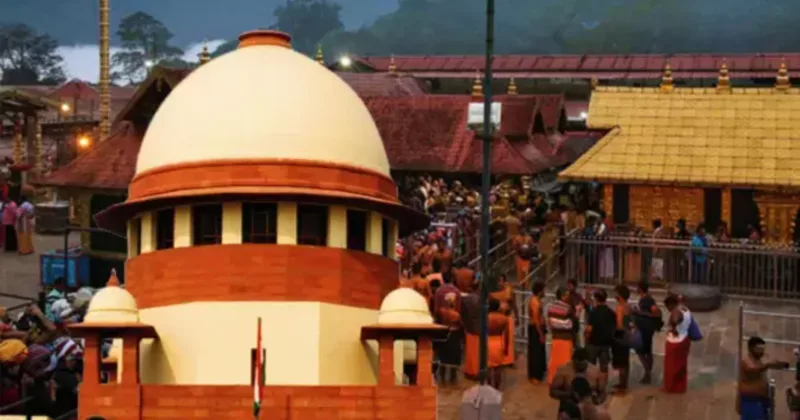
Supreme Court questions the relevance of PIL on Sabarimala Women's Entry Case

Supreme Court questions the relevance of PIL on Sabarimala Women's Entry Case

Facebook
Twitter
WhatsAppTelegramEmail

The Supreme Court of India raised serious concerns over the Public Interest Litigation filed by the Indian Young Lawyers’ Association seeking entry of women into the Sabarimala Temple, questioning both the intent and the manner in which the petition was instituted.

Bench Questions Purpose and Outcome of PIL

During the hearing – details of which have been reported by Live Law, the nine judge bench, including Justice BV Nagarathna, asked what the petition had ultimately achieved. The court questioned why the PIL was filed at all and whether any meaningful outcome had resulted from it.

Doubts Raised Over Locus of the Organisation

The bench asked how a juristic entity like the association could claim a right to worship. Judges repeatedly questioned whether the organisation was composed of genuine believers and whether it had any direct stake in the religious practices it sought to challenge.

Read More: West Bengal Post-Poll Violence 2026: BJP worker Jadhav Bor lynched to death in Howrah, family accuses TMC goons

Observations on Filing Process and Leadership

Referring to the then president Noushad Ali, Justice P. S. Sundresh remarked critically on the circumstances under which the PIL was filed. The petitioner’s counsel stated that Ali was only a nominal head and was not aware of the litigation, which further drew concern from the bench.

Petition Based on Media Reports

The counsel, Advocate Ravi Prakash Gupta, submitted that the petition was triggered by news reports suggesting that the temple was considered defiled after the entry of a woman. The plea challenged the restriction on women aged 10 to 50 entering the shrine, also citing earlier statements by temple authorities.

Court Criticises Reliance on News Items

The bench, led by Chief Justice Surya Kant, observed that a PIL based solely on newspaper reports should not have been entertained. The court remarked that such material should have been dismissed at the threshold.

No Resolution Seen as Abuse of Process

When asked whether the association had passed any formal resolution authorising the filing of the PIL, the counsel admitted he was unaware. The bench termed this a serious lapse, with Justice Sundresh calling it an abuse of the legal process.

Questions on Choice of Cause and Priorities

Justice Nagarathna also questioned why the organisation chose to pursue this issue instead of other welfare causes. She suggested that efforts could have been directed toward supporting legal professionals or disadvantaged communities.
Reference to Earlier Proceedings and Protection
The counsel pointed out that an earlier bench led by Dipak Misra had found merit in the case and referred it to a Constitution Bench. He added that the petitioners had faced threats and were granted police protection.

Court Suggests PIL Could Have Been Dismissed Earlier

The bench observed that such threats might have been avoided altogether if the PIL had not been entertained in the first place. It noted that dismissal at an early stage could have prevented escalation.

Concerns Over Non-Believers Challenging Religious Practices

Justice Nagarathna raised broader concerns about individuals without faith questioning established religious customs. She stressed that courts must be cautious in allowing challenges that may interfere with deeply held beliefs.

Debate on Constitutional and Religious Principles

The counsel argued that Hinduism, often described as Sanatana Dharma, is inherently inclusive and evolving. He cited Articles 25 and 26 of the Constitution to argue that the right to practice religion includes access to public religious institutions.

During the hearing, the lawyer’s claim linking Lord Ayyappa to Buddhism was not appreciated by the bench, which asked him to restrict arguments to legal issues relevant to the case.


How the Sabarimala Temple Dispute Reached the Supreme Court

The Sabarimala temple in Kerala, dedicated to Lord Ayyappa, has long followed a practice restricting the entry of women between the ages of 10 and 50. The custom is linked to the belief that the deity is a Naishtika Brahmachari (eternal celibate), and the pilgrimage itself involves strict observances, including a 41-day period of penance undertaken by devotees. Almost all devotees of Lord Ayyappa have found the rules perfectly acceptable and it was almost never a contentious issue as far as the followers of the Sanatan Hindu Dharma were concerned.

The issue entered the legal domain in 2006 when the Indian Young Lawyers’ Association filed a Public Interest Litigation before the Supreme Court of India, challenging the validity of the restriction. Over time, the case expanded into a wider constitutional debate on the balance between religious practices and fundamental rights.

In September 2018, a five-judge Constitution Bench led by then Chief Justice Dipak Misra delivered a split verdict, with a 4:1 majority holding that the exclusion of women in the specified age group was unconstitutional. One judge dissented, taking a different view on the scope of judicial intervention in matters of faith.

The judgment led to widespread protests and unrest in Kerala, particularly during the annual pilgrimage season. Attempts by women to enter the shrine became flashpoints, requiring police intervention and leading to a prolonged public and political standoff.

Subsequently, several review petitions were filed. In 2019, a Constitution Bench headed by then Chief Justice Ranjan Gogoi kept the review petitions pending while referring broader constitutional questions to a larger nine-judge bench. These questions relate to the extent of judicial review in religious matters, the concept of essential religious practices, and the interplay between individual rights and denominational freedoms.

The matter has since remained under consideration, with the court examining these larger issues that go beyond Sabarimala and may have implications for similar disputes involving religious customs and practices across communities.
Topics: Supreme CourtPILSabrimala CaseWomen entry Case
Share
Tweet
SendShareSend
✮ Subscribe Organiser YouTube Channel. ✮
✮ Join Organiser's WhatsApp channel for Nationalist views beyond the news. ✮
Previous News

West Bengal Post-poll violence 2026: BJP worker killed in Rajarhat-New Town, 6 party workers stabbed in Jalpaiguri

Next News

‘Maintain continuous patrolling’: CEC Gyanesh Kumar orders crackdown as post-poll violence rocks West Bengal

Related News

Tamil Nadu: SC gives TVK government 3 months to identify land for Navodaya schools, asks reconsider position on Hindi

Pinarayi Vijayan, former CM of Kerala (Left)

Keralam: RTI reveals Pinarayi Vijayan govt spent Rs 245.62 cr on litigations, Kapil Sibal among top beneficiaries

Registrar of Copyrights in India has rejected an application of computer scientist to make AI as an Author

DABUS loses copyright battle in India: Human author must be named; The tradition of Apūrvatā to Maulikatā

1993 Blasts Case: SC Rejects Abu Salem’s Release Plea

From 1993 Mumbai blasts to Portugal extradition: SC rejects Abu Salem’s bid for early release

Two Supreme Court cases have put India’s constitutional safeguards for tribal land, representation and self-governance under renewed scrutiny

Demography as a Weapon: The Supreme Court’s twin test on tribal protections

SC Backs Eviction from Tamil Nadu Temple Land

SC backs eviction from Tamil Nadu Temple land: Muslim occupants cannot claim rights through illegal sale

Load More

Latest News

BMS launches National Organisation for Digital Employees (NODE) for IT workforce; aims to strengthen employee welfare

GalaxEye’s US patent for OptoSAR marks a major boost for India’s private space sector, advancing its global Earth-observation ambitions

GalaxEye secures US patent for OptoSAR technology, boosting India’s private space and deep-tech ambitions

The arrested Bangladeshi national

Keralam: Series of Bangladeshi arrests raises questions over alleged support ecosystem of fake IDs, jobs and shelter

The Indian Army has launched AASHVAST to detect hidden software and electronic vulnerabilities in military drones

Indian Army strengthens drone security with AASHVAST lab to detect software vulnerabilities & Chinese components

Nileema Mishra’s grassroots work empowered women and helped transform more than 200 villages across Maharashtra

Nileema Mishra: The woman who transformed more than 200 villages across rural Maharashtra

Shree Stambheshwar Mahadev Mandir in Gujarat

Shiva Mandir that disappears into the sea and returns with the tide: The fascinating story of Stambheshwar Mahadev

Vishwa Hindu Parishad (VHP) spokesperson Surendra Jain (file photo0

VHP condemns Hamid Ansari over remarks citing Nehru on Hindu right-wing communalism

Ganesh murti visarjan incidents raise concerns over radical Islamic intolerance and law and order in Tamil Nadu

ABVP registers 3-0 win in Delhi University Students’ Union elections; wins president, secretary, joint secretary posts

Ganapati murti visarjan procession at T. Narasipura on September 18

Karnataka: Ganapati procession follows approved mosque route in T Narasipura amid allegations of police high-handedness

Load More
  • Privacy
  • Terms
  • Cookie Policy
  • Refund and Cancellation
  • Delivery and Shipping

© Bharat Prakashan (Delhi) Limited.
Tech-enabled by Ananthapuri Technologies

  • Home
  • Search Organiser
  • Bharat
    • Assam
    • Bihar
    • Chhattisgarh
    • Jharkhand
    • Maharashtra
    • View All States
  • World
    • Asia
    • Africa
    • North America
    • South America
    • Europe
    • Australia
  • Editorial
  • Operation Sindoor
  • Opinion
  • Analysis
  • Defence
  • Culture
  • Sports
  • Business
  • RSS @ 100
  • Entertainment
  • More ..
    • Sci & Tech
    • Vocal4Local
    • Special Report
    • Education
    • Employment
    • Books
    • Interviews
    • Travel
    • Health
    • Politics
    • Law
    • Economy
    • Obituary
  • Subscribe Magazine
  • Read Ecopy
  • Advertise
  • Circulation
  • Careers
  • About Us
  • Contact Us
  • Policies & Terms
    • Privacy Policy
    • Cookie Policy
    • Refund and Cancellation
    • Terms of Use

© Bharat Prakashan (Delhi) Limited.
Tech-enabled by Ananthapuri Technologies