
“I have visited a good deal of Europe, including Germany and France, but England and America were the chief centres of my work. At first, I found myself in a critical position, owing to the hostile attitude assumed against the people of this country by those who went there from India. I believe the Indian nation is by far the most moral and religious nation in the whole world, and it would be a blasphemy to compare the Hindus with any other nation. At first, many fell foul of me, manufactured huge lies against me by saying that I was a fraud, that I had a harem of wives and half a regiment of children. But my experience of these missionaries opened my eyes as to what they are capable of doing in the name of religion – Swami Vivekananda, The Missionary Work of the First Hindu Sannyasin to the West and His Plan of Regeneration of India, Madras Times, February, 1897
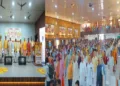
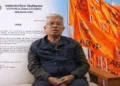
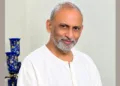
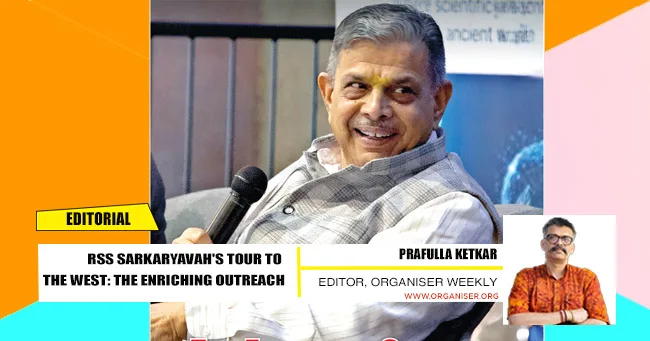
More than a century has passed; Bharat has been free for around eighty years from the colonial clutches; with the toil and genius of the Bharatiya mind, now the country has carved out its own place in the galaxy of nations. However, the Western world refuses to acknowledge and accept the rising Bharat with its civilisational roots. What Swami Vivekananda experienced in the 1890s has not changed in substance or attitude towards Bharat and Bharatiyas, though market compulsions have modified the strategies. The misconceptions and misperceptions about Bharat and the age-old Bharatiya civilisation persist, despite the potential to address many challenges arising from the Western model. Amidst this, Sarkaryavah of Rashtriya Swayamsevak Sangh, Shri Dattatreya Hosabale Ji’s visit to Europe and the United States of America and addressing audiences from different sections of society, was a significant outreach effort through dialogue.
Generally, when it comes to the Rashtriya Swayamsevak Sangh, a large section of the Western intelligentsia and policymakers are sceptical about Sangh owing to the questions and doubts fed by a Bharatiya liberal and Left-dominated media and academia over the decades. Hindu supremacist and anti-minority framework to understand RSS has not changed for them, even after a hundred years of journey of Sangh and its growing acceptance. At a prominent think tank like the Hudson Institute in Washington, DC, Sarkaryavah forthrightly answering all those questions and making the Sangh’s point of view clear was a remarkable step. Hindus see the entire world as one family, hence they can’t be supremacist. It is important to let the world know that RSS is a people’s movement rooted in civilisational ethos. As the Western world tried to understand Bharat on their parameters and their misperceptions about the Sangh, Bharat and the philosophical framework of Hindutva (Hinduness) persist. First time ever, Sangh leadership articulated the organisation’s grassroots work, from daily and weekly shakhas aimed at character-building, and discipline, and highlighted its valuable contribution in education, healthcare, rural development, environmental initiatives, and disaster relief across Bharat without any discrimination. Presenting the Sangh’s thought process as it is to the foreign audience seems to be one of the objectives of this engagement, which Sarkaryavah achieved to a large extent.
Even in his interactions with the premier European think tanks, business leaders, and public representatives, Dattatreya Hosabale Ji presented the RSS worldview and its importance amid the global turmoil. The futuristic vision to build sustainable societies at every level, from families to societies, grounded in shared universal values, found resonance across the board in the United Kingdom and Germany. The global challenges and uncertainties require a different approach to balance the environment and the economy; the uncertain, war-torn world needs a solution for peace that the traditional Western framework is unable to provide. Bharat, with its civilisational experience, can bring unique wisdom to address those problems. The Bharatiya diaspora, with civilisational roots and modern competence, can be a bridge-builder in this process. Dattatreya Hosabale Ji provided a fresh perspective in his engagement with community leaders and policymakers across continents.
The most engaging discussion took place on the sidelines of the Thrive 2026 conference, organised by the Global Science Innovation Forum at Stanford University. Dattatreya Ji’s point about ethics, ecology, and economy having a critical bearing on thinking about technological innovation and its impact on human life shaped the contours of the panel discussion and the following informal discussion. Bharat finds a common ground between science and spirituality. The West has a technology which is now deliberating on consciousness, and Bharat has civilisationally seen spirituality as science. Engagement on these issues can be enriching for both worlds.
Dialogue is the only way to understand each other, and Hindus believe in Shastrarth – the meaningful debate in search of truth. From the Sangh side, the General Secretary himself engaging in this process and presenting the Bharatiya worldview, opens up a new window for developing people-to-people level understanding that goes beyond the diplomatic and strategic considerations.