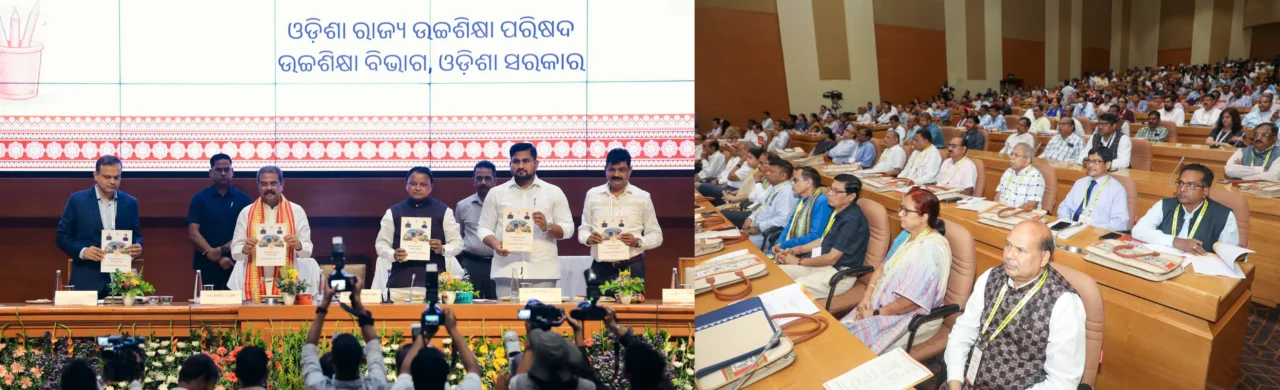
Bhubaneswar: A two-day brainstorming programme titled ‘Pragya Prerna’ was inaugurated at the Convention Centre of Lok Seva Bhavan in Bhubaneswar to discuss the effective implementation of the National Education Policy (NEP)-2020 in Odisha and to advance the state’s vision of becoming a “Knowledge Capital.” The event brought together educationists from across Odisha as well as from other parts of India. Chief Minister Mohan Charan Majhi and Union Education Minister Dharmendra Pradhan were present at the inaugural session.
In his address at the opening ceremony, Chief Minister Mohan Charan Majhi called for a “transformational change” in Odisha’s education system.
NEP-2020: A Mission to Make India a Global Knowledge Power
The Chief Minister stated that eliminating long-standing stagnation in the education sector is a top priority of his government. He said that the National Education Policy (NEP)-2020, implemented under the guidance of Prime Minister Narendra Modi, is not merely a policy document but a historic mission to position India as the “Knowledge Capital” of the world.
He emphasized that education is not limited to textbook learning but is the foundation of human civilizational progress. The government is committed to ensuring that students in the state become industry-ready and are capable of competing at the global level.
Education: Top Priority of the State Government
The Chief Minister informed that a massive allocation of ₹41,273 crore has been made for the education sector in the financial year 2025–26. This investment will lay a strong foundation for the bright future of Odisha’s youth and strengthen the state’s education infrastructure to global standards.
To bridge the gap between rural and urban education, the government has launched the ‘Godabarish Mishra Adarsha Vidyalaya’ scheme. Under this initiative, ₹12,000 crore will be invested to establish one modern school in each of the 6,794 gram panchayats across the state. These schools will be equipped with urban-level facilities such as advanced classrooms, laboratories, and sports infrastructure.
ଆଜି ଜାତୀୟ ଶିକ୍ଷା ନୀତି-୨୦୨୦ ଉପରେ ଆୟୋଜିତ ଜାତୀୟ ସ୍ତରୀୟ କର୍ମଶାଳାରେ ଯୋଗଦେଲି। ଏହି ଅବସରରେ ଦେଶର ବିଭିନ୍ନ ସ୍ଥାନରୁ ଆସିଥିବା ଶିକ୍ଷାବିତ, କୁଳପତି, ଅଧ୍ୟାପକ ଓ ଅଧ୍ୟାପିକାମାନଙ୍କ ସହ ଚର୍ଚ୍ଚା ଆଲୋଚନା କରିବାର ସୁଯୋଗ ମିଳିଲା। ‘Knowledge is Power’ ଏହି ମନ୍ତ୍ରକୁ ଆଧାର କରି ଜାତୀୟ ଶିକ୍ଷା ନୀତି-୨୦୨୦ ଭାରତର ଶିକ୍ଷା… pic.twitter.com/TRGIhjBWTh
— Mohan Charan Majhi (@MohanMOdisha) May 2, 2026
Emphasis on Social Justice and Equality
The government has introduced 11.25 per cent reservation for SEBC students in higher education to promote social equity. Additionally, to reduce dropout rates among Scheduled Tribe (ST) students, direct financial assistance is being provided under the ‘Shaheed Madho Singh Hat Kharcha Yojana’.
The Chief Minister stated that these initiatives will play a crucial role in bringing students from marginalized sections into the mainstream education system.
Focus on Mother Tongue and Digital Education
The Chief Minister further stated that the government is actively promoting education in the mother tongue to strengthen Odisha’s cultural identity on the global stage. A significant agreement has been signed with IGNOU to offer technical and higher education courses in the Odia language, enabling students to better understand complex subjects in their native language.
He added that these initiatives will collectively help transform Odisha into one of India’s leading knowledge-based societies in the future.
Odisha’s Educational Institutions Must Evolve into National Models Through Autonomy, Innovation, and Research: Dharmendra Pradhan
Union Education Minister Dharmendra Pradhan has stated that educational institutions in Odisha should not remain confined to traditional teaching methods, but must evolve into national models through autonomy, innovation, and research. He said that, in line with the National Education Policy (NEP), universities should adopt “best practices” that address local challenges while simultaneously strengthening the goals of a “Developed Odisha” and a “Developed India.”
Odisha: A Land of Knowledge and Culture
Describing Odisha as a “land of knowledge,” Pradhan said the state has been a guiding force for the world since ancient times. He noted that the Kalinga War was not merely a bloody conflict, but a landmark moment symbolizing the victory of humanity and the message of peace.
He added that Odisha has historically been a major centre of Indian culture, which spread from Sri Lanka to Southeast Asia. The state’s maritime trade traditions, agriculture, temple architecture, literature, and rich cultural heritage were all rooted in its ancient education system, making it a knowledge-driven society from early times.
He cited classical literary works such as Sarala Mahabharata, Chandi Purana, and Vilanka Ramayana as evidence of Odisha’s intellectual legacy.
ଆମର ଶିକ୍ଷା ବ୍ୟବସ୍ଥାରେ ସ୍ଥାନୀୟ ଇତିହାସ, ଗାଁ ମନ୍ଦିର ଏବଂ ଓଡ଼ିଶାର ଅଜ୍ଞାତ ନାୟକମାନଙ୍କ ବୀରତ୍ୱ ଗାଥାକୁ ସାମିଲ କରି ଛାତ୍ରଛାତ୍ରୀଙ୍କୁ ନିଜ ମାଟିର ଗୌରବ ବିଷୟରେ ଅବଗତ କରାଇବା ଅତ୍ୟନ୍ତ ଜରୁରୀ । ସନ୍ଥ କବି ଭୀମ ଭୋଇ, ଗୋପବନ୍ଧୁ ଦାସ, ଫକୀର ମୋହନ ସେନାପତି, କବିସମ୍ରାଟ ଉପେନ୍ଦ୍ର ଭଞ୍ଜ, ପଠାଣି ସାମନ୍ତ ଓ ଗଙ୍ଗାଧର ମେହେରଙ୍କ ଭଳି… pic.twitter.com/NvUMzcUSFy
— Dharmendra Pradhan (@dpradhanbjp) May 2, 2026
Contributions of Great Personalities
Pradhan highlighted the contributions of eminent personalities such as Pathani Samanta, Kabisamrat Upendra Bhanja, Fakir Mohan Senapati, and Swabhaba Kavi Gangadhar Meher, describing them as symbols of the intellectual excellence of Odia society.
He also noted that Guru Padmasambhava, the founder of the Vajrayana branch of Buddhism, was born in Odisha, from where the tradition spread to the Himalayas, Tibet, and Arunachal Pradesh.
He further emphasized that academic curricula should be designed keeping in mind Odisha’s 450-km-long coastline and mineral resources, so that education aligns with local needs and development priorities.
Universities as Centres of Thought and Ideas
The Union Minister said that universities should not merely be centres of “infrastructure development,” but should function as hubs of “idea and value creation.” He stressed the need to cultivate a creative academic culture by promoting sports, arts, skill-based education, and a spirit of service within campuses.
He added that such efforts are essential to secure the future of nearly 12.5 million youth in Odisha.
Emphasis on Local History and Mother Tongue
Pradhan stressed the importance of including local history, village temples, and the heroic tales of Odisha’s unsung heroes in the education system. He said the philosophical and scientific contributions of saints and scholars such as Bhima Bhoi, Gopabandhu Das, and Pathani Samanta should be integrated into academic curricula.
Reiterating the importance of the Odia language, he said that under the leadership of Prime Minister Narendra Modi, the education policy aims to free the system from colonial mindset and promote knowledge dissemination through Indian languages.
He also emphasized the need to integrate Odisha’s cultural identity, inspired by the Jagannath tradition, into the education system while balancing global responsibilities.
Focus on Digital Education and Globalization
Pradhan said that modern technology and digital platforms are essential to increase enrolment in higher education. Platforms such as SWAYAM and SWAYAM Prabha, along with AI-based content in the Odia language, can help deliver quality education to remote and underserved regions.
He also called for greater internationalization of education, stating that foreign languages and contemporary curricula should be introduced to prepare Odisha’s youth for global competition.