A fresh controversy has erupted in Uttar Pradesh after a video from a state-aided madrasa in Barabanki allegedly exposed a fraudulent attendance system that bypasses mandatory biometric verification. The incident has not only raised serious concerns about administrative lapses but has also triggered scrutiny from the National Human Rights Commission (NHRC), which has reportedly taken cognisance of the matter.
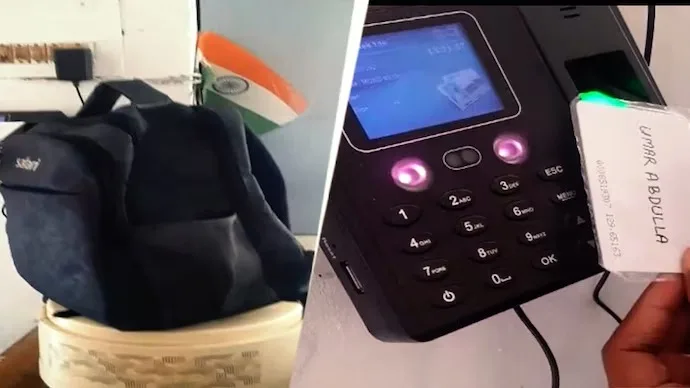
The video, accessed by media outlets, purportedly shows teachers’ attendance being marked using plastic cards instead of actual biometric authentication such as thumb impressions or facial recognition. In the footage, names of multiple teachers are seen written on plastic cards, which are then used to simulate attendance entries on the biometric device. The visuals suggest that attendance may have been marked even for teachers who were not physically present, raising the possibility of manipulation of official records.
🚨Madarsa Shocker: Fake teacher attendance exposed
Former NCPCR chief & NHRC member Priyank Kanoongo shared a video allegedly showing fake biometric attendance at a state-funded madrasa in Barabanki, UP.
He claims taxpayer money is being misused for ghost teachers, calling it… pic.twitter.com/FwjnCM3kIz
— Ramesh Tiwari (@rameshofficial0) April 30, 2026
How the fraud worked?
According to officials familiar with the system, biometric attendance is mandatory across all state-aided madrasas in Uttar Pradesh. The system is designed to ensure transparency and accountability, with attendance records being compiled at the district level by minority welfare officers. These records form the basis for salary disbursal to teaching and non-teaching staff.
However, the Barabanki case appears to reveal a glaring loophole. The biometric system in the madrasa was reportedly not linked to Aadhaar-based or real-time online authentication, making it vulnerable to misuse. Instead of capturing live biometric data, the system allegedly allowed manual inputs through plastic cards, effectively defeating its purpose.
The video further indicates that attendance was being marked centrally by a few individuals, potentially on behalf of absent staff members. If proven true, such manipulation could directly impact government funds, as salaries are processed based on these attendance records.
Madrasa identified, enquiry ordered
Reports have identified the institution in question as Islamia School located in Maila Reganj area of Barabanki. The madrasa reportedly employs around two dozen teachers and is equipped with biometric devices. Despite the presence of such infrastructure, the lack of strict monitoring and real-time verification appears to have enabled the alleged malpractice.
Following the emergence of the video, authorities have ordered a formal enquiry into the matter. Officials from the state’s minority welfare department have acknowledged the seriousness of the allegations and assured that appropriate action will be taken based on the findings.
UP Joint Director Son Kumar stated that biometric attendance is compulsory and subject to periodic checks. He added that district-level reports are prepared based on attendance data and used for salary disbursal. “The Barabanki case will be thoroughly investigated, and any irregularities found will be dealt with strictly,” he said.
Pattern of irregularities emerges
The Barabanki incident is not an isolated case. It comes shortly after a similar controversy in Jaunpur, where fake attendance was allegedly marked using thumb impressions of family members of a madrasa manager. That case is currently under investigation, and officials suspect that such practices may be more widespread than initially believed.
The recurrence of such incidents points towards systemic weaknesses in the implementation of biometric systems in educational institutions. While the technology itself is designed to eliminate human manipulation, inadequate safeguards and lack of integration with robust digital verification systems appear to be undermining its effectiveness.
The controversy has broader implications beyond a single institution. It raises questions about the integrity of attendance systems across state-aided madrasas and the effectiveness of oversight mechanisms put in place by authorities.
With government funds being directly linked to attendance records, any manipulation not only undermines administrative credibility but also results in potential financial irregularities. The involvement of the NHRC further underscores the seriousness of the issue, as it touches upon transparency, accountability, and proper utilisation of public resources.
Authorities have indicated that the outcome of the enquiry will determine the next course of action. If the allegations are substantiated, strict disciplinary measures, including suspension of staff and recovery of funds, may follow. There could also be a push for systemic reforms to plug existing loopholes and prevent recurrence of such incidents.