
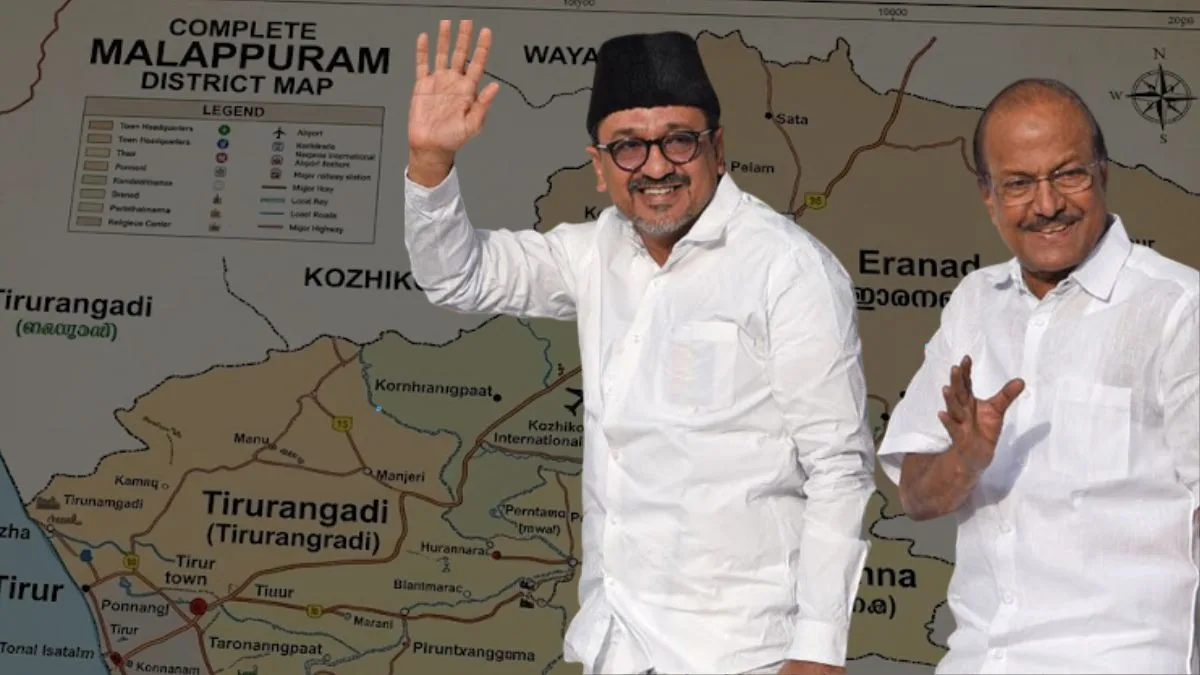
The Muslim Youth League, the youth wing of the Indian Union Muslim League (IUML)—a key constituent of the Congress-led United Democratic Front (UDF)—has called for the bifurcation of the Muslim-majority Malappuram district and the creation of a new district with Tirurangadi as its headquarters.
The demand was formalised through a resolution adopted at a convention held on May 1. It proposes splitting Malappuram into two administrative units: a new district comprising Tirur, Ponnani, Tirurangadi and Kondotti taluks, and a reconstituted Malappuram district consisting of Eranadu and Perinthalmanna taluks, with Tirurangadi and Malappuram designated as their respective headquarters.
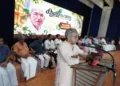
Senior IUML leaders, including state president Sadiq Ali Shihab Thangal and state general secretary P.M.A. Salaam, were present at the convention. Proponents of the proposal cite persistent developmental gaps in Malappuram, arguing that bifurcation would enhance administrative efficiency, expedite delivery of government services, and address regional imbalances.
They argue that the move will catalyze infrastructure development, generate employment, and enable region-specific policies for coastal, hilly, and urban areas. However, looking at the history of Kerala, this demand is rooted purely in political and religious interests. Past bifurcations pushed by the Muslim League have consistently triggered demographic shifts, characterized by a sharp rise in the Muslim population while other communities face a steady decline.
However, nationalist observers interpret the demand through a communal lens, pointing to a pattern of similar assertions in the past. As recently as three months ago, the Kanthapuram A.P. faction—an orthodox Muslim grouping—raised a comparable demand, as did the Kerala Muslim Jamaat.
Historically, allied organisations such as the Muslim Youth League, IUML, Sunni Yuvajana Sangham and others have periodically advocated for a separate ‘Malabar State’ carved out of North Kerala.
Such proposals have typically invoked concerns of regional neglect, developmental disparity, and the need for improved educational and infrastructural ecosystems. The envisioned state would span from Thrissur to Kasaragod, with Kozhikode often proposed as the capital.
Critics have consistently viewed these demands as reflective of fissiparous tendencies. The roots of this debate trace back to 1969, when the CPM-led Seven Party Front government under Chief Minister EMS Namboodiripad constituted Malappuram district by consolidating Muslim-majority regions.
The move was opposed at the time by the RSS, the Bharatiya Jan Sangh (the precursor to the BJP), and nationalist leaders within the Congress, including Kelappan, who alleged that the decision was driven by political accommodation of the Muslim League.
The renewed push for bifurcation—and, in some quarters, the revival of statehood demands—is now being framed by critics as a potential challenge to national integration.