
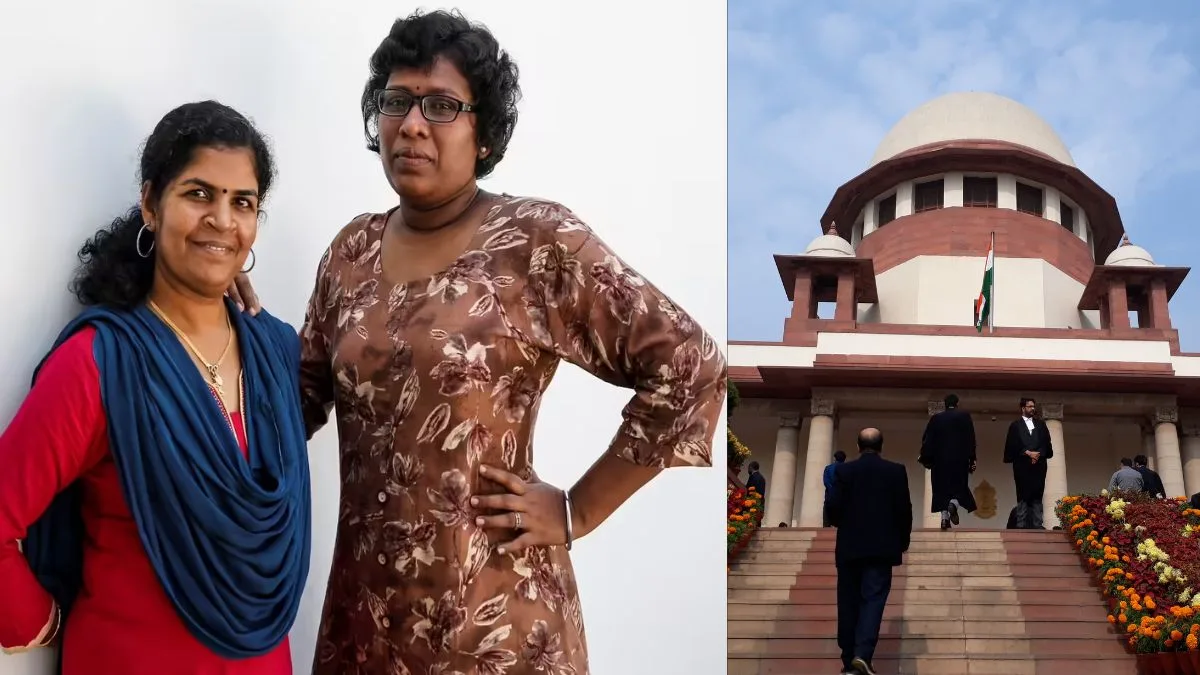
The Supreme Court on Wednesday questioned how a non-believer could claim the right to enter the Sabarimala temple. As the Supreme Court heard arguments regarding the implementation of its prior verdict. Justice B.V. Nagarathna raised a pivotal question during the proceedings, specifically inquiring whether Bindu Ammini and Kanaka Durga—the two women who entered the shrine in 2019—were genuine devotees and believers.
The SC noted that, in deciding who can and cannot enter the Sabarimala temple, it must first determine whether the person asserting the right is a devotee or a non-devotee.
The remark by the nine-judge Constitution bench came during hearings on petitions concerning alleged discrimination against women at religious sites, including the Sabarimala temple in Kerala, and the scope and extent of religious freedom across faiths.
The Senior Counsel Indira Jaising contended that the 2018 verdict permitting women of all ages to enter Sabarimala still prevails and cited Article 25(1) of the Constitution to defend their right to worship.
However, when pointedly asked by Justice Nagarathna about the “devotee status” of the women, Jaising reportedly pivoted to the safety concerns faced by the activists. She alleged that Bindu Ammini faced a “mob attack” following her entry and was subsequently forced to leave the state.
SC’s 2018 verdict and Activists Entry
The 2018 Supreme Court verdict that struck down the century-old ban on women of menstrual age entering the Lord Ayyappa shrine triggered intense political battles and street protests across Kerala. The LDF government welcomed the Supreme Court’s decision on Sabarimala. In a symbolic culmination of the legal mandate, Bindu Ammini, Kanaka Durga, Rehna Fatima who did not regard as devotees, were escorted by police into the sacred hill shrine, defying long-standing traditional restrictions.
Their entry triggered widespread protests across the state, with many Hindu devotees taking to the streets. In several instances, tensions turned violent, and groups of protesters camped along the pilgrimage route and around the hill shrine in an attempt to prevent women from entering Sabarimala. At that time, Kerala witnessed intense unrest and heightened tensions across the state.
At the time, the state was gripped by massive ‘Nama Japa’ protests, where thousands of devotees engaged in non-violent chanting and sit-ins to protect the centuries-old tradition barring women aged 10–50.
RSP leader and Kollam MP N.K. Premachandran has stood by his controversial remarks on the 2018 Sabarimala women’s entry issue, alleging that the LDF government and the state police facilitated the visit of Rehana Fathima, Kanaka Durga and Bindu Ammini to the temple. Premachandran had made the remarks during the concluding session of the UDF’s ‘Faith Protection March’ in Pandalam, where he accused the state government of actively aiding women’s entry into Sabarimala.
He further claimed, citing what he described as police sources, that the women were provided porotta and beef before their temple visit. He also pointed out that the same government later organised the Ayyappa Sangamam in Pamba in 2025.
What Kerala CM Pinarayi Vijayan Said
Critics of the 2019 entry argue that the state government, under Chief Minister Pinarayi Vijayan, misused the judicial order to violate temple customs. Following the entry, the Chief Minister held a press conference where he notably questioned the validity of the protests, a move that many devotees viewed as a ridicule of their faith.
The Supreme Court’s current focus on whether the entrants were “believers” marks a significant moment in the legal battle, as the court weighs constitutional rights against established religious practices.