Guwahati: What began as a search for healing in Guwahati turned into a living nightmare, forced beef consumption, forced religious conversion, and a desperate bid for freedom that ended with three people lying critically injured on the ground below.
The story emerging from the ‘Nibaran’ rehabilitation centre in Gauripur town of Dhubri district, Assam, is not just a tale of one illegal facility run by unscrupulous operators. It is, if the allegations of survivors are to be believed, a story of calculated, systematic religious persecution carried out behind locked doors, and it has sent shockwaves across the state.
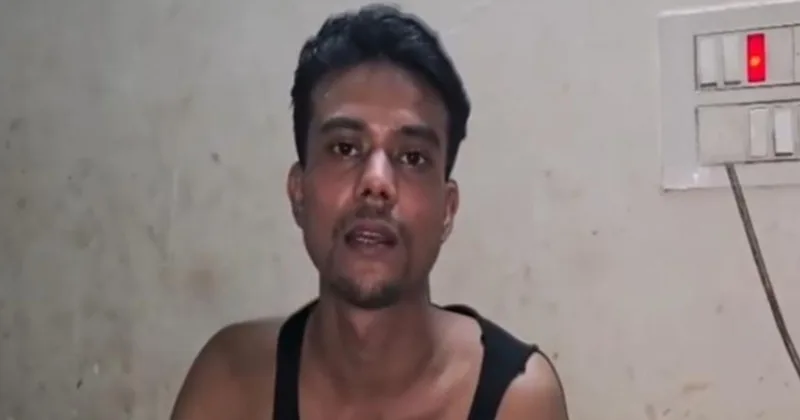
“They gave us leftover bones of beef to eat, if we refuse to eat we were beaten matchlessly,” said one victim now getting treatment in Dhubri MCH. Nobody would have known. The centre had been operating for three years — quietly, illegally, without a valid licence from any administrative authority — in a district already on edge after Chief Minister Himanta Biswa Sarma’s June 10, 2025, warning that beef was being “weaponised” against Hindus in the area following Eid celebrations.
Then five patients jumped off the top floor. Five people, pushed to such extremes of desperation that leaping from a multi-storey building seemed preferable to spending one more hour inside. Three of them were critically injured when they hit the ground. But their desperate act broke open, and what the police would soon discover was far worse than anyone had imagined. “ We were given leftover foods to eat and if we ask for good food they force us to convert to Islam. We were beaten for asking for medicine”, said another survivor.
When law enforcement arrived at the Nibaran centre following the incident, they found not a rehabilitation facility in any recognisable sense — but a place where vulnerable Hindu patients were allegedly being subjected to beatings with pipes and iron rods, denied adequate medical care despite being heavily overcharged, and — most shockingly — forced under brutal physical threat to eat beef and convert to Islam, with the promise of “better treatment” dangled as a reward for those who complied.
Nine patients were rescued. Six staff members were detained. The prime accused — the centre’s owner, identified as Zahirul Sheikh, is still absconding.
One of the most disturbing aspects of this case is not just what happened inside Nibaran — it is how long it was allowed to happen. Police investigation confirmed that the centre had been running for approximately three years without a valid licence from the district administration. No authorised oversight. No inspections. No accountability. Families who had entrusted their most vulnerable members — people battling addiction, mental health crises, or other ailments — to this facility had no way of knowing what was actually happening behind its walls. For three years, that appears to have been precisely the point. “They charged Rs 10-12 thousand every month for one patient and promised to provide good food, medicines and proper treatment, but inmates were forced to do work like toilet cleaning, washing clothes etc,” said a guardian of a victim.
According to accounts emerging from rescued patients and their families, the abuse at Nibaran was neither random nor impulsive. It was structured. Hindu inmates alleged they were subjected to repeated physical torture — beaten with pipes and iron rods — as a mechanism of control. Proper medical attention, which a legitimate rehabilitation centre is duty-bound to provide, was allegedly withheld or made conditional. The overcharging — billing families significant sums while delivering not care but cruelty — added a financial dimension to the exploitation.
And then there was the conversion pressure. Patients were allegedly told, in explicit terms, that eating beef and embracing Islam would result in better treatment. For individuals already in a state of physical and psychological vulnerability, already cut off from family and the outside world, this was not a choice — it was coercion under conditions of captivity. The fact that five people collectively decided that jumping off a building was the better option speaks, more than any testimony could, to what life inside those walls had become.