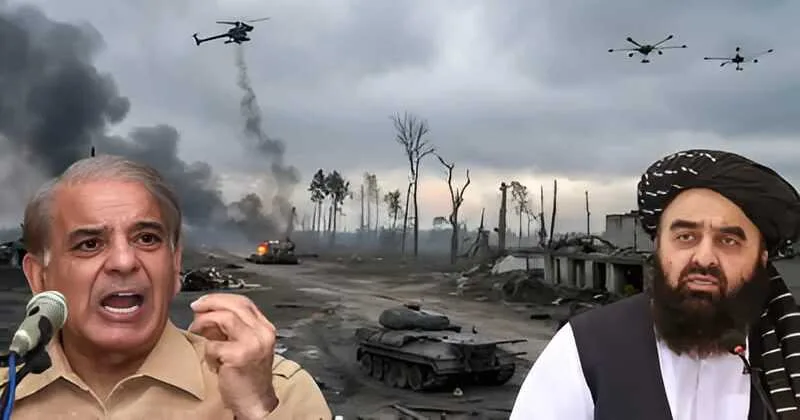
Kabul: Fresh cross-border violence erupted on Monday as mortars and missiles fired from Pakistan struck a university and civilian homes in north-eastern Afghanistan, killing seven people and wounding at least 85, according to Afghan officials. The strikes mark the first major escalation since China-mediated peace talks earlier this month, underlining the fragile and uncertain nature of diplomatic efforts between the two countries.
Afghan authorities said the attack targeted the city of Asadabad, the capital of Kunar province, along with surrounding areas. Among those hit was the Sayed Jamaluddin Afghani University, where students and professors were injured. Afghanistan’s higher education ministry confirmed that around 30 students and faculty members were wounded in the strike.
The casualties also included women and children, according to deputy government spokesperson Hamdullah Fitrat. However, Pakistan strongly denied targeting the university. In a statement, Pakistan’s information ministry said its operations were “precise and intelligence-based” and dismissed Afghan claims as “a blatant lie” and “frivolous and fake”.
Civilian toll and ground impact
The Kunar Information and Culture director, Najibullah Hanafi, confirmed that seven people were killed and at least 85 others wounded in the strikes. Eyewitness accounts from Asadabad painted a grim picture of the aftermath. At a local hospital, residents gathered around the injured, many of whom had been caught in the shelling while going about their daily routines.
One resident, Sahatullah, a 22-year-old labourer, said his nephew was among those injured. “He was playing outside, and shelling came and hit over there,” he said. Another resident, Zmarai Kunari, a 40-year-old teacher, reported that one of his relatives was killed while others were wounded. “This is my brother. He was wounded in the shelling; he had gone to pick up his uncle,” he said. The violence adds to an already dire humanitarian situation. Earlier this month, the United Nations Office for the Coordination of Humanitarian Affairs reported that the ongoing conflict had displaced 94,000 people.
Fragile truce collapses amid blame game
The latest strikes come despite recent diplomatic efforts led by China to ease tensions. Afghan and Pakistani officials had met in Urumqi in early April and agreed not to escalate hostilities. Monday’s attack represents the first significant breach of that understanding, highlighting the tenuous nature of the peace process. The two countries have been embroiled in months of deadly fighting since late February, when Afghanistan launched a cross-border attack on Pakistan in retaliation for Pakistani airstrikes inside Afghanistan.
Islamabad subsequently declared it was in “open war” with Afghanistan following bombings of major Afghan cities.
Pakistan has repeatedly accused Afghanistan of harbouring militant groups, particularly Tehrik-e-Taliban Pakistan (TTP), which it says carries out attacks inside Pakistani territory. The TTP is separate from, but allied with, the Afghan Taliban, which returned to power in Afghanistan in 2021 after the withdrawal of US-led forces. Kabul has consistently denied these allegations.
Although fighting had largely subsided in March following a temporary truce during the Muslim festival of Eid al-Fitr, tensions remained high. The truce came after a controversial Pakistani airstrike on 17 March in Kabul, which Afghan officials claimed killed more than 400 civilians.
Despite ongoing talks in Urumqi, sporadic cross-border clashes continued. Apart from China, mediation efforts have also involved countries such as Turkey, Qatar, the United Arab Emirates and Saudi Arabia at different stages. Monday’s strikes now cast serious doubt over the viability of these diplomatic initiatives, as both sides remain locked in a cycle of accusation, retaliation and fragile ceasefires.