
Exploring Bindi, ornaments & the philosophy of Sanatan Dharma
June 6, 2026
  • Read Ecopy
  • Circulation
  • Advertise
  • Careers
  • About Us
  • Contact Us
Android AppiPhone AppArattai
Organiser
  • ‌
  • Bharat
    • Assam
    • Bihar
    • Chhattisgarh
    • Jharkhand
    • Maharashtra
    • View All States
  • World
    • Asia
    • Europe
    • North America
    • South America
    • Africa
    • Australia
  • Editorial
  • International
  • Opinion
  • RSS @ 100
  • More
    • Op Sindoor
    • Analysis
    • Sports
    • Defence
    • Politics
    • Business
    • Economy
    • Culture
    • Special Report
    • Sci & Tech
    • Entertainment
    • G20
    • Azadi Ka Amrit Mahotsav
    • Vocal4Local
    • Web Stories
    • Education
    • Employment
    • Books
    • Interviews
    • Travel
    • Law
    • Health
    • Obituary
  • Subscribe
    • Subscribe Print Edition
    • Subscribe Ecopy
    • Read Ecopy
  • ‌
  • Bharat
    • Assam
    • Bihar
    • Chhattisgarh
    • Jharkhand
    • Maharashtra
    • View All States
  • World
    • Asia
    • Europe
    • North America
    • South America
    • Africa
    • Australia
  • Editorial
  • International
  • Opinion
  • RSS @ 100
  • More
    • Op Sindoor
    • Analysis
    • Sports
    • Defence
    • Politics
    • Business
    • Economy
    • Culture
    • Special Report
    • Sci & Tech
    • Entertainment
    • G20
    • Azadi Ka Amrit Mahotsav
    • Vocal4Local
    • Web Stories
    • Education
    • Employment
    • Books
    • Interviews
    • Travel
    • Law
    • Health
    • Obituary
  • Subscribe
    • Subscribe Print Edition
    • Subscribe Ecopy
    • Read Ecopy
Organiser
  • Home
  • Bharat
  • World
  • Operation Sindoor
  • Editorial
  • Analysis
  • Opinion
  • Culture
  • Defence
  • International Edition
  • RSS @ 100
  • Magazine
  • Read Ecopy
Home Bharat

Beyond Ornamentation: How the bindi and traditional practices reflect the energy systems of the human body

The bindi and traditional adornments in Sanatan Dharma are not mere symbols but reflections of a deeper understanding of human physiology, energy, and consciousness. Rooted in the wisdom of the Ajna Chakra, these practices blend spirituality with subtle scientific insight developed over centuries

Nandini NairNandini Nair
Apr 25, 2026, 05:00 pm IST
in Bharat, Culture
Follow on Google News
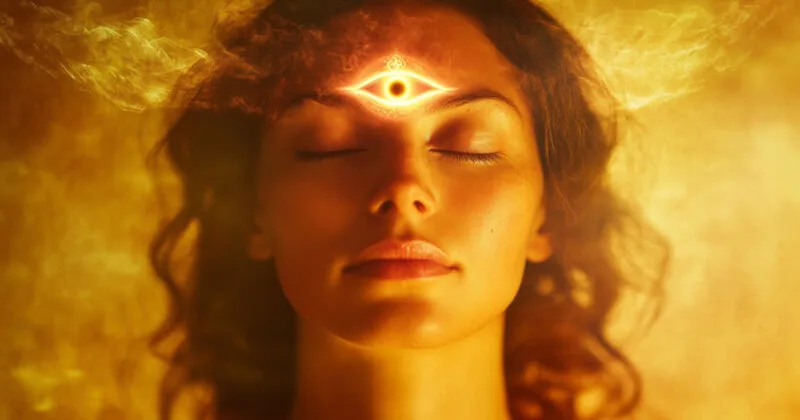
The bindi in Sanatan Dharma reflects human energy and consciousness, rooted in the Ajna Chakra, blending spirituality with ancient insight

The bindi in Sanatan Dharma reflects human energy and consciousness, rooted in the Ajna Chakra, blending spirituality with ancient insight

FacebookTwitterWhatsAppTelegramEmail

The bindi, often perceived today as a simple aesthetic or cultural accessory, holds profound meaning within the framework of Sanatan Dharma. It is not merely decorative; it reflects a deeper philosophy that integrates the body, mind, and consciousness. Ancient Indian traditions were built on sustained observation of human physiology, nature, and energy patterns, resulting in practices that subtly influenced well-being. What may appear as ritual or ornamentation often carries layered significance rooted in both symbolic and functional understanding.

The Bindi is far more than a decorative dot—it represents the Ajna Chakra (Third Eye), the seat of intuition, awareness, and higher consciousness. Placed between the eyebrows, this point is believed to be a powerful nerve center that influences focus, emotional balance, and… pic.twitter.com/qwHKjQ7z4G

— Hitesh Awasthi 🚩 🇮🇳 (@awasthi_571989) April 20, 2026

The Bindi and the Ajna Chakra

At the centre of this practice lies the concept of the Ajna Chakra, commonly referred to as the “third eye.” Located between the eyebrows, this point is considered the seat of intuition, awareness, and higher consciousness in yogic philosophy. Applying a bindi or tilak at this spot is believed to stimulate this energy centre, enhancing concentration, clarity, and emotional stability.

Traditionally, the bindi was made from natural substances such as Kumkum, sandalwood paste, or turmeric. These materials were chosen not only for their ritual purity but also for their physical properties,  which cool the skin, offer mild antiseptic benefits, and induce a calming effect on the nervous system. This demonstrates how spiritual symbolism and physical well-being were closely intertwined.

Ornaments as Functional Tools, Not Just Adornment

Toe Rings (Bichiya) and Reproductive Health

Toe rings, worn primarily by married women, are believed to stimulate specific nerves in the toes that are connected to the uterus. This stimulation is thought to support reproductive health and regulate hormonal cycles. While modern science may not fully map these exact connections, similar principles are seen in reflexology, where pressure points in the feet correspond to different organs in the body.

Anklets (Payal) and Vibrational Awareness

Anklets produce gentle, rhythmic sounds with movement. These sound vibrations are traditionally believed to activate energy points in the body and enhance blood circulation in the lower limbs. Additionally, the auditory feedback promotes bodily awareness, encouraging graceful movement and balance.

Bangles (Chudiyaan) and Circulatory Flow

Bangles create continuous friction and pressure on the wrists from daily movement. This interaction is thought to stimulate blood circulation and maintain energy flow throughout the body. In a broader sense, it reflects an understanding that repetitive motion and mild pressure can influence physiological processes.

The Science Behind Traditional Practices

Although these practices emerged long before modern scientific disciplines, they align in interesting ways with contemporary fields such as Neurology, acupressure, and mind-body medicine. The idea that specific points on the body can influence internal organs or mental states is now being explored through scientific research.

Ancient practitioners did not frame their knowledge in the language of modern science, but their observations led to systems that recognised the importance of nerve centres, circulation, and sensory stimulation. These traditions suggest that the human body responds not only to internal processes but also to external inputs like touch, pressure, and vibration.

Integration of Physical and Spiritual Life

One of the defining features of Sanatan Dharma is its refusal to separate the physical from the spiritual. Daily practices, whether applying a bindi, wearing ornaments, or following routines, are designed to cultivate mindfulness and balance. The tilak or bindi, in particular, acts as a psychological anchor, reminding individuals to remain centred, disciplined, and aware in their everyday lives.

Cross-Cultural Parallels and Rediscovery

Interestingly, similar ideas have appeared in other cultures over time. The Western concept of the “vena amoris,” the belief that the ring finger is directly connected to the heart, echoes symbolic associations found in Indian traditions. Such parallels suggest that different civilisations, through independent exploration, arrived at comparable insights about the human body and its deeper connections.

A Balanced Perspective: Tradition and Modern Understanding

It is important to approach these practices with both respect and critical thinking. Not every traditional belief can be directly validated through modern scientific methods, and not every modern critique is unfounded. However, dismissing these traditions entirely risks losing valuable cultural and experiential knowledge.
A more meaningful approach lies in exploring these practices with curiosity, understanding their origins, observing their effects, and appreciating the wisdom they carry without blindly accepting or rejecting them. Ultimately, Sanatan Dharma represents more than a set of rituals; it is a living knowledge system that integrates philosophy, lifestyle, and self-awareness. Its practices were designed to align the body, mind, and inner consciousness, helping individuals lead balanced and harmonious lives.

Topics: Hindu traditionsSanatan DharmaAncient ScienceBindi significanceAjna ChakraEnergy balanceCultural practices
Nandini Nair
Nandini Nair
Nandini Nair is a Subeditor-cum-Content Manager at Organiser Digital with more than 3.5 years of experience covering international, national, cultural and current affairs. Also tracks and develops impactful stories emerging from social media discourse, delivering engaging digital reporting [Read more]
ShareTweetSendShareSend
✮ Subscribe Organiser YouTube Channel. ✮
✮ Join Organiser's WhatsApp channel for Nationalist views beyond the news. ✮
Previous News

Railway land encroachment by Islamists cleared in Uttarakhand: Illegal ‘Mazar’ removed in joint action

Next News

Saving schemes with tax benefits under Clause 123 of the Income Tax Act 2025

Related News

Udhayanidhi Stalin, Leader of Opposition & DMK MLA, while speaking in Tamil Nadu Assembly on May 12

Sanatan Dharma and Politics: Understand before attacking

A huge crowd of Sanatanis, along with the Hindu Munnani Karyakartas, gathered to
protest near Coimbatore Power House in Sivananda Colony on May 15

Sanatan Dharma and Politics in Tamil Nadu: Eradicating the eternal

Dr Surendra Jain, Joint General secretary, VHP

Cow slaughter & insult to Sanatan is unbearable; Hindus ready to go to any extent for cow protection: Dr Surendra Jain

Book Review: Decolonising the Bharatiya Minds; From colonial roots to cultural marxism

Wars begin in human mind. They arise from greed, arrogance or the desire to capture or control: Dattatreya Hosabale

RSS Sarkaryavah Dattatreya Hosabale

Sanatan Dharma is the eternal soul of Bharat that cannot be abolished: RSS Sarkaryavah Dattatreya Hosabale

Load More

Latest News

Prime Minister Narendra Modi

“Makes every Indian proud”: PM Modi hails India’s 7.7 per cent GDP growth in FY 2025-26

Once known for maoist violence, Minpa now leads healthcare revolution with telemedicine services in Sukma

From Maoist Stronghold to Healthcare Hub: How Chhattisgarh’s Minpa is transforming through telemedicine & development

Dr Surendra Jain, Joint General secretary, VHP

VHP Demands Audit of Waqf Properties Amid Encroachment Claims: “Land should go to rightful owner,” says Surendra Jain

A Special NIA Court has framed charges against banned PFI and 20 office bearers, including E. Abubakar and O.M.A. Salam, under UAPA and IPC

PFI Terror Case: Special NIA court charges Abubakar, Salam & others for alleged conspiracy to wage war against India

Prime Minister Narendra Modi with women during an event (Old image used for representative purposes)

The Nari Shakti Decade: How 12 years of policy reforms under Modi govt transformed lives of women in Bharat

Ritabrata Banerjee, expelled by Mamata Banerjee from TMC, has been appointed as the Leader of the Opposition in Bengal assembly.

TMC House Divided: Mamata’s party battles Itself as LoP row exposes deepening cracks after BJP’s big blow

Lucknow’s UP 112 Headquarters hosts West Bengal team for policing innovation study

UP 112 Model: West Bengal police visits Lucknow to replicate Yogi’s emergency response model

Representative Image

Pakistan: POJK to go for polls on July 27 under shadow of JAAC agitation

Saokat Molla with Mamata Banerjee

West Bengal: NIA foils escape bid, tracks former TMC MLA Saokat Molla through third-party mobile network

Saurav Das, Chief Spokesperson of CJP

Exposing CJP’s Saurav Das: Inside his controversial commentary on Article 370, Umar Khalid & nationalism

Load More
  • Privacy
  • Terms
  • Cookie Policy
  • Refund and Cancellation
  • Delivery and Shipping

© Bharat Prakashan (Delhi) Limited.
Tech-enabled by Ananthapuri Technologies

  • Home
  • Search Organiser
  • Bharat
    • Assam
    • Bihar
    • Chhattisgarh
    • Jharkhand
    • Maharashtra
    • View All States
  • World
    • Asia
    • Africa
    • North America
    • South America
    • Europe
    • Australia
  • Editorial
  • Operation Sindoor
  • Opinion
  • Analysis
  • Defence
  • Culture
  • Sports
  • Business
  • RSS @ 100
  • Entertainment
  • More ..
    • Sci & Tech
    • Vocal4Local
    • Special Report
    • Education
    • Employment
    • Books
    • Interviews
    • Travel
    • Health
    • Politics
    • Law
    • Economy
    • Obituary
  • Subscribe Magazine
  • Read Ecopy
  • Advertise
  • Circulation
  • Careers
  • About Us
  • Contact Us
  • Policies & Terms
    • Privacy Policy
    • Cookie Policy
    • Refund and Cancellation
    • Terms of Use

© Bharat Prakashan (Delhi) Limited.
Tech-enabled by Ananthapuri Technologies