The idea of cultural nationalism in Bengal has been changing in recent years. For a long time, Bengal’s public life and politics were shaped by what is often called “bhadralok culture”. The bhadralok was the educated, urban, upper-caste middle class who played a major role in Bengal’s social reform movements, literature and politics during the colonial period and after independence. Their values emphasized intellectual debate, literature, secularism and a certain refined cultural identity. But today, many observers feel that this older framework is no longer enough to understand what is happening in Bengal’s society and politics.
Cultural nationalism in Bengal is now expanding beyond the bhadralok worldview. It is drawing from a wider range of social groups, including rural communities, lower castes and people who were not traditionally part of elite cultural spaces. This shift is important because it reflects deeper social and economic changes that have been taking place over the last few decades.
One reason for this change is the transformation of Bengal’s economy and society. Migration, urbanization and the spread of education have brought new voices into public life. Many people who were once excluded from cultural and political discussions are now asserting their identity and demanding recognition. They are not always comfortable with the older bhadralok model, which they sometimes see as distant, elitist or disconnected from everyday realities.
Another important factor is the role of history and memory. Bengal has a rich and complex past, including the Bengal Renaissance, the freedom struggle and the trauma of partition. For a long time, the interpretation of this history was dominated by elite voices. Today, there is a growing interest in revisiting history from different perspectives. People are looking at local traditions, folk culture, regional heroes, and religious practices that were often ignored or undervalued in mainstream narratives.
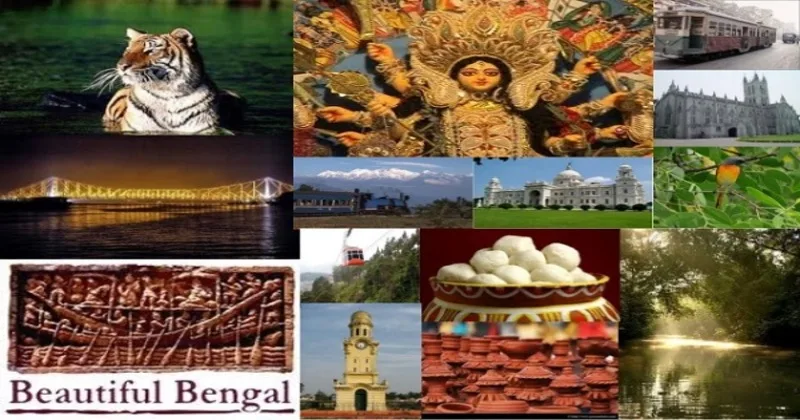
This has led to a broader understanding of what it means to be Bengali. Cultural nationalism in this context is not just about language or literature, but also about festivals, rituals, food, music and everyday practices. It includes both urban and rural experiences and it tries to bring together different strands of identity into a shared sense of belonging.
Religion has also become a more visible part of cultural expression in Bengal. Traditionally, Bengal was known for a form of secularism that allowed different communities to coexist peacefully, with religion often seen as a private matter. However, in recent years, public expressions of religious identity have increased. Festivals are celebrated with greater visibility, and there is more discussion about the role of religion in shaping culture and society.
This does not necessarily mean that Bengal is becoming less diverse or less tolerant. Rather, it shows that people are more openly expressing aspects of their identity that may have been less visible before. At the same time, this trend has also led to debates and tensions, as different groups try to define what cultural nationalism should mean.
The role of politics in shaping cultural nationalism cannot be ignored. Political parties and leaders often use cultural symbols, historical figures and social issues to connect with people. In Bengal, this has led to a more competitive environment where different visions of identity are presented to the public. Some emphasize tradition and heritage, while others focus on inclusiveness and diversity.
Media and technology have also played a major role in this transformation. Social media platforms allow people to share their views, promote local culture and engage in discussions that were once limited to small circles. This has helped spread new ideas and narratives, but it has also made debates more intense and sometimes more polarized.
Education is another area where changes can be seen. There is a growing interest in regional history, local languages and traditional knowledge systems. Schools, colleges and cultural organizations are increasingly focusing on topics that connect people to their roots. This has helped create a sense of pride in local identity, while also encouraging critical thinking about the past.
At the same time, it is important to recognize that cultural nationalism is not a single, unified idea. Different groups may have different interpretations of what it means. For some, it is about preserving traditions and values that they feel are under threat. For others, it is about redefining identity in a more inclusive and dynamic way. These differences can lead to disagreements, but they also show that the concept is evolving.
The decline of bhadralok dominance does not mean that their contributions are no longer important. Literature, art and intellectual traditions associated with the bhadralok continue to be an important part of Bengal’s identity. However, they are now being seen as one part of a larger and more diverse cultural landscape.
In many ways, this shift can be seen as a democratization of culture. More people are participating in shaping what it means to be Bengali. Voices that were once on the margins are now being heard and their experiences are being recognized as part of the broader story.
This process is not without challenges. Rapid changes can create uncertainty and conflict. There may be disagreements about values, priorities and the direction in which society should move. It is important for these discussions to take place in a respectful and constructive manner, so that differences can be addressed without deepening divisions.
At the same time, this process requires careful balance. A strong sense of identity can be a source of unity, but it can also become a source of conflict if not handled thoughtfully. It is important for public discussions to remain open and respectful, allowing for differences while seeking common ground. Institutions, educators and community leaders all have a role to play in guiding this transition in a positive direction.
Looking ahead, the future of cultural nationalism in Bengal will likely depend on how these different forces interact. The balance between tradition and change, between unity and diversity, will continue to shape the region’s identity. It will also depend on how institutions, leaders and citizens respond to the opportunities and challenges that come with this transformation.
In conclusion, the rise of cultural nationalism in Bengal beyond bhadralok politics reflects a broader shift in society. It shows that identity is not fixed, but constantly evolving. As more people take part in defining culture and belonging, the result is a richer and more complex understanding of what it means to be Bengali. This process may be messy at times, but it is also a sign of a vibrant and dynamic society that is finding new ways to express itself.