The Central Board of Secondary Education (CBSE), through an official circular issued on April 9, has made the third language R3 compulsory from Class 6 with effect from the academic session 2026 to 27. Under this provision, students from Class 6 to Class 10 will be required to study three languages namely R1, R2 and R3 in a phased manner. In the current academic session, it has been implemented only for Class 6, however each year the next class will be added. This decision is not merely an administrative or curricular change, but an important step towards institutionalising multilingualism in the Indian education system.
According to the guidelines issued by CBSE, R1 will generally be the first language, that is, the mother tongue or any language prescribed by the Board. R2 will be the second language, which may be Hindi, English or any other standard language different from R1. R3, as the third language, may be chosen from any other Indian or foreign language, however it is mandatory that at least two out of the three languages must be of Indian native. It has also been clearly stated that all three languages will be distinct and the same language cannot be studied at more than one level such as R1, R2 or R3. The Board has further clarified that no student will be eligible to appear in the Class 10 Board Examination unless he or she has passed the third language R3. Students currently studying in Class 6 will become the first batch under this system when they reach Class 10 in the year 2030 to 31. As per the curriculum, in the year 2031 the third language will not be assessed through a Board examination, rather it will be evaluated through school based internal assessment.
Every school will have to decide which language it will offer as the third language. Thereafter, it will have to provide this information to the CBSE Regional Office and update the same on the OASIS portal. This arrangement clearly indicates that the Board is committed to implementing this policy in a serious manner and does not intend to keep it confined to a mere formality.
Schools have been directed to prepare a time bound plan for the effective implementation of R3, to ensure the availability of qualified teachers, and to make arrangements for the necessary learning materials. The purpose of implementing this system in a phased manner is to ensure that no disruption or difficulty arises in the process of teaching, learning and assessment. Under the new curriculum, the teaching of the third language from Class 6 will be in accordance with the goals determined by the National Curriculum Framework 2023. Accordingly, at the middle stage covering Classes 6 to 8, students will be expected to engage in conversations related to daily life in the third language, express their thoughts and experiences with simplicity, understand the material they read and develop practical writing skills such as writing letters, invitations and instructions.
This approach establishes language not merely as a subject of examination but as a life oriented skill. This entire initiative is a concrete and long awaited step towards implementing the multilingual vision of the National Education Policy 2020. The fundamental basis of the new education policy is that education becomes more effective when imparted through the mother tongue or the language inherited through tradition and heritage. At the same time, knowledge of other languages contributes to the intellectual, cultural, cognitive and professional development of students. It is also noteworthy that the three language formula had been proposed in the education policies of 1968 and 1986 as well, however it could not be implemented effectively and uniformly. The present initiative is, in essence, a well considered effort to translate that historical recommendation into practice.
It is unfortunate that even such a positive and forward looking initiative is being viewed through a narrow perspective by certain political groups. Leaders such as M. K. Stalin and parties like Dravida Munnetra Kazhagam (DMK) and All India Anna Dravida Munnetra Kazhagam (AIADMK) are attempting to mislead the public by portraying it as an attempt to impose Hindi. However, the factual position is that there is no provision in this policy that mandates the imposition of any one language. On the contrary, this policy provides greater flexibility and gives the highest priority to local languages and needs. It clearly states that the selection of all three languages will be based on the preferences of states, regions and students. In this way, the policy does not favour any one language, but provides equal opportunity to all. It reflects respect for all and inclusion of all. It is also important to note that this arrangement will apply only to those schools that are affiliated with the Central Board of Secondary Education.
There are many schools that have already been offering the option of a third language to students, which makes it clear that this is not an entirely new or unexpected arrangement. According to data presented in response to a question in the Lok Sabha last year, 3.2 percent of schools in Tamil Nadu out of a total of 1905 schools have been teaching three languages. At the same time, the total number of CBSE affiliated schools in the state is around 1800. These figures naturally indicate how baseless and misleading the allegation of imposition of Hindi is. Another important fact deserves attention for those who engage in politics in the name of language. In Karnataka during the academic year 2026, about 93 percent of students of the state board, that is more than 7.5 lakh out of 8.1 lakh students, chose Hindi as the third language. This single example is sufficient to expose the reality behind the claims of opposition to Hindi or its alleged imposition in southern states. In reality, those who indulge in politics in the name of language appear to be apprehensive that the success of the three language formula may weaken their politics built on artificial linguistic divisions, and that the underlying divisive intent may come to light before the people. For this reason, they are attempting to obstruct the emerging bridge of contact and cultural partnership between the northern and southern parts of the country that may develop after this new initiative of CBSE.
Some intellectuals, under the guise of ideology, also argue that the three language system will impose an unnecessary burden on children. However, numerous international studies clearly refute this perception. In particular, the research of Ellen Bialystok (Renowned Canadian Psychologist) demonstrates that multilingual children exhibit greater cognitive flexibility, improved concentration and enhanced problem solving abilities. They are capable of performing multiple tasks efficiently at the same time, and their decision making ability is also comparatively more mature. Similarly, studies conducted by University of Cambridge and other reputed academic institutions across the world have concluded that multilingualism makes the brain more active and resilient. As a result, neurodegenerative conditions in old age, especially dementia, tend to manifest later among multilingual individuals. A study conducted in Ethiopia on mother tongue based education revealed that students who received their early education in their mother tongue and later transitioned to a second language such as English at the secondary level performed better academically than those who were educated in a foreign language from the very beginning. This research has also been supported by UNESCO. It is also a widely accepted fact that language acquisition during childhood is natural and effortless. Children possess greater energy, time and receptivity, which enables them to acquire new languages quickly. Once a strong foundation in one language is established, learning a second or third language does not remain difficult for them.
Turning the question of language into an unnecessary controversy is neither in the interest of education nor of society. In reality, language is not merely a medium of expression, but also a foundation for opportunity, mobility and social inclusion. In present day India, where millions of migrant workers move from one state to another in search of employment, the continuity of their children’s education becomes a serious challenge. Language differences often emerge as one of the biggest barriers. In such a situation, a multilingual education system can act as a bridge, enabling children to adjust more easily to new environments. The three language system not only ensures educational continuity but also broadens the perspective of students. It familiarises them with diverse cultures, traditions and ideas. Knowledge of more than one language strengthens cognitive development, creativity and communication skills. In an era of globalisation, where multilingualism has become an essential skill, this system equips students to become more capable and competitive for the future.
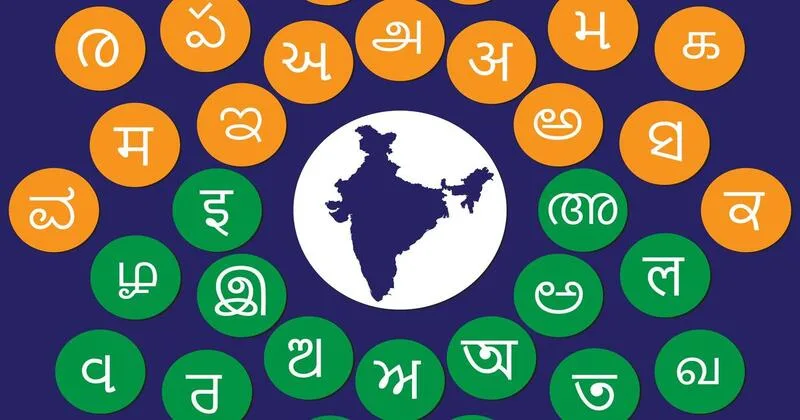
In the context of Indian languages, it is particularly noteworthy that they are not marked by division or conflict, but rather by deep and inherent similarities at multiple levels. These similarities extend across emotions, ideas, structure and grammar, and further encompass proverbs, idioms and folk traditions. At the levels of phonetics, word order, sentence structure, word formation and meaning, Indian languages exhibit remarkable commonality. By understanding and studying these features, students from different regions will come closer to one another. The study of various Indian languages will foster mutual connection and bring about a living sense of cultural unity.
The uniquely Indian worldview of unity in diversity finds its foundation in the country’s languages, their rich literature and the ideas expressed through them. Is it not true that despite many exaggerated claims of artificial and constructed divisions, there has always been a continuous and natural cultural dialogue between the North and the South, the East and the West since ancient times? Has this not found vibrant expression in pilgrimages, fairs, festivals and traditions across the country? It was not accidental that a monk from South India, Adi Shankaracharya, travelled across the nation and established a profound religious and philosophical dialogue, thereby strengthening cultural unity. History bears witness to the fact that even in the absence of any formal three language framework, the great saints, poets, philosophers and litterateurs of this land consistently upheld the ideals of unity, harmony and coexistence beyond the barriers of language, sect, region and caste. Whether it be Kabir, Surdas, Tulsidas, Guru Nanak Dev, Dadu Dayal, or Namdev, Tukaram and Tiruvalluvar, do their works not reflect a profound unity of thought and emotion? Despite the diversity of philosophies, sects, traditions and spiritual lineages, there has always existed a seamless dialogue and coordination among them. Has this not been the essence of our national and civilisational vision? And have not different languages and the literature composed in them illuminated this path of thought? Does this not demonstrate that Indian languages and intellectual traditions inherently possess the capacity for dialogue and interconnectedness?
It is therefore entirely appropriate to say that all Indian languages are national languages. They are not marked by competition or conflict, but by cooperation and coexistence. The purpose of language is not division, but the strengthening of dialogue and unity. The need of the hour is to view language not as a subject of politics and controversy, but as a medium of connection, cooperation and empowerment. The three language system is a meaningful step in this direction, which will not only make education more inclusive but will also further strengthen India’s cultural and national unity.