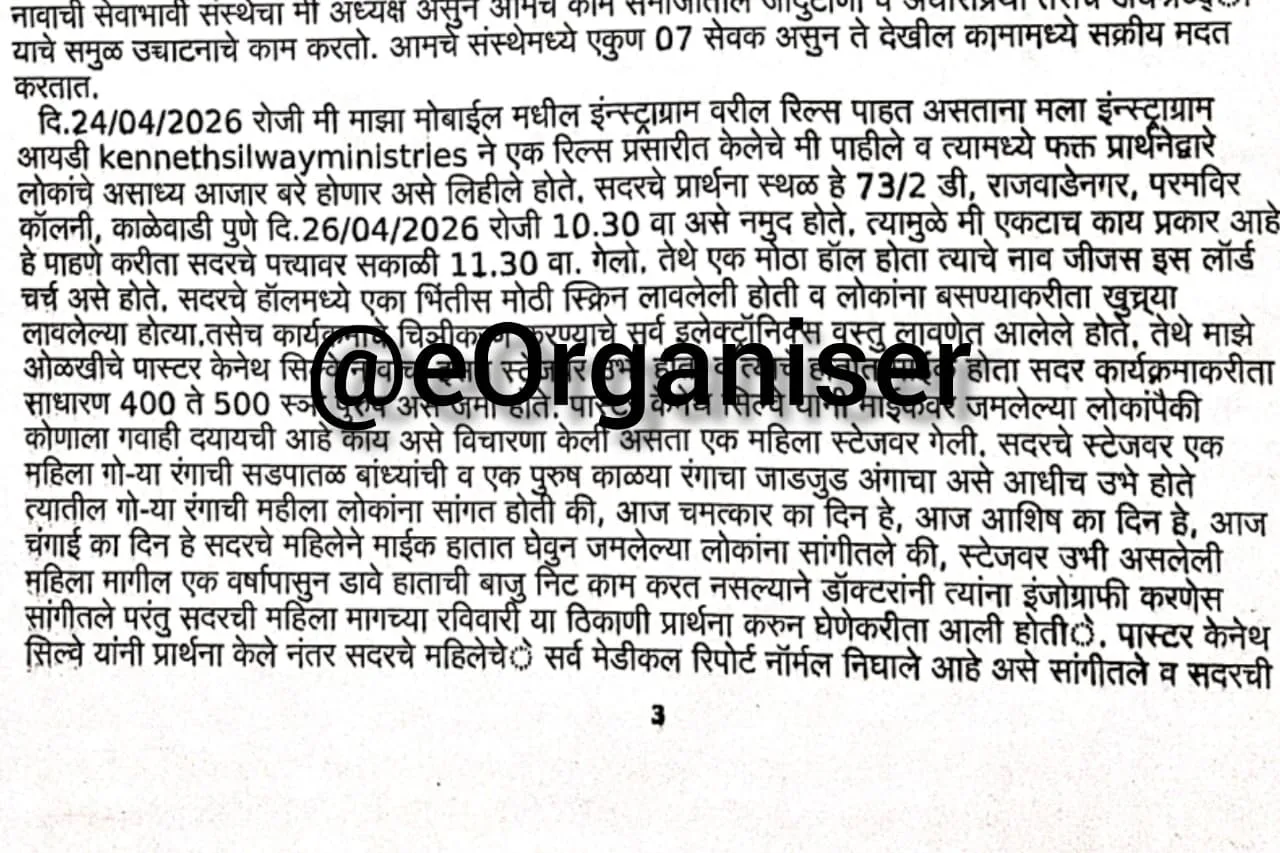
What began as a routine scroll through social media turned into a disturbing discovery for 35-year-old social worker Sindhdat Shahuraj Chavan. On April 24, 2026, Chavan came across an Instagram reel from an account named “kennethsilwayministries,” claiming that incurable diseases could be healed through prayer. The post invited people to attend a prayer meeting at a location in Kalewadi, Pune, on April 26.
Curious and concerned, Chavan decided to visit the venue himself.
What he witnessed, he later alleged in his complaint, was not just a religious gathering but an organised event where vulnerable individuals were being drawn in with promises of miraculous healing and gradually nudged towards religious conversion.
Inside the Church: Claims of ‘Miracles’ and mass gathering
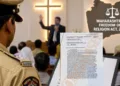
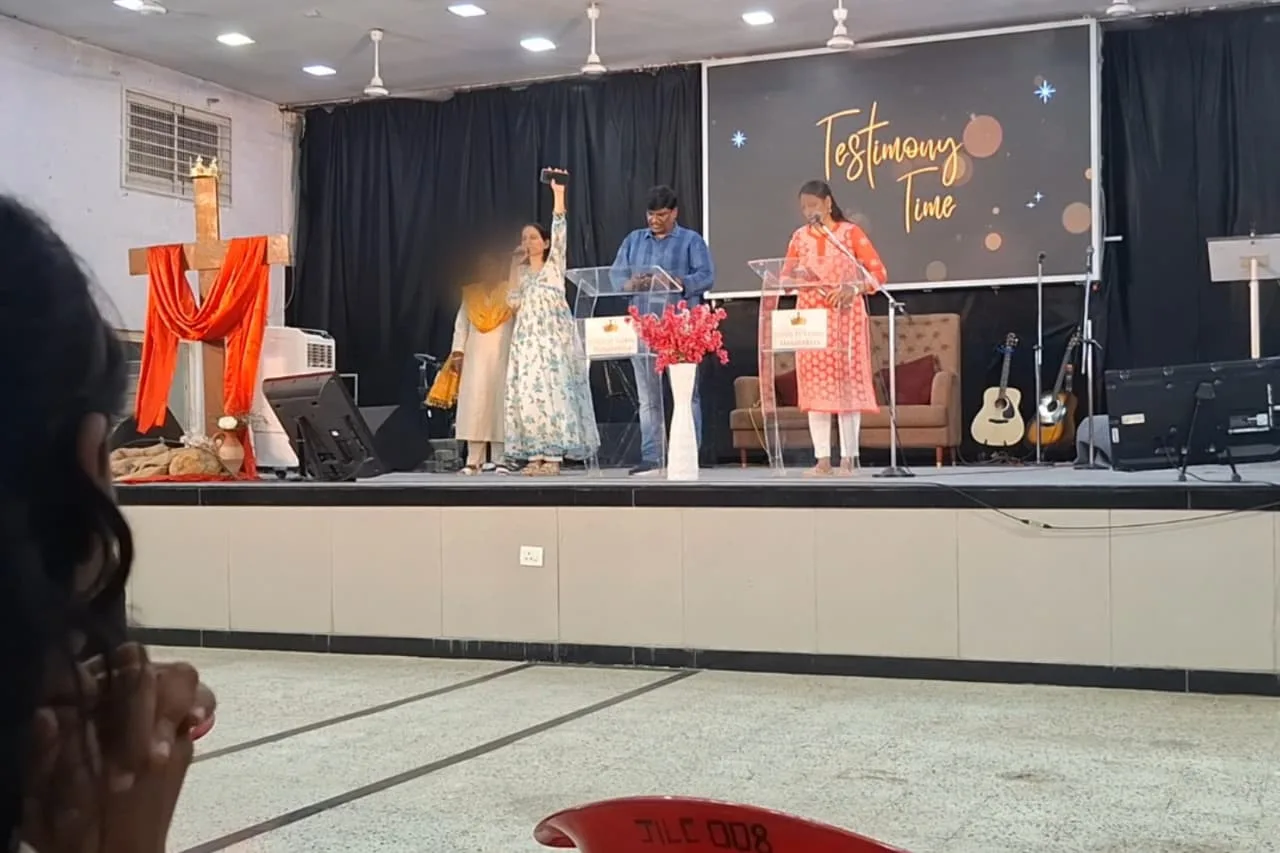
According to the FIR, Chavan reached the location at around 11:30 am on April 26. The venue, identified as “Jesus Is Lord Church” at Rajwade Nagar in Kalewadi, was already crowded. Nearly 400 to 500 men and women had gathered inside a hall equipped with chairs, a large screen, and electronic equipment.
On stage stood Pastor Kenneth Silvey, holding a microphone, addressing the audience.
Soon, what followed were testimonies.
A woman took the stage and declared, “Today is a day of miracles, today is a day of blessings, today is a day of healing.” Another woman, she claimed, had been unable to use her left arm for a year and had been advised angiography by doctors. However, after attending a prayer session the previous Sunday, she was allegedly “completely cured.”
The crowd watched as the woman walked off the stage, reinforcing the narrative of divine healing.
Chavan, who was observing the proceedings closely, began recording the event on his mobile phone.
Prayer or pressure?
The gathering intensified as Pastor Silvey called those suffering from illnesses to come closer to the stage. Several people stepped forward.
Chavan’s complaint describes what happened next in detail. The pastor reportedly asked everyone to place their left hand on the affected part of their body. “Now I am going to lay hands on you… all your diseases will be cured,” he said before beginning prayers and gestures.
For Chavan, this was the moment that confirmed his suspicions.
As a member of Andhashraddha Mukti Mission Maharashtra, an organisation dedicated to eradicating superstition and black magic, he had seen similar patterns before. But this time, his attempt to document it triggered a violent reaction.
Lights off, assault begins
At around 2:30 pm, Pastor Silvey allegedly noticed Chavan filming.
What followed, as per the FIR, was swift and alarming.
The pastor reportedly ordered the lights to be switched off and instructed a group of individuals to “beat him and throw him out.” Within moments, Chavan says he was surrounded by 7 to 8 unidentified men.
“They assaulted me, kicked me, abused me, and dragged me out,” Chavan recounted.
Even outside the premises, the violence did not stop. Two of Chavan’s acquaintances, Vilas Kharade and Vaibhav Santosh Sawant, who tried to intervene, were also allegedly beaten and abused.
Chavan eventually dialled 112, seeking police help. He was then taken to Kalewadi Police Station, where his statement was formally recorded.
FIR details and charges
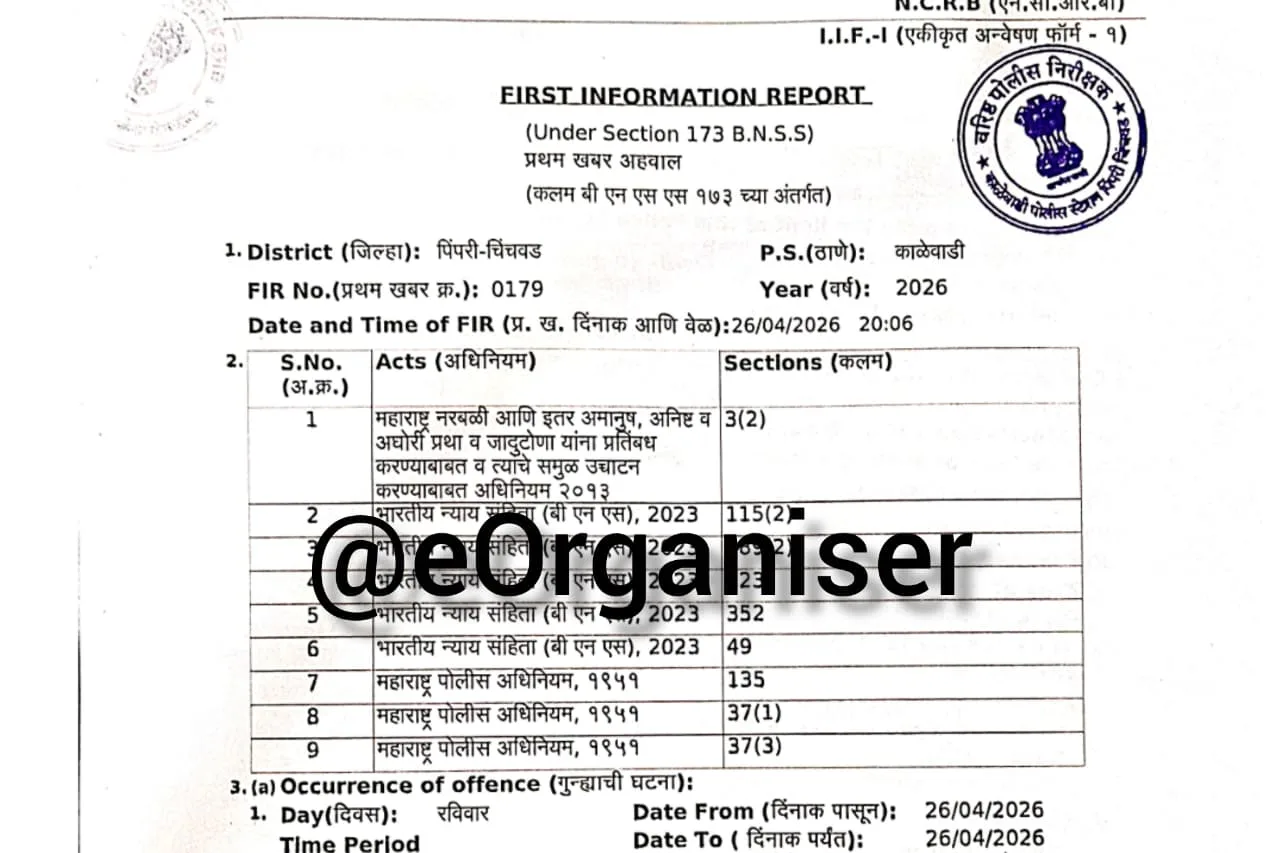
Based on Chavan’s complaint, an FIR numbered 179/2026 has been registered at Kalewadi Police Station in Pimpri Chinchwad.
The accused include Pastor Kenneth Silvey and five to six unidentified individuals.
They have been booked under multiple sections, including:
1. Section 3(2) of the Maharashtra Prevention and Eradication of Human Sacrifice and other Inhuman, Evil and Aghori Practices and Black Magic Act, 2013
2. Sections 115(2), 189(2), 223, 352, and 49 of the Bharatiya Nyaya Sanhita, 2023
3. Sections 135, 37(1), and 37(3) of the Maharashtra Police Act, 1951
The FIR explicitly states that the gathering was conducted without a licence and involved claims of curing “incurable diseases” through prayer, which falls under the ambit of promoting superstition.
“Why fear filming if nothing is wrong?”: Chavan
Speaking with Organiser after the incident, Chavan did not hold back.
“After they caught me filming what was happening in the Church, the pastor directed his people to switch off the lights and attack me. They assaulted me and threw me out,” he said.
He added that he repeatedly questioned them during the assault.
“I kept saying, what is wrong with me filming if what you are doing is right? Come to a temple with me and film everything, no one will stop you.”
Chavan believes the issue goes beyond a single event.
According to Chavan, the prayer meetings are part of a larger pattern aimed at gradual religious conversion.
“The pastor has been forcing Hindus to leave their religious practices and slowly become Christians under the guise of treatment,” he alleged.
He claimed that women who begin attending these gatherings often stop wearing traditional Hindu symbols.
“They stop wearing bindis, mangalsutra, sindoor. All that remains is a cross. They throw idols of gods and goddesses into water and start worshipping Jesus,” he said.
He further alleged that many individuals retain Hindu names despite conversion, making the shift less visible externally.
What does the channel have?
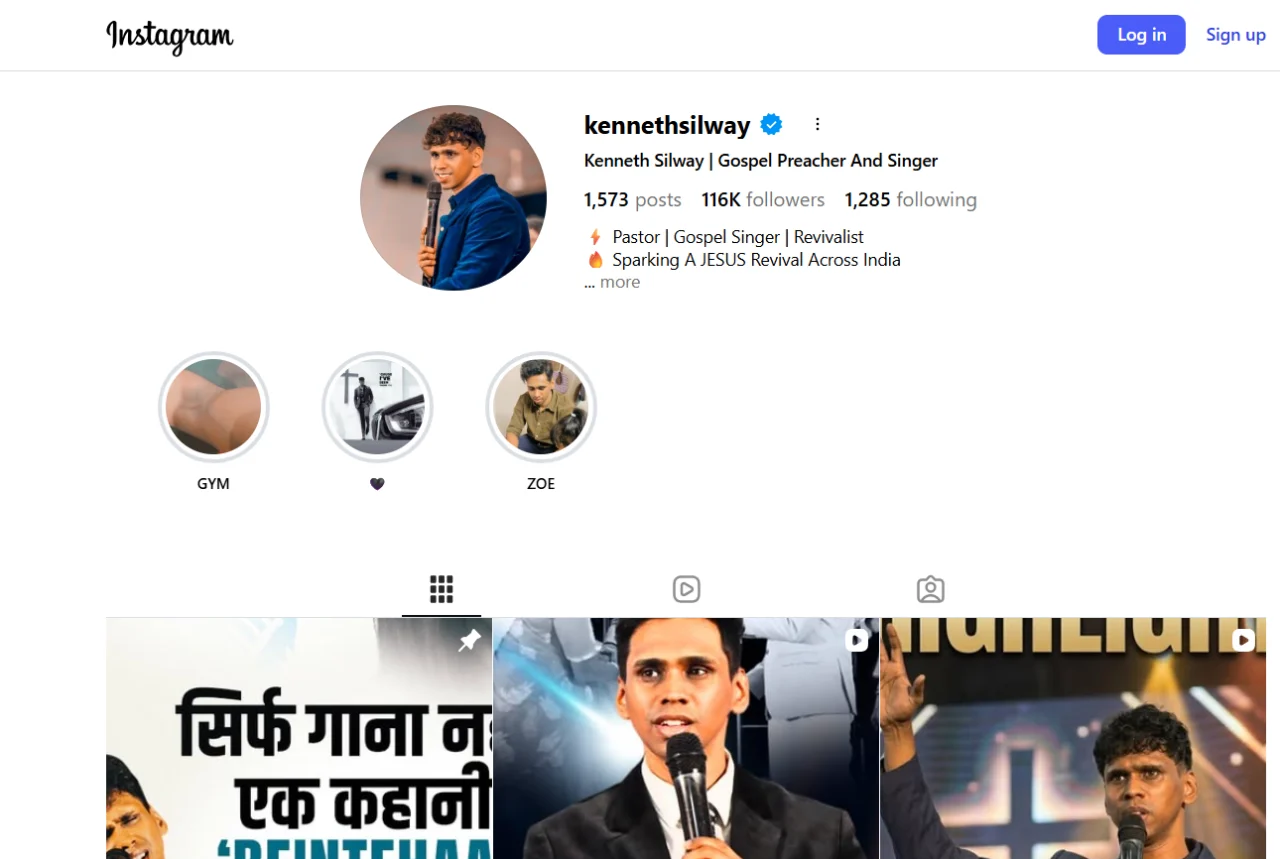
Organiser reviewed the YouTube channel and Instagram account of kennethsilwayministries and found a significant online presence. The YouTube channel has around 204,000 subscribers, while the Instagram account has approximately 116,000 followers. The content shared across these platforms revolves largely around themes of spiritual healing and transformation.
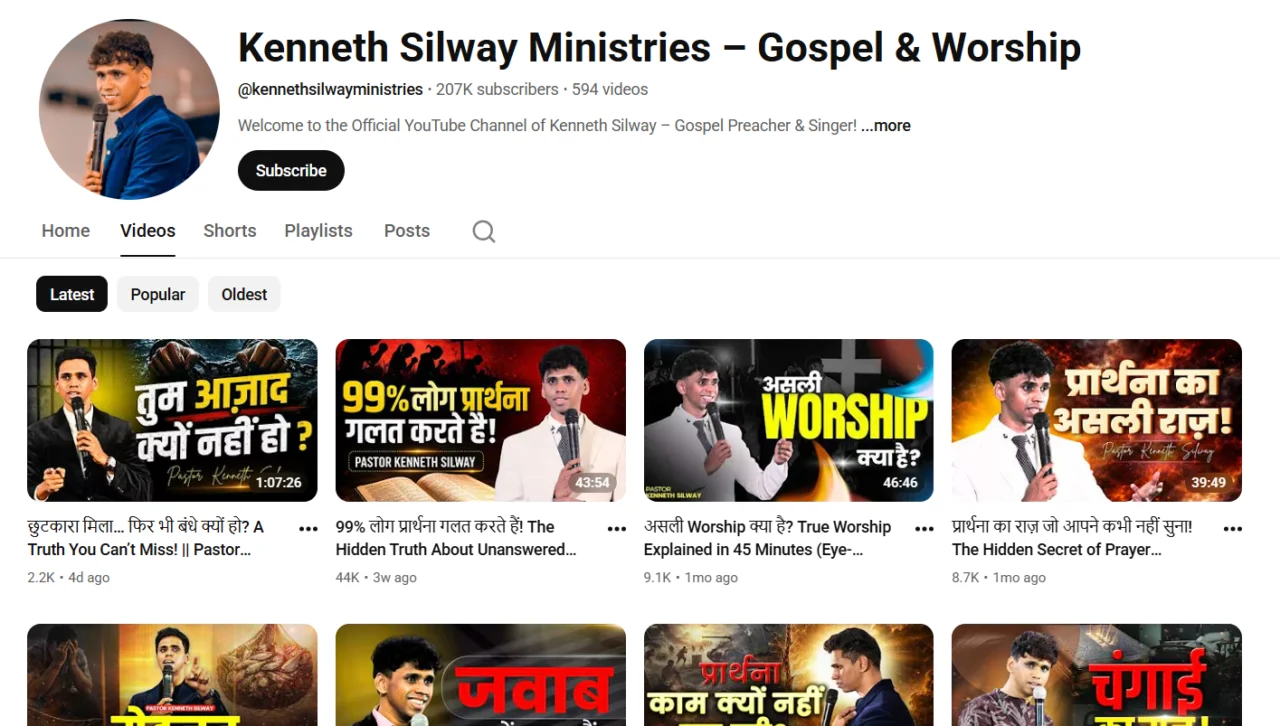
Videos on YouTube carry titles such as “What is real worship,” “Why are you not free,” “30 days, 30 chamatkars,” “Changai ka raaz,” and “Jaadu tona aur andhvishwas se chhutkara, Yeshu ne di nai zindagi,” among others. The Instagram account reflects a similar pattern, with posts titled along the lines of “Kyu bhatak rahe ho, Ishwar ki ichha jano, sahi disha milegi,” indicating a consistent messaging strategy focused on healing, faith, and personal change.
A pattern of complaints
This is not an isolated case for Chavan.
He stated that this is his sixth FIR against similar activities in the region.
For years, he has been actively working against what he describes as “illegal conversion networks,” often putting himself at personal risk.
“I have been attacked, targeted, and received threats. But I am ready to sacrifice even my life if it takes to fight this,” he said.
Chavan also questioned what he sees as selective attention by mainstream media.
“Is the media getting funded by missionaries? They never call a pastor ‘bhondu’, but they keep exposing ‘bhondu babas’. They never question what is happening in churches,” he alleged.
His remarks reflect a broader frustration among activists who feel certain issues are underreported or selectively framed.
Faith, fraud, and the law
The Pune incident has once again brought to the forefront a complex and sensitive debate.
Where does faith end and exploitation begin?
India’s legal framework, particularly laws like the Maharashtra Anti-Black Magic Act, is designed to prevent exactly such situations where vulnerable individuals are misled through claims of supernatural cures.
At the same time, the line between religious freedom and unlawful inducement remains a contested space.
In this case, the allegations are serious. Promising cures for incurable diseases, organising large gatherings without permission, and assaulting a complainant are all offences that go beyond the domain of religious practice.
The police have begun their investigation based on the FIR.
Statements of witnesses, video evidence, and the role of the accused individuals will be examined. Authorities are also likely to probe whether similar events have been conducted in the past and if a larger network is involved.
For now, the church gathering that promised healing has left behind a trail of legal questions, allegations of coercion, and a social worker nursing injuries from what he describes as an attempt to expose the truth.
A story still unfolding
The Kalewadi incident is not just about one pastor or one prayer meeting. It points to a larger pattern where missionary networks are accused of using the language of healing, miracles, and emotional vulnerability to draw people in and gradually push religious conversion. When claims of curing incurable diseases are used as a tool to influence faith, it raises serious concerns about exploitation rather than spirituality.
For Chavan, this is not an isolated episode but part of a continuing fight against what he describes as organised conversion activities operating under the guise of prayer meetings and social outreach.
For the authorities, the issue now goes beyond belief and enters the domain of law, where allegations of assault, unlawful gathering, and promoting superstition must be investigated thoroughly.
For society, the incident serves as a reminder that behind the promise of “miracles” and “new life,” there may sometimes lie a structured attempt to reshape identity and belief systems, making it necessary to question, scrutinise, and hold such practices accountable.