New York: The race to lead the United Nations has entered a decisive phase, with four candidates set to face intense public scrutiny over two days of live questioning on critical global challenges. The contenders vying to succeed Antonio Guterres will be tested on issues ranging from armed conflicts to climate change, as well as their vision for reforming the world body. Describing the role as both daunting and indispensable, Annalena Baerbock, president of the UN General Assembly, called it “one of the toughest jobs in the world,” emphasizing that the next secretary-general will shape not only the institution but also the international rules-based order as the chief defender of the UN Charter.
Female Candidates: Experience, promise, and controversy
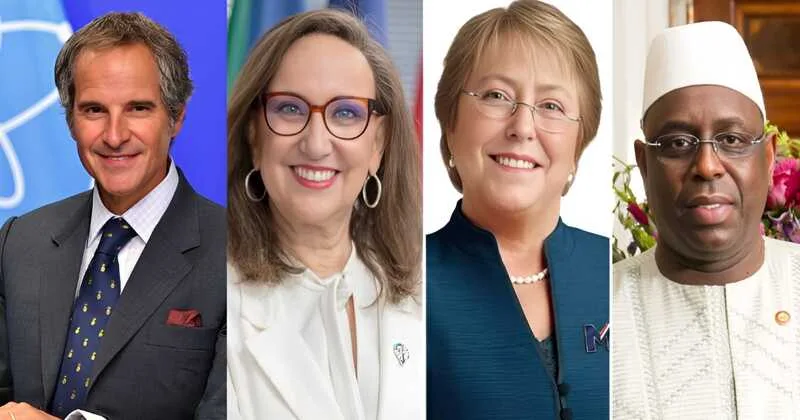
At the centre of the debate over whether the UN could finally have its first woman leader are two prominent candidates: Michelle Bachelet and Rebeca Grynspan. Bachelet, a former president of Chile who served two terms, brings a formidable resume that includes leading roles as UN High Commissioner for Human Rights and executive director of UN Women. Her candidacy, however, has sparked sharp political divisions. In March, the government of Jose Antonio Kast withdrew Chile’s backing, though she continues to enjoy support from Brazil and Mexico. Her critics extend beyond Latin America; 28 Republican lawmakers in the United States urged Secretary of State Marco Rubio to veto her candidacy, accusing her of promoting pro-abortion policies that challenge state sovereignty. Additionally, Bachelet has faced scrutiny for her handling of China’s treatment of Uyghur Muslims, with critics arguing that her response downplayed what many experts have described as genocide.
Grynspan, the other woman in the race, offers a different profile rooted in economic diplomacy and development policy. A former vice president of Costa Rica and current head of the UN Conference on Trade and Development, she has consistently advocated for gender equality, human rights, and sustainable development. Her candidacy has been less controversial but faces geopolitical hurdles similar to Bachelet’s, particularly given the influence of veto-wielding powers in the UN Security Council. Both women are seen by many global leaders, including Guterres, as strong candidates who could break the institution’s long-standing glass ceiling, but their prospects remain uncertain amid political resistance.
Male contenders and the strategic edge
While the push for a female secretary-general has gained momentum, the current front-runner remains Rafael Grossi, director-general of the International Atomic Energy Agency. Known for his hands-on diplomatic style, Grossi has built a reputation as a “man of action,” particularly through his engagement in high-stakes nuclear diplomacy. His efforts include deploying an IAEA team to the Russian-occupied Zaporizhzhia nuclear power plant in September 2022 and conducting ongoing nuclear negotiations with Tehran. However, critics argue that he has been overly accommodating toward Iran’s uranium enrichment programme, raising questions about his approach to non-proliferation.
The fourth candidate, Macky Sall, brings experience from the Global South and could become only the third African to hold the post. During his presidency, Sall oversaw major infrastructure development and advocated for reforms in global governance, including permanent representation for developing countries on the U.N. Security Council. Yet his record has also drawn criticism, particularly allegations of orchestrating a “constitutional coup” in 2024 by postponing elections to extend his term in office. These mixed legacies complicate the choice facing member states.
A fragmented world and uncertain outcome
This year’s selection process is notable not only for its high stakes but also for its unusually small pool of candidates, just four, compared with 13 in 2016. Analysts attribute this decline to growing global fragmentation and perceptions of the U.N.’s diminishing influence in an increasingly multipolar world. As the process unfolds, the U.N. Security Council will recommend a candidate to the General Assembly, where the final decision will be made.
Despite strong advocacy for a woman to lead the organization, geopolitical realities could shape the outcome. Concerns persist that the United States, particularly under the influence of the Trump administration, may use its veto power to block candidates like Bachelet or Grynspan. This raises a critical question that is the global political climate ready to support a historic shift in leadership, or will strategic interests once again override symbolic progress?
The next secretary-general will assume office on January 1, 2027, for a five-year term, inheriting a world grappling with conflict, climate crises, and institutional challenges. As deliberations continue, the possibility of the first female UN chief remains both within reach and under threat, reflecting the broader tensions shaping global governance today.