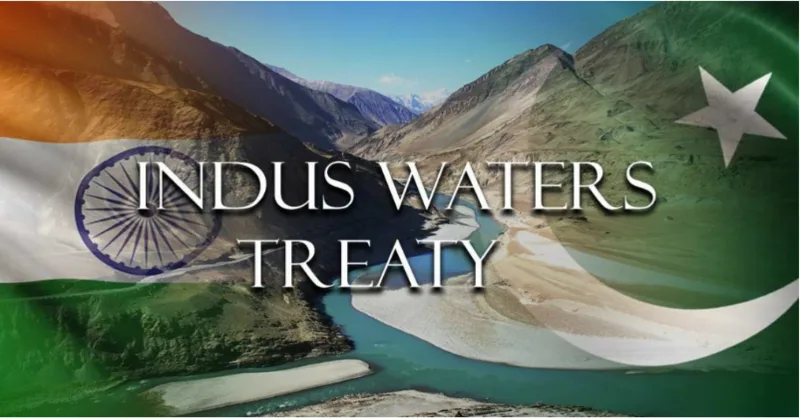
Most Pakistani commentators, be it politicians, journalists or leading lawyers and diplomats, all unanimously assailed the Indian leadership for putting the Indus Waters Treaty (IWT) in abeyance very abruptly on April 23, 2025. They are wrong as the action of putting it in abeyance took nine long years to fructify and was not abrupt. It was out of the Uri attack of September 2016 that the phrase “Blood and water can’t flow together’’ was born. The following paragraphs expand on the theme of it not being a knee jerk reaction on India’s part but very well thought out, taken after due diligence.
Pakistan went unpunished for masterminding the hijacking of aircraft from Kathmandu to Kandhar in December 1999. Maulana Masood Azhar was released from Kot Bhalwal jail in Jammu, to be taken to Kandhar, in exchange for safe release of passengers and the aircraft. Maulana Masood became an invaluable assert for the Inter Services Intelligence (ISI) after that as he founded Jaish e Mohammad (JeM).
Jaish terrorists then wreaked havoc in J&K as the first suicide bomber, fidayeen, was its creation, trained and supplied by the organisation.
Pakistan went unpunished after the December 13, 2001, Parliament attack, though condemnatory statements were issued. Nothing substantial happened. Months later, a minister in Atal Behari Vajpayee’s ministry issued a statement that had an ominous reference to Indus Waters Treaty (IWT).
It was after four decades at that time that IWT was brought up into discussions.
Each attack emboldened Pakistan to make the next attack bigger and more devastating. The Mumbai attack of November 26, 2008, can be quoted as a case in point. The dance of mayhem and death by 10 armed proxy terrorists of Pakistan continued for full three days. Beyond feeble protests, the United Progressive Alliance (UPA) government led by the Congress under Prime Minister Manmohan Singh did not contemplate any punitive action.
Air Marshall Homi Major is on record saying that the Indian Air Force (IAF) was at that time (in November 2008) ready to strike at select targets within Pakistan. To demonstrate its capacity as also send a clear message to the adversary. It was, however, stopped by the PM. Singh apparently either did not want any escalation (or feared it) that India’s strikes across the border could have led to.
Pakistan’s Terrorist Proxies, Asymmetric War
This gave an idea to Pakistan that its use of terrorist proxies in pursuing an asymmetric war against India could be carried on indefinitely without any fear of reprisals. Low cost, almost at no cost. During the 10-year-rule under UPA from 2004 to 2014, terrorist attacks all over India, by Pakistan’s terror proxies, were carried out with impunity.
The National Democratic Alliance (NDA) government under BJP had different ideas about how to deal with a recalcitrant Pakistan. When Prime Minister Narendra Modi started his innings on May 26, 2014, he invited Pakistani Prime Minister Nawaz Sharif to his swearing-in ceremony. He followed it up with sudden appearance at Lahore in December 2015 to meet Nawaz again, signalling his intent that good relations with Pakistan were a top priority.
The horror of terrorist attack on Pathankot airbase followed in January 2016 and Modi did as directed by Pakistan authorities. Submission of proofs for these attacks, allowing Pakistani team to visit the incident site, and so on. Nothing happened as changing the pattern of behaviour was never on Pakistan’s mind. Use of terror proxies against a much stronger adversary was too tempting an option to give up in a hurry.
Uri Attack Started Changing Things Irreversibly
Over two years after Modi had taken charge, a heinous terrorist attack was orchestrated by Pakistan at an Army camp in Uri in September 2016. Enough, Modi just said enough, & ordered Surgical Strikes. This signalled India was now willing to climb the escalatory ladder from now on, as a firm change in policy. Blood and water can’t flow together was a phrase born in these times. Indus Waters Treaty was now in the strategic arena from thence onwards.
On February 14, 2019, a day which the western world celebrates as a day of love, turned into a nightmare by afternoon when Adil Dar of Jaish e Mohammad (JeM) banged his car laden with explosives into a CRPF convoy. It led to the loss of 40 lives of brave personnel who were in Jammu & Kashmir to establish peace but were themselves torn to pieces as the explosives exploded.
Kinetic action, stronger than the 2016 Surgical Strikes, the aerial Balakot strike, followed the Pulwama blast. IWT was once again in India’s playbook as on February 22, eight days after the blast, Press Information Bureau (PIB) gave details of three projects on the Ravi. To fully utilise Indian share of waters allocated to it under the Indus Waters Treaty (IWT).
Shahpur Kandi Dam Complete on Ravi
Only one the three projects, Completion of Shahpur Kandi dam, announced that day has been completed. The second project, Ujh dam to impound 750 Million Cubic Metres (MCM) of water, is back into circulation, so to say, with the government saying this will be started now. The third project, which was announced on February 22, 2019, can be taken up in a major way only if there is substantial progress of second.
In Modi’s third term, on April 22, 2025, Pakistan’s terror proxies, indoctrinated and trained by the Inter Services Intelligence (ISI) struck in Baisaran (Pahalgam), killing 24 male Hindu tourists after first identifying their religion. What followed barely 24 hours later is something that constitutes the third step on the escalatory ladder from the Indian side.
Pahalgam Attack, Op Sindoor plus IWT in Abeyance
On April 23, Foreign Secretary Vikram Misri announced at least five measures agreed up in the Cabinet Committee on Security (CCS). The first of these was keeping the IWT in abeyance. Other things like expelling Pakistanis staying in India illegally are far smaller in their impact, not significant enough for the Pakistan government to sit up and take note.
In the first week of May, Operation Sindoor, the kinetic action during which lasted barely four days (May 7 to 10), was launched. A pause in bombardment of terror infrastructure in Pakistan and many of its airfields does not mean that India is off the ramp. Replenishing its weapons stockpile, ordering more S-400 missile systems from Russia, Rafales from France and undisclosed quantities of select hardware from Israel, are just things that late Dr Manmohan Singh did not do.
These are things that the good doctor should have ordered for terribly ill and delusional Pakistan we have for a neighbour. For too long, it hallucinated that India lacked the guts to go up the escalatory ladder. Heavy doses of kinetic actions were administered during Operation Sindoor. If Pakistan asks for more, by doing something like Pahalgam again, India is ready for Operation Sindoor 2.0.
The IWT in abeyance is something that is in addition to, over and above everything else. For the near future, this pause is there to stay and the days ahead can only be a tough time for Pakistan.