Pakistan image push unravels after Pahalgam attack
June 7, 2026
  • Read Ecopy
  • Circulation
  • Advertise
  • Careers
  • About Us
  • Contact Us
Android AppiPhone AppArattai
Organiser
  • ‌
  • Bharat
    • Assam
    • Bihar
    • Chhattisgarh
    • Jharkhand
    • Maharashtra
    • View All States
  • World
    • Asia
    • Europe
    • North America
    • South America
    • Africa
    • Australia
  • Editorial
  • International
  • Opinion
  • RSS @ 100
  • More
    • Op Sindoor
    • Analysis
    • Sports
    • Defence
    • Politics
    • Business
    • Economy
    • Culture
    • Special Report
    • Sci & Tech
    • Entertainment
    • G20
    • Azadi Ka Amrit Mahotsav
    • Vocal4Local
    • Web Stories
    • Education
    • Employment
    • Books
    • Interviews
    • Travel
    • Law
    • Health
    • Obituary
  • Subscribe
    • Subscribe Print Edition
    • Subscribe Ecopy
    • Read Ecopy
  • ‌
  • Bharat
    • Assam
    • Bihar
    • Chhattisgarh
    • Jharkhand
    • Maharashtra
    • View All States
  • World
    • Asia
    • Europe
    • North America
    • South America
    • Africa
    • Australia
  • Editorial
  • International
  • Opinion
  • RSS @ 100
  • More
    • Op Sindoor
    • Analysis
    • Sports
    • Defence
    • Politics
    • Business
    • Economy
    • Culture
    • Special Report
    • Sci & Tech
    • Entertainment
    • G20
    • Azadi Ka Amrit Mahotsav
    • Vocal4Local
    • Web Stories
    • Education
    • Employment
    • Books
    • Interviews
    • Travel
    • Law
    • Health
    • Obituary
  • Subscribe
    • Subscribe Print Edition
    • Subscribe Ecopy
    • Read Ecopy
Organiser
  • Home
  • Bharat
  • World
  • Operation Sindoor
  • Editorial
  • Analysis
  • Opinion
  • Culture
  • Defence
  • International Edition
  • RSS @ 100
  • Magazine
  • Read Ecopy
Home World North America USA

Pakistan’s image makeover via US-Iran mediation unravels as report exposes terror nexus a year after Pahalgam attack

Pakistan’s bid to recast its global image through a mediating role in US-Iran tensions rings hollow as reports flag its continued support for terror networks. A year after the Pahalgam terror attack, evidence points to a sustained, Pakistan-linked ecosystem driving violence and instability in the region

Dr Vishnu AravindDr Vishnu Aravind
Apr 23, 2026, 02:20 pm IST
in USA, Bharat, World, West Asia, South Asia
Follow on Google News
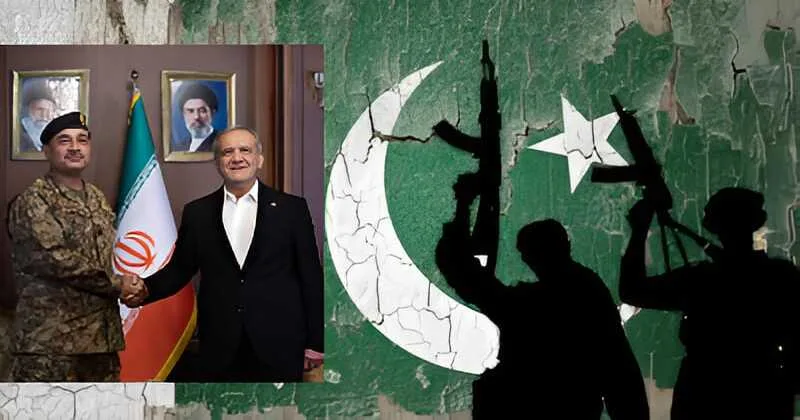
Report punctures Pakistan’s US-Iran mediation image push, as failure to curb a growing terror ecosystem at home stands exposed a year after the Pahalgam attack

Report punctures Pakistan’s US-Iran mediation image push, as failure to curb a growing terror ecosystem at home stands exposed a year after the Pahalgam attack

FacebookTwitterWhatsAppTelegramEmail

Pakistan is attempting to recast its international image by leveraging its perceived mediating role in tensions between the United States and Iran. However, a recent report argues that the underlying reality remains unchanged, that Pakistan continues to function as a breeding ground and safe haven for terrorist organisations.

The deadly April 22 Pahalgam terror attack cannot be viewed as an isolated episode. Instead, it reflects a deeply entrenched and systematic infrastructure of violence. At the centre of this mechanism is The Resistance Front, widely identified as an offshoot of Lashkar-e-Taiba. Its role highlights the sustained and deliberate use of extremist proxy groups by Pakistan.

Such operations form part of a broader strategic approach aimed at destabilising the region, perpetuating tensions, and weakening any meaningful prospects for peace. In this framework, terrorism is not merely a tactical instrument but an embedded structural component of policy, deployed with consistency and intent to generate instability.

One year has passed since the terrorist attack in Pahalgam that killed 26 innocent people, leaving behind not only human loss but also a deep imprint of fear and instability across the region of Jammu and Kashmir. The victims were executed in cold blood after being segregated on the basis of religion, exposing the severe human cost of terrorism and the systematic targeting of civilians as a tool of political violence.

Persistent terror networks and regional instability

While Pakistan seeks to enhance its global standing through diplomatic positioning, including its perceived role in US-Iran tensions, the country’s internal dynamics continue to foster terrorism. The underlying reality remains unchanged. The terrorist organisations not only persist within Pakistan but continue to regenerate, posing an ongoing threat to regional stability and security. Recent incidents within Pakistan itself reinforce this pattern of sustained violence. In early 2026, multiple attacks underscored the persistence of terrorist activity. At least 31 people were killed in a mosque bombing in February, while a bomb blast in January claimed the lives of seven police personnel. During the same period, coordinated attacks in Balochistan resulted in 36 deaths, further illustrating the recurring nature of such violence.

These attacks are not detached from the broader political context. They coincide with a period during which Jammu and Kashmir had begun to witness relative stability following successful elections, alongside visible economic progress and developmental initiatives. Against this backdrop, the resurgence of terrorism appears to be a calculated attempt to disrupt stability and reverse developmental gains. Experts also pointed out the contrast between the progress in Jammu and Kashmir and the continued underdevelopment in Pakistan-occupied Jammu and Kashmir, suggesting that such disparities further underline the strategic motivations behind these acts of violence. The involvement of Pakistani elements in the Pahalgam attack strengthens this assessment.

Also Read: One year of Pahalgam Massacre: Nations rally behind India’s fight against Pakistan-backed terrorism

Evolving tactics and expansion of militant structures

Many reports further highlight how terrorist financing and operational methods have undergone significant transformation. Security analyses indicate that militant networks are increasingly relying on encrypted financial transactions, including digital wallets and cryptocurrencies. This shift towards digital systems has made it more challenging for authorities to trace funding flows, enabling these groups to retain operational flexibility and maintain global connectivity.

In parallel, there has been a noticeable trend towards the “mainstreaming” of terrorist organisations within Pakistan. Groups such as Jaish-e-Mohammad and Lashkar-e-Taiba have expanded their activities beyond traditional militant operations. In 2025, under the leadership of Masood Azhar, Jaish-e-Mohammad intensified recruitment drives across Punjab and Pakistan-occupied Jammu and Kashmir. The group also established a women’s wing, ‘Jamaat-ul-Mominat’, aimed at ideological outreach and social mobilisation. At the same time, between 2024 and 2026, Lashkar-e-Taiba expanded its training infrastructure, including the development of specialised units such as the so-called “Water Wing” for maritime operations. These developments, combined with ongoing recruitment campaigns, public mobilisation efforts, and sustained anti-India rhetoric, indicate a shift in the operational profile of these organisations.

Rather than functioning solely as clandestine militant networks, these groups are increasingly evolving into entities with broader social presence and the capability to systematically reproduce radicalisation. This transformation raises serious concerns about the long-term implications for regional security and stability, as well as the challenges involved in countering such deeply embedded and adaptive structures.




Topics: cross border terrorismThe Resistance FrontPahalgam Terror AttackJammu and Kashmir securityregional instabilityPakistanLashkar-e-TaibaJaish-e-Mohammad
ShareTweetSendShareSend
✮ Subscribe Organiser YouTube Channel. ✮
✮ Join Organiser's WhatsApp channel for Nationalist views beyond the news. ✮
Previous News

Tamil Nadu Polls 2026: Voter turnout reaches 41.11% by 11 am despite heat; polling remains largely peaceful

Next News

Separate electorate for Dalits: What would Ambedkar say to Chandra Shekhar Ravan today?

Related News

India’s Permanent Representative to the United Nations Ambassador Harish Parvathaneni

India slams Pakistan at UNSC for peddling false narratives on Jammu & Kashmir

Jameer Khan and Alla Bhakshu arrested in Pakistan-linked terror probe

Karnataka: Digital jihad trail exposed: Jameer Khan and Alla Bhakshu arrested, links traced to Pakistan

India slams Pakistan’s bid to hold elections in Gilgit-Baltistan, demands end to illegal occupation

As Khalistani networks seek new platforms beyond the West, Azerbaijan has emerged as a key venue for conferences, campaigns and narratives aligned with the Pakistan-Turkey axis against India.

Khalistan’s New Grazing Ground: Azerbaijan emerges as new hub for Turkey-Pakistan backed anti-India networks

Bangladesh’s reported JF-17 push has triggered fresh scrutiny after India’s Ops Sindoor exposed the vulnerabilities of Pakistani-Chinese defence systems and precision strike capabilities

Shadows of Operation Sindoor: Questions loom over Bangladesh’s JF-17 ambitions amid Sino-Pakistani tech vulnerabilities

Kawagoe Mosque Row: Pakistan faces embarrassment as Japan orders demolition of illegally built mosque

Load More

Latest News

A large crowd of Bangladeshis residing in West Bengal gathers at the Hakimpur border crossing in the Basirhat subdivision of North 24 Parganas district to cross over to Bangladesh

Unnatural Demographic Change: Securing Bharat against the silent invasion

Prime Minister Narendra Modi

BJP’s Victory with Vision: An idea of India that is Indian

Visuals from the site of protests

Cockroach Janata Party Protest: Over 93 mobile phones reportedly stolen during rally at Jantar Mantar

Freedom Fighter Durga Devi Vohra

Durga Bhabhi: The fearless revolutionary who helped Bhagat Singh outsmart the British & fought for India’s freedom

‘We Wanted Him to Serve the Nation, Not Get Caught in Political Drama’: Parents Rebuke Abhijit Dipke

‘This is not what we raised him for,’ say disappointed parents over Cockroach Janata Party Abhijit Dipke’s activism

Strait of Hormuz Crisis: Why India cannot afford to be a spectator

India & Israeli billionaires in the US: How immigrants from Asian countries are powering the growth of American economy

Beneath the Minaret: The Hindu and Jain legacy burried under Qutub Minar

How Ramrajya and Kautilya’s Saptang model can build a prospering civilisation

Why invading empires hated them?

Load More
  • Privacy
  • Terms
  • Cookie Policy
  • Refund and Cancellation
  • Delivery and Shipping

© Bharat Prakashan (Delhi) Limited.
Tech-enabled by Ananthapuri Technologies

  • Home
  • Search Organiser
  • Bharat
    • Assam
    • Bihar
    • Chhattisgarh
    • Jharkhand
    • Maharashtra
    • View All States
  • World
    • Asia
    • Africa
    • North America
    • South America
    • Europe
    • Australia
  • Editorial
  • Operation Sindoor
  • Opinion
  • Analysis
  • Defence
  • Culture
  • Sports
  • Business
  • RSS @ 100
  • Entertainment
  • More ..
    • Sci & Tech
    • Vocal4Local
    • Special Report
    • Education
    • Employment
    • Books
    • Interviews
    • Travel
    • Health
    • Politics
    • Law
    • Economy
    • Obituary
  • Subscribe Magazine
  • Read Ecopy
  • Advertise
  • Circulation
  • Careers
  • About Us
  • Contact Us
  • Policies & Terms
    • Privacy Policy
    • Cookie Policy
    • Refund and Cancellation
    • Terms of Use

© Bharat Prakashan (Delhi) Limited.
Tech-enabled by Ananthapuri Technologies