India has suffered from the scourge of terrorism of various shades, be it armed intervention, insurgency, militancy or Naxalism right after gaining Independence. The armed intervention into Jammu & Kashmir by Pakistan through tribals in October 1947 was just the beginning of Pakistan state sponsored terrorism and India has fought various forms of armed struggle over the last seven decades.
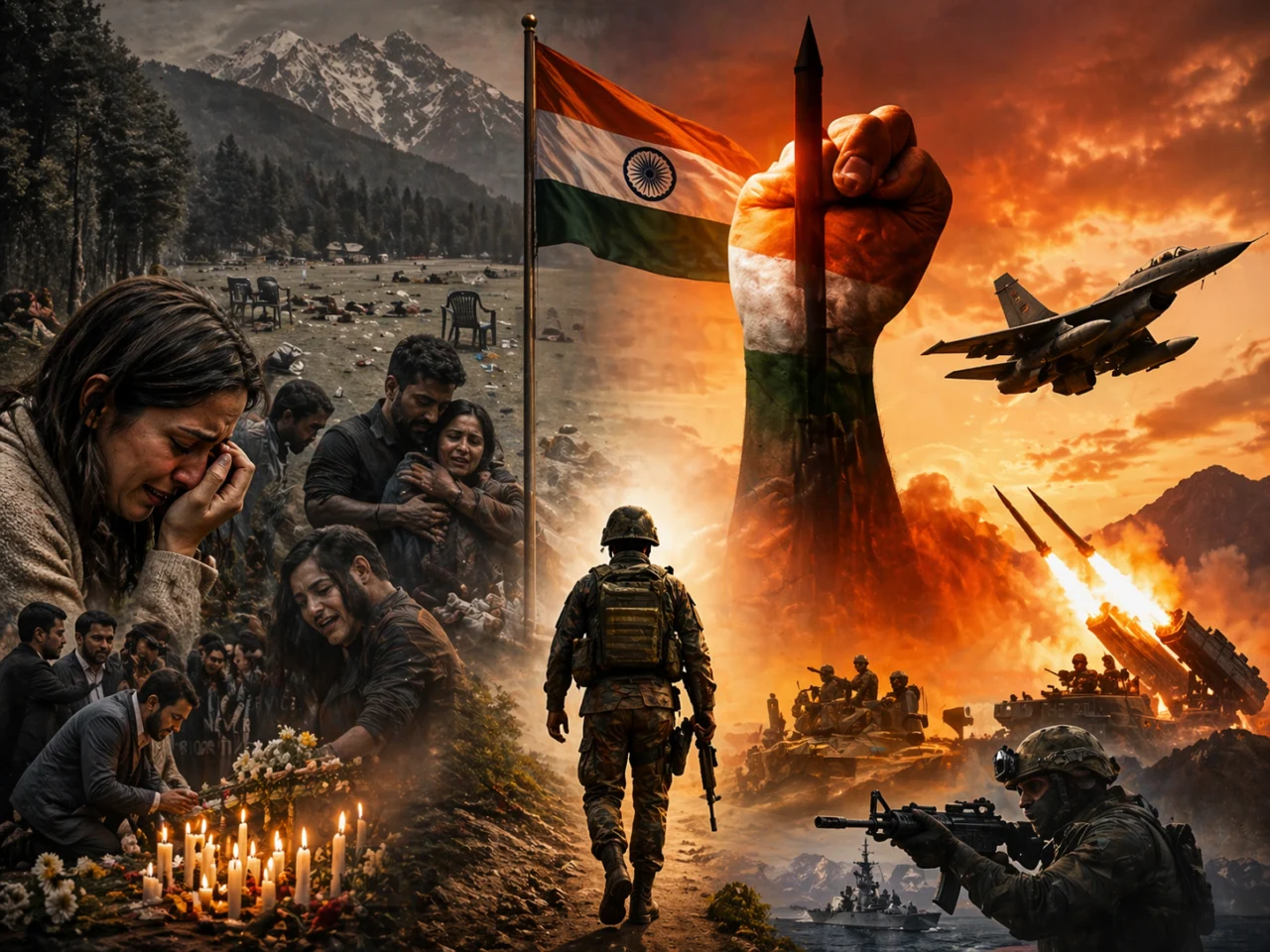
Every major terror attack has taught our government, the policy makers, security analysts and the security forces some important lessons. But the Pakistan sponsored terror attack in Pahalgam on 22 April last year shook the Indian conscience like never before. On 22 April 2025, a dastardly terror attack ripped through the quaint Baisaran meadow in Pahalgam, killing 25 tourists and a local pony-ride operator. In a most heinous manner, three-armed terrorists of The Resistance Front (TRF), a Pakistan based militant terrorist organisation and a proxy of Lashkar-e-Toiba (LeT) selectively targeted and killed Hindu tourists.
The outrage over the killing of innocent tourists and that too after identifying their Hindu religion was something that had not happened earlier in India. The condemnation of this barbaric act of terrorism drew instant and spontaneous nation-wide protests and demonstration. It was heartening to witness the streets of Jammu & Kashmir also joining the protests against the Pakistan sponsored terrorism. Even Pakistan may not have visualised the gravity of Indian anger against terrorism, particularly from the people of Kashmir valley.
The background for the Pahalgam terror attack lay in two major events in April last year. The first one was the extradition of Tahawwur Hussain Rana to India on April 10 last year from the United States. Rana is a key accused and co-conspirator in the 26/11 Mumbai terror attacks. The 26/11 Mumbai attacks took place from 26-29 November 2008, across Mumbai that claimed 166 lives and left more than 300 injured. The attacks were carried out by a 10-member terrorist team of Lashkar-e-Taiba. Since India under the PM Manmohan Singh led UPA regime did not take any aggressive action against Pakistan then, the current military leadership also expected a similar muted response from India.
The second major indicator came in the form of General Asim Munir, Pakistan Army Chief’s statement on Islam and Kashmir on 16 April from Islamabad while addressing Overseas Pakistanis Convention. The main theme of his talk was to assert the ‘superior Islamic ideology and culture over India’. An ambitious man who wanted a stronger stranglehold over the power structure in Pakistan, General Munir took the calculated risk of another terror attack against India. But this time, he totally miscalculated the firm resolve of 140 crore Indians, now fully united in their voice to punish Pakistan, under the leadership of PM Modi.
India punished Pakistan decisively during the Operation Sindoor from 7-10 May last year. To begin with, India destroyed the nine terror hubs deep inside Pakistan with precision strikes. When Pakistan attempted to escalate the conflict, India destroyed the entire war waging machinery of Pakistan. During my military career, I have served on the Pakistan border and Line of Control many times. But the type of retribution inflicted by the Indian armed forces during Operation Sindoor remains unparalleled. So severe was Indian offensive that Pakistan pleaded for ceasefire, which India accepted on own terms, from a position of strength.
Post cessation of Operation Sindoor, India signalled a major shift in its response to any future terror activity on its soil. India has modified its policy of ‘Zero Tolerance to Terrorism’. India has now articulated that any act of terrorism by the non-state actors would be treated as an act of war from the sponsoring state. This ‘new normal’ against terrorism has now been effectively implemented on the ground. The elimination of three terrorists responsible for Pahalgam terror attack on 28 July last year is just one example of our resolve.
India also ended the nuclear blackmail of Pakistan, by striking deep inside the enemy territory. On the conventional warfare front, India quickly adapted to the indigenous defence technology to defeat the Chinese military hardware being used by Pakistan. India has also demonstrated the lethality of BrahMos to the world. India has quickly developed an array of UAVs and has further strengthened the air defence cover. Indian Army has raised an effective offensive combat force in the form of Bhairav Battalions. India is now fully prepared to deal with any challenge and security threat from Pakistan.
Indians have paid a befitting tribute to the fallen heroes by remaining steadfastly united post Pahalgam terror attack. Civil defence drills were carried out across India with complete dedication by the Indian citizens. There is a new level of security consciousness amongst the citizens. The revival of tourism in Jammu & Kashmir is another positive indicator of our national resolve. Indians realise the importance of ‘whole of nation approach’ towards security. Pakistan has further slipped in economic penury and is almost a failed state. India has suspended the Indus Water Treaty and Pakistan is likely to face the pinch this summer. We Indians don’t have to browbeat any ideology because India is an ancient civilisational giant. I join a grateful nation in paying my homage to the fallen heroes of Pahalgam terror attack. Their souls must be at peace that their sacrifice has awakened the giant called Bharat. Jai Bharat!