
Can Dinesh Trivedi re-script Bharat–Bangladesh diplomacy?
August 30, 2026
  • Read Ecopy
  • Circulation
  • Advertise
  • Careers
  • About Us
  • Contact Us
Android AppiPhone AppArattai
Organiser
  • ‌
  • Bharat
    • Assam
    • Bihar
    • Chhattisgarh
    • Jharkhand
    • Maharashtra
    • View All States
  • World
    • Asia
    • Europe
    • North America
    • South America
    • Africa
    • Australia
  • Editorial
  • International
  • Opinion
  • RSS @ 100
  • More
    • Op Sindoor
    • Analysis
    • Sports
    • Defence
    • Politics
    • Business
    • Economy
    • Culture
    • Special Report
    • Sci & Tech
    • Entertainment
    • G20
    • Azadi Ka Amrit Mahotsav
    • Vocal4Local
    • Web Stories
    • Education
    • Employment
    • Books
    • Interviews
    • Travel
    • Law
    • Health
    • Obituary
  • Subscribe
    • Subscribe Print Edition
    • Subscribe Ecopy
    • Read Ecopy
  • ‌
  • Bharat
    • Assam
    • Bihar
    • Chhattisgarh
    • Jharkhand
    • Maharashtra
    • View All States
  • World
    • Asia
    • Europe
    • North America
    • South America
    • Africa
    • Australia
  • Editorial
  • International
  • Opinion
  • RSS @ 100
  • More
    • Op Sindoor
    • Analysis
    • Sports
    • Defence
    • Politics
    • Business
    • Economy
    • Culture
    • Special Report
    • Sci & Tech
    • Entertainment
    • G20
    • Azadi Ka Amrit Mahotsav
    • Vocal4Local
    • Web Stories
    • Education
    • Employment
    • Books
    • Interviews
    • Travel
    • Law
    • Health
    • Obituary
  • Subscribe
    • Subscribe Print Edition
    • Subscribe Ecopy
    • Read Ecopy
Organiser
  • Home
  • Bharat
  • World
  • Operation Sindoor
  • Editorial
  • Analysis
  • Opinion
  • Culture
  • Defence
  • International Edition
  • RSS @ 100
  • Magazine
  • Read Ecopy
Home World

Gujarati Brought Up as Bengali: Can Dinesh Trivedi re-script Bharat–Bangladesh diplomacy?

Bharat and Bangladesh share more than borders—they share history, culture, language and civilisational memory. From the legacy of 1971 to contemporary economic interdependence, the relationship is layered and sensitive. In sending a “Gujarati brought up as Bengali", New Delhi may be attempting to symbolically bridge identities—trade pragmatism with cultural empathy, national strategy with regional understanding

Siddhartha DaveSiddhartha Dave
Apr 20, 2026, 10:00 pm IST
inWorld, South Asia, Analysis, India, Asia
Follow on Google News
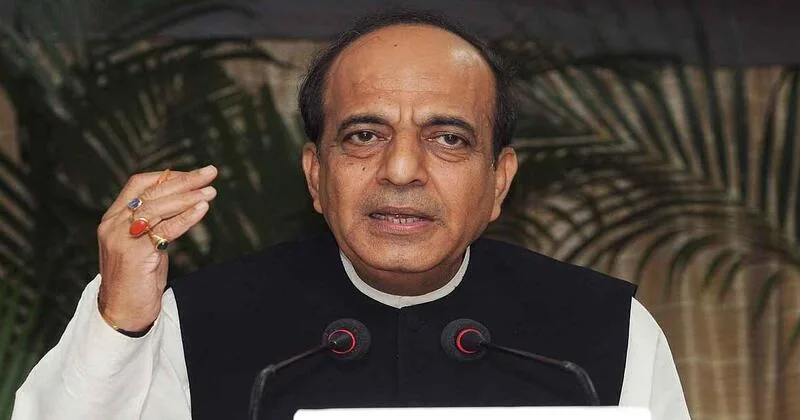
Former Union Minister Dinesh Trivedi appointed as Indian High Commissioner to Bangladesh

Former Union Minister Dinesh Trivedi appointed as Indian High Commissioner to Bangladesh

Facebook
Twitter
WhatsAppTelegramEmail

At a time when the geopolitics of energy is once again redrawing fault lines across Asia, Bharat’s decision to nominate Dinesh Trivedi as High Commissioner to Bangladesh is far more than a routine diplomatic reshuffle. It is a calculated political signal—both to Dhaka and to the wider region—that New Delhi is willing to blend political instinct with diplomatic tradition.

A political appointment in a strategic neighbourhood

For over three decades, Bharat has largely relied on career diplomats from the Indian Foreign Service (IFS) to manage relations with its immediate neighbours. The last notable political appointment in the neighbourhood dates back to the early 1990s, when historian Bimal Prasad was sent to Kathmandu. Even in Dhaka—one of Bharat’s most sensitive and strategically vital postings—the tradition has been strictly bureaucratic. This makes Trivedi’s probable nomination a departure of consequence.

Historically, political appointees have been reserved for key global capitals. The appointment of Vinay Kwatra to Washington after serving as Foreign Secretary or earlier placements like RK Raghavan in Cyprus and Dalbir Singh Suhag in Seychelles, were exceptions rather than the rule. But Dhaka is neither Washington nor London—it is a neighbourhood capital with deep civilisational, political and security linkages with Bharat. That New Delhi has chosen to send a politician here suggests that diplomacy with Bangladesh is entering a more political, personality-driven phase.

Timing: Energy crisis and regional flux

The timing is not incidental. Bangladesh is currently grappling with an acute energy crisis, exacerbated by the ongoing tensions in West Asia, particularly the U.S.-Israel confrontation with Iran and the strategic chokehold over the Strait of Hormuz. For an energy-import dependent economy like Bangladesh, disruptions in supply chains translate quickly into domestic instability.

In such a scenario, Bharat’s outreach—through a politically seasoned envoy—signals readiness to engage not just at the bureaucratic level, but through political understanding and negotiation. A career diplomat brings procedural finesse. A politician brings negotiation instincts, ideological clarity and the ability to read political undercurrents. Dhaka, at this moment, requires both.

The Man: Gujarati roots, Bengali soul

Dinesh Trivedi’s personal journey is itself a metaphor for the layered identity that Bharat often embodies. Born into a Gujarati family that migrated from Karachi during Partition, Trivedi’s upbringing unfolded in Kolkata. His father’s professional journey with Hindustan Construction Company anchored the family in Bengal, shaping Trivedi’s cultural and linguistic sensibilities. Educated at St. Xavier’s College, Calcutta and later at the University of Texas at Austin, he represents a blend of regional rootedness and global exposure.

Fluent in Bangla, trained in classical music and once even aspiring to join the Indian Air Force as a pilot, Trivedi defies the stereotype of a conventional politician. His Gujarati lineage gives him a trader’s instinct and pragmatism; his Bengali upbringing lends him cultural fluency in a region where identity and language matter deeply. In Dhaka, this duality could become a diplomatic asset.

Political Trajectory: From TMC insider to BJP voice

Trivedi’s political career has been equally layered. A long-time associate of Mamata Banerjee, he rose within the Trinamool Congress (TMC), serving as Railway Minister (2011–12) and Minister of State for Health (2009–11) in the UPA government.

His shift to the BJP ahead of the 2021 West Bengal elections marked a significant ideological repositioning. This transition—from a regional party deeply embedded in Bengal’s politics to a national party with a strong central leadership—has equipped him with insights into both regional sensitivities and national strategic priorities. Such experience may prove crucial in Dhaka, where domestic politics often intersect with bilateral relations.

Breaking the IFS monopoly in Dhaka

As former High Commissioner Veena Sikri has noted, Dhaka has historically remained the domain of seasoned IFS officers. Even the first envoy after Bangladesh’s creation in 1971, Subimal Dutt, though retired, came from a bureaucratic lineage. Trivedi’s appointment breaks that continuum.

This development inevitably raises a set of critical questions about the evolving nature of Bharat’s foreign policy. Is New Delhi consciously moving towards a more politically agile and responsive diplomatic framework in its neighbourhood? Does this appointment signal a broader shift towards a leader-driven foreign policy, where political trust and alignment outweigh bureaucratic continuity? Or is it simply a pragmatic response to the increasingly political and personality-driven nature of regional engagements, especially in countries like Bangladesh where domestic politics and foreign relations are deeply intertwined? In reality, the answer appears to lie in a combination of all three factors, reflecting both strategic intent and situational necessity.

Also Read: Exposed: The hollow claims of women empowerment; Congress and INDI Alliance falter on the Nari Shakti Vandan Adhiniyam

At the same time, the appointment of a political envoy brings with it a mix of opportunities and risks. On the positive side, such an envoy enjoys direct access to the political leadership in New Delhi, which can significantly expedite decision-making and enhance coordination. A seasoned politician is also better equipped to read, interpret, and respond swiftly to political signals, both overt and subtle, within the host country. Moreover, political figures often possess greater flexibility in conducting informal negotiations, building personal rapport and navigating complex political landscapes beyond the rigid frameworks of traditional diplomacy.

However, these advantages are accompanied by equally significant risks. A political appointee may lack the depth of training and experience in formal diplomatic protocols that career diplomats possess, which can sometimes lead to missteps in sensitive situations. There is also the danger of bilateral engagement becoming overly politicised, potentially complicating long-term institutional relationships. Additionally, perception challenges within the host country may arise, where such an appointment could be viewed through a political or ideological lens rather than as a purely diplomatic initiative. Balancing these opportunities and risks will ultimately determine the success of this unconventional but strategically significant move.

A civilisational connect, reimagined

Bharat and Bangladesh share more than borders—they share history, culture, language and civilisational memory. From the legacy of 1971 to contemporary economic interdependence, the relationship is layered and sensitive. In sending a “Gujarati brought up as Bengali,” New Delhi may be attempting to symbolically bridge identities—trade pragmatism with cultural empathy, national strategy with regional understanding.

If leveraged well, this appointment could mark a new phase in neighbourhood diplomacy—one that is less rigid, more political and deeply attuned to the realities of the region. Dhaka just became one of the most closely watched diplomatic postings in Bharat’s foreign policy landscape.


Topics: IndiadiplomacyBangladeshBilateral relationsDinesh TrivediHigh Commissioner to Bangladesh
Siddhartha Dave
Siddhartha Dave
Siddhartha Dave is an alumnus of the United Nations University in Tokyo and a former Lok Sabha Research Fellow. He writes on foreign affairs and national security. [Read more]
Share
Tweet
SendShareSend
✮ Subscribe Organiser YouTube Channel. ✮
✮ Join Organiser's WhatsApp channel for Nationalist views beyond the news. ✮
Previous News

Karnataka: BJP intensifies attack on tariff hike; Former CM Yediyurappa and LoP Ashoka slam Congress government

Next News

TCS Nashik Corporate Jihad Case: No interim protection from arrest for one of the key accused Nida Khan

Related News

PM Modi conferred highest state honour of Uzbekistan

PM Modi recieves Uzbekistan’s highest state honour “Oliy Darajali Dustlik”; Vows to strive for Global South prosperity

India airlifts 4th tranche of relief aid to Nepal along with a forensic team

Nepal Floods: 734 dead, 2419 missing; India airlifts 4th tranche of relief aid, deploys forensic team for DNA analysis

PM Modi participates in a yoga session in Uzbekistan

PM Modi in Uzbekistan: Attends yoga session; Resonates India’s soft power & civilisational wisdom in Central Asia

Nepal Floods & India’s Swift Response: A testament to ‘Neighbourhood First’ policy & humanitarian assistance

Finance Ministers Nirmala Sitharaman and Francois-Philippe Champagne concluded the inaugural Canada-India Finance Ministers' Economic and Financial Dialogue

India-Canada Finance Ministers Meet: Ottawa explores UPI adoption; India pitches investment treaty, targets $50bn trade

India’s Nuclear Mission: Powering clean & resilient energy future; Driving economic growth & environmental security

Load More

Latest News

Ghaziabad: Shivam Beaten for Being With Muslim Woman, UP Police Probe

UP: Hindu youth assaulted for being with Muslim woman in hijab; Ghaziabad Police probe viral video

Kollakkayil Devaki Amma turned adversity into a green legacy by creating a 4.5-acre forest with over 3,000 trees in Kerala

Kollakkayil Devaki Amma: The Kerala woman who turned her backyard into a 4.5-acre forest with 3,000+ trees

Chinese artist Gao Zhen

China sentences artist Gao Zhen to three years over decades-old artwork as CCP criminalises criticism of its leaders

Karnataka: HC slams dark field policing; Questions detention of Hindu activist over social media post on Kunal Kamra

PM Modi conferred highest state honour of Uzbekistan

PM Modi recieves Uzbekistan’s highest state honour “Oliy Darajali Dustlik”; Vows to strive for Global South prosperity

Mundeshwari Mandir

Mundeshwari Mandir: Exploring India’s 1,900-year-old Hindu shrine and its ancient legacy in Bihar

Prime Minister Narendra Modi & Uzbekistan President Shavkat Mirziyoyev

India-Uzbekistan upgrade ties to comprehensive strategic partnership; Foreign Ministers Council to seek bilateral goals

India airlifts 4th tranche of relief aid to Nepal along with a forensic team

Nepal Floods: 734 dead, 2419 missing; India airlifts 4th tranche of relief aid, deploys forensic team for DNA analysis

Bilaspur Violence: Over 50 Injured After Communal Clashes in Chhattisgarh

Chhattisgarh: Sohail Khan’s derogatory social media post sparks tension, stone-pelting and vandalism; Over 50 injured 

Three Gorges Dam in central China's Hubei Province

Nepal flood horror raises alarm over China’s Great Bend Dam in Tibet; CCP’s hydropower push threatens millions of lives

Load More
  • Privacy
  • Terms
  • Cookie Policy
  • Refund and Cancellation
  • Delivery and Shipping

© Bharat Prakashan (Delhi) Limited.
Tech-enabled by Ananthapuri Technologies

  • Home
  • Search Organiser
  • Bharat
    • Assam
    • Bihar
    • Chhattisgarh
    • Jharkhand
    • Maharashtra
    • View All States
  • World
    • Asia
    • Africa
    • North America
    • South America
    • Europe
    • Australia
  • Editorial
  • Operation Sindoor
  • Opinion
  • Analysis
  • Defence
  • Culture
  • Sports
  • Business
  • RSS @ 100
  • Entertainment
  • More ..
    • Sci & Tech
    • Vocal4Local
    • Special Report
    • Education
    • Employment
    • Books
    • Interviews
    • Travel
    • Health
    • Politics
    • Law
    • Economy
    • Obituary
  • Subscribe Magazine
  • Read Ecopy
  • Advertise
  • Circulation
  • Careers
  • About Us
  • Contact Us
  • Policies & Terms
    • Privacy Policy
    • Cookie Policy
    • Refund and Cancellation
    • Terms of Use

© Bharat Prakashan (Delhi) Limited.
Tech-enabled by Ananthapuri Technologies