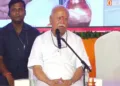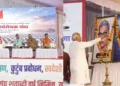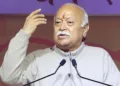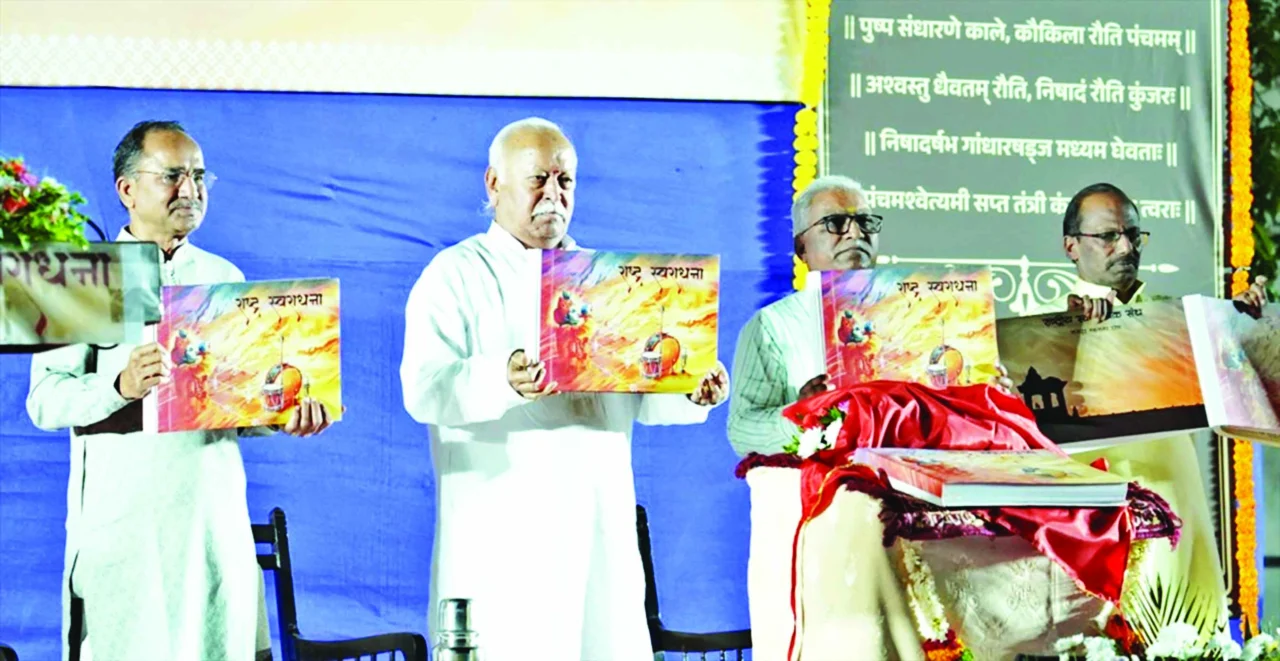
The Ghosh (band) of the Rashtriya Swayamsevak Sangh includes various musical instruments whose tones and sounds differ, yet Swayamsevaks march in the same rhythm. This develops a sense of coordination and unity. When any work is done wholeheartedly and with complete dedication, its result manifests in this form and one experiences Satyam, Shivam, Sundaram. Establishing Satyam, Shivam, Sundaram in society and the nation is the objective of the Sangh,” said Dr Mohan Bhagwat, Sarsanghchalak, Rashtriya Swayamsevak Sangh (RSS) while speaking at a programme held at Dr Hedgewar Smruti Mandir in Reshimbag, On the occasion, a handwritten volume titled Rashtra Swaradhana, based on the history of the Nagpur Mahanagar Ghosh Pathak, was released in Nagpur on April 8. The Sarsanghchalak emphasised that the purpose of all Sangh programmes is to build sanskar (values). Advancing towards a quality life through the coordination of a strong body and a cultured mind is the goal. From this perspective, the handwritten history of Rashtra Swaradhana is very important. Time passes and work stands, but maintaining the original quality from beginning to end is significant. This handwritten volume constantly reminds us of how the work was established in difficult circumstances and with what objective.
Though Swayamsevaks are not professional singers or musicians, people are astonished at how they present multiple compositions without referring to paper while managing their daily responsibilities. However, creating miracles is not the Sangh’s objective; it happens naturally. The virtues of former Swayamsevaks are found and reflected in these compositions.
Dr Bhagwat said that the work of the Sangh has neither progressed due to anyone’s favour nor stopped due to anyone’s disfavour. It has been realised through the efforts of Swayamsevaks. Considering the Sangh as their own, all Swayamsevaks have devoted their full strength to shaping the nation according to its ideals. That is why, today the Sangh stands as a force guiding the nation. This year marks the centenary of the Rashtriya Swayamsevak Sangh. The completion of one hundred years of continuous work is not a celebration, but an occasion for introspection — remembering the ancestors and striving towards a more advanced state. It is the responsibility of today’s Swayamsevaks to evaluate the work of their predecessors and move forward by comparing themselves with them. It is not enough to preserve the work done by the elders; it is the duty of the present generation to carry it forward in a more advanced form.