Anekantavad(the doctrine of multifaceted reality) provides the intellectual grounding for social harmony, while the principle of Parasparopagraho Jivanam serves as a precursor to today’s environmental and ESG standards. By applying concepts like Aparigraha and Shravak Dharma to contemporary life, we find a blueprint for civic duty and the “Swadeshi” movement. Ultimately, this article argues that Mahaveer’s teachings aren’t just for the monastery, they are essential tools for India’s journey toward becoming a global leader.
The convergence of timelines and shattering misconceptions
“He who knows one (the soul), knows all; and he who knows all, knows one.” – Acharanga Sutra (1.1.2)
On Vaishakh Shukla Dashami, which is an auspicious day 2,550 years ago, Vardhaman Mahaveer attained the highest level of Keval Gyan(Absolute Knowledge) on the banks of the Rijupalika(Rujuvalika) River. Centuries there have been a complete misunderstanding of this event by the world. Many a time Jainism is perceived through a single limited prism: that of extreme asceticism, extreme fasting and complete renunciation of the world, which makes one think that its followers are not in touch with the socio-political conditions of their country or the world.
The truth is much different. Jain philosophy is heavily infused with active socio-economic responsibility. A demographic fact: although it is a micro-minority of just about 0.4 per cent of the population of India, the Jain community over the years only represents a disproportionately huge contribution of more than 24 per cent to the national income tax revenues as calculated by various economic organizations. This fact all by itself demolishes the myth of the passive renunciation, and points to the history of active economic involvement, philanthropy, institution-building and active nation-building. The enlightenment of Prabhu Mahaveer was not a way-out of the world; it was a great Management Blueprint of living in perfect accord with, and being responsible to, that which was every particle of the universe.
We are at a crossroad in history as we stand in April 2026. On the one hand, we are commemorating the divine anniversary of Keval Gyan of Lord Mahaveer. On the other, the Rashtriya Swayamsevak Sangh (RSS) is celebrating 100 years of existence, which started a huge social revolution with its Panch Parivartan (Five Transformations). As a Growth Strategist, and a Law and Management student, a study of these two different currents will show an amazing ‘Strategic Synergy’.
Even the five pillars of the RSS – Social Harmony, Environmental Protection, Family Enlightenment, Selfhood Based Life (Swadeshi) and Civic Duty are modern, practical reformulations of the vows of Mahaveer. These five pillars are to be discussed in the light of the eternal and highly practical teachings of Lord Mahaveir.
1. Social Harmony: The Management of Equanimity and Anekantavad
Social Harmony (Samajik Samarasata) is the cornerstone of Panch Parivartan. Nowadays in the boardrooms we refer to it as Inclusive Growth and Diversity Management. Lord Mahaveer gave the final weapon of conflict-resolution to a historically divided society that lacked social mobility: Anekantavad (The Doctrine of Multi-faceted Reality).
The scriptural foundation & evidence
Reference: The Acharanga Sutra (Attributed to Sudharmaswami, circa 530 BCE) and The Uttaradhyayana Sutra (Compiled between 599-540 BCE). According to the Acharanga Sutra (1.2.3), a true knower is one who perceives the pain of others as their own. Lord Mahaveer aggressively dismantled the rigidity of the birth-based caste system long before modern constitutions were written. He stated in the Uttaradhyayana Sutra (25.30-33): “Tavena Bambhano hoi, Bambhano hoi Kammuna” clarifying that a person achieves greatness through penance and actions (Karma), not by birth.
Strategic analysis
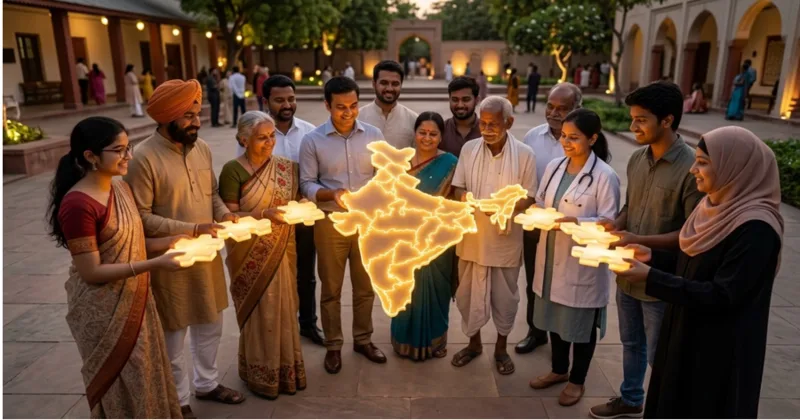
The internal power and unity of a nation cannot be maximized when a certain segment of the population considers itself superior to the other, and excludes it. The recent socio-political programme of One Temple, One Well and One Crematorium in Indian villages is the immediate, practical application of the Mahaveer conception of the Equality of the Soul. Cognitive flexibility is taught by Anekantavad. It requires that we exercise the Acceptance of Perspective when it comes to the Dalit, tribal and economically poor in society. When social harmony understands that truth has many sides and that there is no single community that has a monopoly on human dignity, social harmony becomes not an ideal, but a working reality.
2. Environmental Protection: ‘Parasparopagraho Jivanam’ and modern ESG
Nowadays, ESG (Environmental, Social and Governance) is a heavily discussed topic in the world of business, as it is regarded as a new-generation corporate compliance liability. Yet, Lord Mahaveer articulated the ultimate ESG framework two and a half years ago. The second pillar of the RSS, the Environmental Protection, is nothing more than a contemporary socio-political solution on the basis of this antique scientific wisdom.

The scriptural foundation & evidence
Reference: The Tattvartha Sutra(Composed by Acharya Umaswami, 2nd-5th Century CE) and The Bhagvati Sutra. The Tattvartha Sutra(5.21) provides the timeless aphorism: “Parasparopagraho Jivanam.” This translates to: “Souls render service to one another.” It is the original declaration of a globally interdependent ecosystem. Furthermore, the Acharanga Sutra commands the protection of the Shat-Jivanikaya, the six classes of life. Prabhu Mahaveer categorized ecological elements long before modern biology: Earth, Water, Fire, Air, and Plant-bodied beings (one-sensed, immobile), alongside Mobile beings (ranging from two-sensed insects to five-sensed mammals and humans).
Strategic analysis
As a management consultant, I view environmental protection strictly as ‘Resource Optimization’. The contemporary demands of a plastic-free life, carbon-neutrality, and water conservation directly reflect the principle of Ahimsa (non-violence) of Prabhu Mahaveer on a macro-economic level. Lord Mahaveer taught that destroying a plant that is as small as a microscopic is similar to self-destruction. Our lack of needless use of nature directly threatens our Economic Sustainability. His theory of Aparigraha (non-possessiveness and confining consumption) is the very foundation of the modern-day highly desired Circular Economy. Real environmentalism goes beyond planting trees, it is the deliberate minimization of one ecological footprint, which is one of the fundamental principles of Jain lifestyle.
3. Family Enlightenment & Awakening: Shravak Dharma and value-based leadership
The third is Family Enlightenment (Kutumb Prabodhan). I have personally observed over 30 years of professional corporate consulting the fall of huge, billion-dollar corporate empires. The root cause is rarely a flawed product; it is nearly always about a governance failure that is due to a deficiency of underlining family values.

The scriptural foundation & evidence
Reference: The Upasakdashang Sutra(Attributed to Sudharmaswami, circa 527 BCE). For householders actively engaged in the economy, Lord Mahaveer established Shravak Dharma. The Upasakdashang Sutra details the life of ‘Shravak Anand,’ a wealthy businessman who was deeply conscious of his ethical boundaries and familial duties. Lord Mahaveer prescribed 12 Vows (Anuvratas) for the householder to discipline the family and business as a cohesive, ethical unit:
- The 5 Anuvratas (Basic Vows): Strict adherence to non-violence, truthfulness, non-stealing, fidelity, and limiting material attachments.
- The 3 Gunavratas (Strengthening Vows): Restricting one’s business footprint (Digvrata) to avoid ecological damage, limiting consumerism (Bhogopabhog-parimana), and abstaining from purposeless destructive activities (Anartha-dandavrata).
- The 4 Shikshavratas (Disciplinary Vows): Allocating time for introspection (Samayika), fasting, and most importantly, Atithi Samvibhag—the absolute duty of sharing wealth, food, and knowledge with the broader society.
Strategic analysis
The modern psychological drive towards the existence of gadget-free family time, digital detoxes, and weekly family conversations is an essential element of the Value Chain Management. The smallest, but most critical, Supply Chain of the society is the family. Without ethical coding in the family unit, the society at large will not be able to deliver high quality morally based-Human Resources. The philosophy of Prabhu Mahaveer does not consider the family as a unit of hoarding, but a Trust. All the members serve as trustees, who compound and transfer cultural integrity not only generational wealth to the following generation.
4. Selfhood Based Life (Swadeshi): Mental decolonization and brand India
Swadeshi is the fourth pillar of five transformations. Swadeshi is often misconceived as economic protectionism, but it is indeed very psychological, the actualization and maintenance of the Self (Swa). Lord Mahaveer had highest premium on true self-knowledge than outward imitation.
The scriptural foundation & evidence
Reference: The Samayasara(Composed by Acharya Kundkund) and The Dashavaikalika Sutra(4th Century BCE). The Samayasara brilliantly explains the distinction between the ‘Self’ and the ‘Other’. It posits that as long as a soul is deeply immersed in the ‘Other'(external, foreign, or superficial influences), it remains in a state of psychological slavery. The Dashavaikalika Sutra (4.1) further reinforces that genuine self-realization is the highest form of liberty.
Strategic analysis
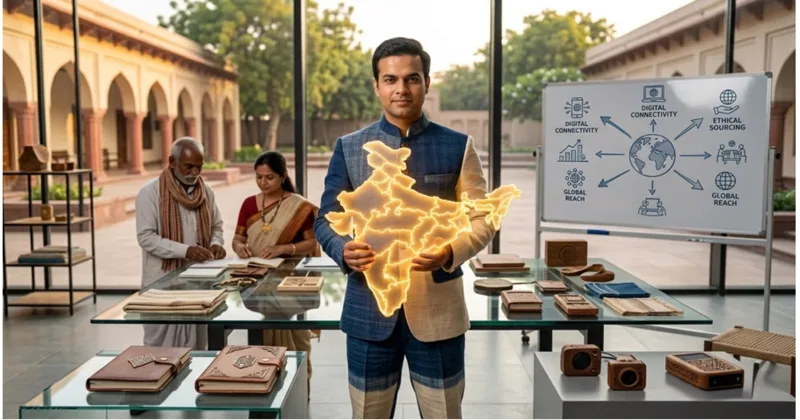
Through the lens of a Growth Strategist, Swadeshi is the ultimate manifestation of ‘Brand India’. By supporting local languages, local fabrics, local ecological buildings, and local supply-chain we are not stumbling back to the past, we are enhancing our country with a Unique Selling Proposition (USP) in the homogenized world market. Local consumption is inherently in line with Prabhu Mahaveer’s Aparigraha (limiting possessions). It teaches us to create and consume based on the ecological capabilities of the region and not aimlessly emulate foreign luxuries with carbon-intensive imports. Swadeshi can actually be called a grand plan of Mental Decolonization and economic independence (Atmanirbharatha).
5. Civic Duty and Etiquettes: The citizen’s manual of ‘Samiti’ and ‘Gupti’
The fifth pillar is Civic Duty (Nagrik Kartavya). The people in the contemporary democracies have been turned to hyper-conscious about their basic rights and at the same time conveniently amnesic about their basic responsibilities. Lord Mahaveer devised a system of absolute civic awareness under Samyak Charitra (Right Conduct).

The scriptural foundation & evidence
Reference: The Sutrakritanga Sutra and The Dashavaikalika Sutra. The Sutrakritanga Sutra(1.8) identifies Vinaya (Discipline/Humility) as the very root of Dharma. To prevent the “Tragedy of the Commons,” Lord Mahaveer established the ‘Five Samitis'(strict guidelines for public conduct: mindful movement, careful speech, ethical earning/seeking, cautious handling of public objects, and sanitary disposal of waste). The Dashavaikalika Sutra instructs: “Jayam chare jayam chitthe jayamase jayam saye” move, stand, sit, and speak with utmost caution and mindfulness to avoid causing harm or inconvenience to the ecosystem or fellow beings.
Strategic analysis
From a legal and administrative perspective, the law can only prohibit or prosecute a crime after it has taken place; it is a collective civic responsibility that creates a country. Following road regulations, keeping clean the surrounding infrastructure and paying taxes in a transparent manner are the contemporary corporate and civic expressions of the Prabhu Mahaveer vows of Asteya (Non-stealing) and Satya (Truthfulness). Civic duty translates our ‘Individual Social Responsibility’ (ISR) into national progress. This ancient framework effortlessly shifts the modern mindset from being passive ‘Consumers’ of a nation’s resources to active ‘Contributors’ to its legacy.
The roadmap to ‘Vishwa Guru’ India
As we celebrate Mahaveer Keval Gyan Diwas in April 2026 alongside the centenary milestones of nationalistic organizations like the RSS, this convergence serves as a powerful call to action. Lord Mahaveer attained Keval Gyan not to escape the world, but to illuminate a civilization darkened by ignorance, inequality, and unsustainable greed. The Panch Parivartan, today, puts forth these eternal, universal truths in an extremely executable, socio-political format.
As a strategist and mentor, I firmly assert that Prabhu Mahaveer’s ultimate maxim, Ahimsa Paramo Dharma(Non-violence is the supreme duty), is not a passive doctrine limited to avoiding physical war. It is an aggressively active commitment: a commitment to unite fractured societies, salvage a bleeding environment, enforce corporate and civic discipline, and cultivate mental resilience.
As India aggressively scales as the global ‘Growth Engine’, the sustainable fuel for this engine must be drawn from these five pillars. We do not merely seek GDP growth; we seek Samyak Pragati (Right Progress). Lord Mahaveer’s pragmatic philosophy of “Live and Let Live” is the operational foundation of “Vasudhaiva Kutumbakam”(The World is One Family). Let us adopt these ancient, battle-tested principles as our ‘Core Business Mantra’. The spiritual and material progress of the individual is inextricably bound to the progress of the nation.