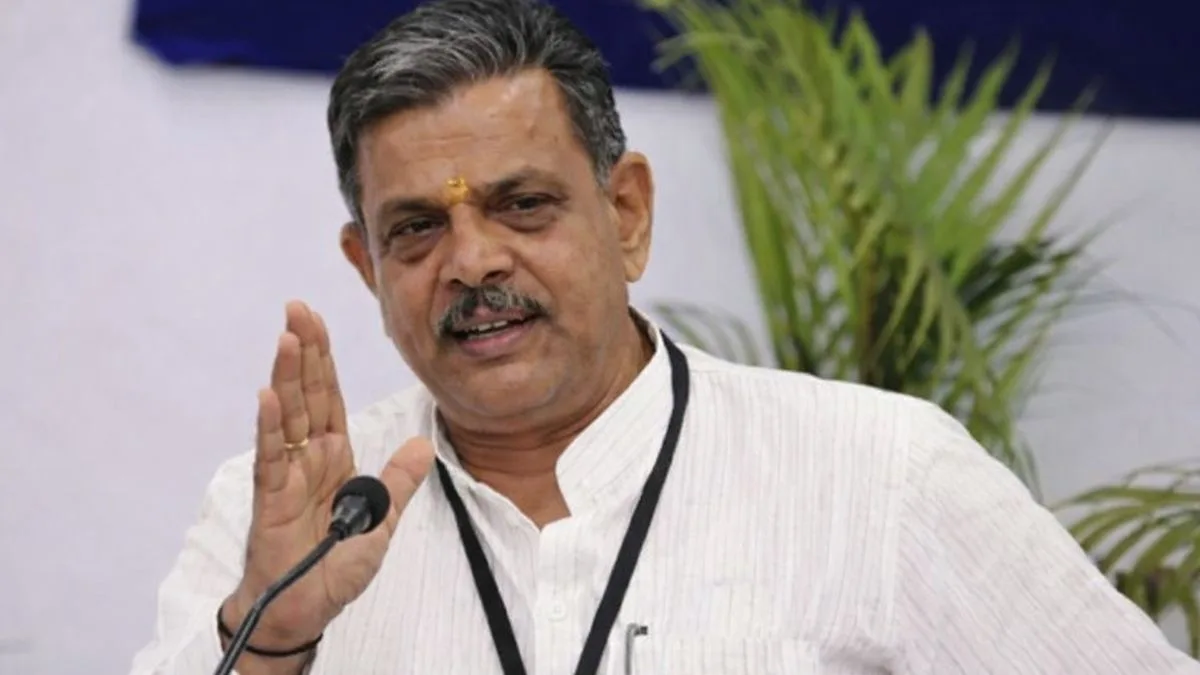
"Political liberty must unlock cultural growth"; Dattatreya Hosabale calls for a decolonised mind to gain true freedom
June 25, 2026
  • Read Ecopy
  • Circulation
  • Advertise
  • Careers
  • About Us
  • Contact Us
Android AppiPhone AppArattai
Organiser
  • ‌
  • Bharat
    • Assam
    • Bihar
    • Chhattisgarh
    • Jharkhand
    • Maharashtra
    • View All States
  • World
    • Asia
    • Europe
    • North America
    • South America
    • Africa
    • Australia
  • Editorial
  • International
  • Opinion
  • RSS @ 100
  • More
    • Op Sindoor
    • Analysis
    • Sports
    • Defence
    • Politics
    • Business
    • Economy
    • Culture
    • Special Report
    • Sci & Tech
    • Entertainment
    • G20
    • Azadi Ka Amrit Mahotsav
    • Vocal4Local
    • Web Stories
    • Education
    • Employment
    • Books
    • Interviews
    • Travel
    • Law
    • Health
    • Obituary
  • Subscribe
    • Subscribe Print Edition
    • Subscribe Ecopy
    • Read Ecopy
  • ‌
  • Bharat
    • Assam
    • Bihar
    • Chhattisgarh
    • Jharkhand
    • Maharashtra
    • View All States
  • World
    • Asia
    • Europe
    • North America
    • South America
    • Africa
    • Australia
  • Editorial
  • International
  • Opinion
  • RSS @ 100
  • More
    • Op Sindoor
    • Analysis
    • Sports
    • Defence
    • Politics
    • Business
    • Economy
    • Culture
    • Special Report
    • Sci & Tech
    • Entertainment
    • G20
    • Azadi Ka Amrit Mahotsav
    • Vocal4Local
    • Web Stories
    • Education
    • Employment
    • Books
    • Interviews
    • Travel
    • Law
    • Health
    • Obituary
  • Subscribe
    • Subscribe Print Edition
    • Subscribe Ecopy
    • Read Ecopy
Organiser
  • Home
  • Bharat
  • World
  • Operation Sindoor
  • Editorial
  • Analysis
  • Opinion
  • Culture
  • Defence
  • International Edition
  • RSS @ 100
  • Magazine
  • Read Ecopy
Home Bharat

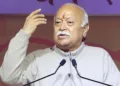
“Political liberty must unlock cultural growth”; Dattatreya Hosabale calls for a decolonised mind to gain true freedom

RSS Sarkaryavah Dattatreya Hosabale has issued a sharp call to “decolonise the mind,” warning that colonial-era distortions still shape how Bharat sees its history, culture and identity. Marking 100 years of the RSS, Dattatreya Hosabale asserted that political freedom remains incomplete without dismantling entrenched narratives that undermine Bharat’s civilisational confidence

Dr Vishnu AravindDr Vishnu Aravind
Apr 18, 2026, 02:23 pm IST
in Bharat, India, RSS News
Follow on Google News
"Political liberty must unlock cultural growth"; Dattatreya Hosabale calls for a decolonised mind to gain true freedom

"Political liberty must unlock cultural growth"; Dattatreya Hosabale calls for a decolonised mind to gain true freedom

FacebookTwitterWhatsAppTelegramEmail

Washington: The Rashtriya Swayamsevak Sangh has called for a renewed and sustained push to “decolonise the mind,” with its Sarkaryavah Dattatreya Hosabale asserting that distorted narratives about Bharat’s history, culture and identity continue to shape public discourse even decades after independence. In an exclusive interview marking 100 years of the RSS, Dattatreya Hosabale emphasised that while Bharat achieved political freedom in 1947, the process of intellectual and cultural decolonisation remains incomplete. “Decolonisation has to take place,” Dattatreya Hosabale said, adding that “somewhere it is still not achieved fully.”

Incomplete freedom beyond politics

Dattatreya Hosabale argued that political independence should have naturally paved the way for broader freedoms, including cultural and intellectual autonomy. However, he suggested that this transition has not fully materialised.
“The political freedom should open the doors for other freedoms, cultural and otherwise,” Dattatreya Hosabale said, stressing the need to correct prevailing narratives about Bharat and its civilisational roots.

According to Dattatreya Hosabale, the persistence of what he described as a “colonised mind” has contributed to the spread of narratives that do not accurately reflect historical facts or the lived realities of Bharat’s civilisation. He maintained that such narratives continue to influence education, public discourse and societal perceptions. Highlighting long-standing distortions, Dattatreya Hosabale pointed specifically to the continued teaching and acceptance of the Aryan invasion theory. “Even today, people think that… there was Aryan invasion, though it was proved that there is no such Aryan invasion in Bharat,” Dattatreya Hosabale said.

He also underlined the lack of awareness about Bharat’s scientific heritage, suggesting that this gap has contributed to a diminished sense of national confidence. “Many a time about our scientific heritage, there is not a full awareness,” Dattatreya Hosabale noted.

Language, identity and civilisational continuity

Dattatreya Hosabale identified language as another domain where colonial-era perceptions continue to exert influence. He pointed out that for many years, speaking Bharatiya  languages was often associated with being less educated, creating what he described as “a sort of inferiority complex among even the educated class.” “For all these years… people thought that they are less educated if they speak Bharatiya  languages,” Dattatreya Hosabale said, emphasising how such attitudes were shaped during colonial rule and persisted long after independence.

Challenging broader historical narratives, Dattatreya Hosabale also rejected the idea that Bharat is a relatively recent political construct. “We are not a nation in the making. We have been a nation for thousands of years,” Dattatreya Hosabale asserted. He argued that claims suggesting Bharat became unified only after independence or under colonial rule overlook the deep cultural and civilisational continuity that has existed across regions for centuries. According to Dattatreya Hosabale, recognising this continuity is essential for reshaping national consciousness.

Dattatreya Hosabale maintained that correcting such narratives is central to achieving what he described as “real and complete freedom,” as it would fundamentally alter how people of Bharat perceive themselves and their place in the world.

Decolonisation, national confidence and global role

Linking the idea of decolonisation to broader national development, Dattatreya Hosabale argued that a confident society rooted in its own civilisational values is better equipped to contribute globally. “If the Bharat narrative is set right, then decolonisation of mind takes place,” Dattatreya Hosabale said. He added that the RSS has, over the past century, worked towards fostering such confidence through cultural awareness and social engagement. “The impact that RSS has is the Hindu nationalism… pride in our nation and culture and civilisation values,” Dattatreya Hosabale stated, describing it as a guiding principle for national life.

According to Dattatreya Hosabale, these values remain “relevant even today” and should inform both domestic priorities and India’s global role. Dattatreya Hosabale also framed decolonisation as part of a wider effort to address contemporary global challenges, including identity conflicts, social fragmentation and ideological divisions.

He argued that restoring a balanced understanding of history and culture could strengthen social cohesion and national unity. At the same time, Dattatreya Hosabale acknowledged that decolonisation is an ongoing process requiring sustained engagement across multiple institutions, including education, media and civil society.

The remarks come at a time when debates over curriculum changes, historical interpretation and cultural identity continue to shape public discourse in Bharat  and among the diaspora. Over the past decade, successive governments have taken steps to revisit school textbooks, promote Bharatiya  languages and highlight indigenous knowledge systems as part of a broader cultural reorientation.

Founded in 1925, the RSS has played a significant role in influencing these debates through its network of RSS influenced organizations, which engage in areas ranging from education to social policy and public discourse. As the RSS enters its second century, Dattatreya Hosabale’s emphasis on decolonisation signals a continued focus on redefining Bharat’s intellectual and cultural framework, both domestically and in the global arena.

Topics: RSSRSS Sarkaryavah Dattatreya HosabaleRashtriya Swayam sevak Sangh
ShareTweetSendShareSend
✮ Subscribe Organiser YouTube Channel. ✮
✮ Join Organiser's WhatsApp channel for Nationalist views beyond the news. ✮
Previous News

Delhi Red Fort Car Blast Case: SIA chargesheet exposes doctor-led terror module’s AGUH revival and TATP plot

Next News

Love Jihad in Hyderabad: Hindu woman alleges sexual exploitation and forced conversion to Islam by her husband Nawaz

Related News

Sunil Ambekar (Akhil Bharatiya Prachar Pramukh Rashtriya Swayamsevak Sangh addressing the gathering in Patna

The Emergency taught us that a vigilant society is essential to protect democracy: Sunil Ambekar ji

Nagpur | Acceptance of Bharatiya civilisational values is steadily increasing worldwide: Shanta Kumari

(Left) Petrol bomb hurled at BJP leader’s clinic opposite newly inaugurated RSS office in Bhatinda (Right) BJP leader Dr Tarsem Garg

Punjab: Petrol bomb hurled at BJP leader’s clinic opposite newly inaugurated RSS office in Bhatinda

Functionaries of Akhil Bharatiya Rashtriya Seva Bharati on the stage release Rashtriya Seva Sadhana–2026

Tamil Nadu: Seva Bharati reviews service initiatives, charts roadmap for future expansion

PM Modi Pays Homage to Jan Sangh Founder Syama Prasad Mookerjee

Balidan Diwas: PM Modi pays tribute to Jan Sangh founder Syama Prasad Mookerjee, hails his nationalist legacy

(Left) Dr. Shyama Prasad Mookerjee (Right) of Dr Keshav Baliram Hedgewar

Bengal and the Sangh: The historical bond forged by Dr Keshav Baliram Hedgewar and Shyama Prasad Mookerjee

Load More

Latest News

Twin earthquakes devastate Venezuela

Venezuela Earthquake 2026: Powerful 7.5 & 7.2 magnitude tremors leave the country in ruins; State of emergency declared

Pakistan’s Defence Minister, Khawaja Muhammad Asif

Pakistan Defence Minister Khwaja Asif sparks fury in POJK, labels Mirpuris &  Rawalakot residents ‘Non-Kashmiris’

Sunil Ambekar (Akhil Bharatiya Prachar Pramukh Rashtriya Swayamsevak Sangh addressing the gathering in Patna

The Emergency taught us that a vigilant society is essential to protect democracy: Sunil Ambekar ji

Moga Massacre 1989: When Khalistani terrorists turned an RSS shakha into a killing field

From sovereign satellite networks to human spaceflight, India is building the foundations of a globally competitive space power

India eyes a $45 billion space economy by 2033: AnanthSat-1’s 2029 launch heralds the private satellite age

Emergency and RSS- The resistance years: Sangh, society and restoration of democracy

Andhra Pradesh Chief Minister N. Chandrababu Naidu inaugurates the Jonnagiri Gold Mining Project in Kurnool district

Andhra Pradesh: CM Chandrababu Naidu lunches first major gold mining project in Kurnool district

AI-generated image for representation

Tamil Nadu: School teacher faces action over alleged humiliation of menstruating student

Cochin Shipyard (File Photo)

Keralam: ‘I Love Pakistan’ inscription found inside vessel at Cochin Shipyard; Central agencies launch probe

BJP national spokesperson Pradeep Bhandari

Karnataka: BJP accuses Kharge family of illegally acquiring government land worth over Rs 100 crore

Load More
  • Privacy
  • Terms
  • Cookie Policy
  • Refund and Cancellation
  • Delivery and Shipping

© Bharat Prakashan (Delhi) Limited.
Tech-enabled by Ananthapuri Technologies

  • Home
  • Search Organiser
  • Bharat
    • Assam
    • Bihar
    • Chhattisgarh
    • Jharkhand
    • Maharashtra
    • View All States
  • World
    • Asia
    • Africa
    • North America
    • South America
    • Europe
    • Australia
  • Editorial
  • Operation Sindoor
  • Opinion
  • Analysis
  • Defence
  • Culture
  • Sports
  • Business
  • RSS @ 100
  • Entertainment
  • More ..
    • Sci & Tech
    • Vocal4Local
    • Special Report
    • Education
    • Employment
    • Books
    • Interviews
    • Travel
    • Health
    • Politics
    • Law
    • Economy
    • Obituary
  • Subscribe Magazine
  • Read Ecopy
  • Advertise
  • Circulation
  • Careers
  • About Us
  • Contact Us
  • Policies & Terms
    • Privacy Policy
    • Cookie Policy
    • Refund and Cancellation
    • Terms of Use

© Bharat Prakashan (Delhi) Limited.
Tech-enabled by Ananthapuri Technologies