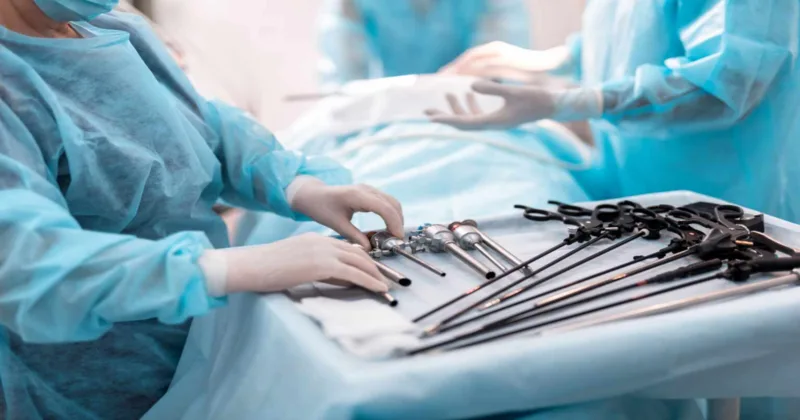
The journey towards parenthood can be complex, especially for couples facing infertility challenges. With advancements in reproductive medicine, techniques such as IVF have significantly improved the chances of conception. However, the success of IVF often depends on identifying and addressing underlying conditions that may not be visible through routine tests. This is where laparoscopy plays a crucial role. At the best IVF centre in Bangalore, laparoscopy is used as a diagnostic and therapeutic tool to enhance IVF success rates.
Understanding The Meaning Of Laparoscopy
The meaning of laparoscopy is a medical procedure used to examine the organs inside the abdomen using a thin, lighted instrument called a laparoscope. Before discussing its role in fertility treatment, it helps to understand what laparoscopy involves. Laparoscopy is a minimally invasive surgical procedure in which a thin, lighted camera is inserted through a small incision, usually near the navel, to examine the pelvic organs. Compared with open surgery, it typically involves smaller incisions, less discomfort, and faster recovery. In fertility care, this procedure allows specialists to closely assess the uterus, ovaries, fallopian tubes, and surrounding tissues, helping identify conditions that may not always be clearly visible on standard imaging tests.
Why Laparoscopy Matters In Fertility Treatment?
Infertility is not always straightforward. Many couples undergo blood tests, scans, and semen analysis, only to find that the results appear normal. Despite this, conception may still not occur. In such cases, hidden conditions such as endometriosis, adhesions, or minor tubal blockages could be the cause.
Laparoscopy provides clarity in these situations. It allows doctors to identify subtle abnormalities that may interfere with fertilisation or embryo implantation. More importantly, many of these issues can be treated during the same procedure, reducing delays in starting IVF.
The Link Between Laparoscopy and IVF Success
Accurate diagnosis plays an important role in improving IVF outcomes, and laparoscopy can help identify and treat underlying conditions that may affect treatment success.
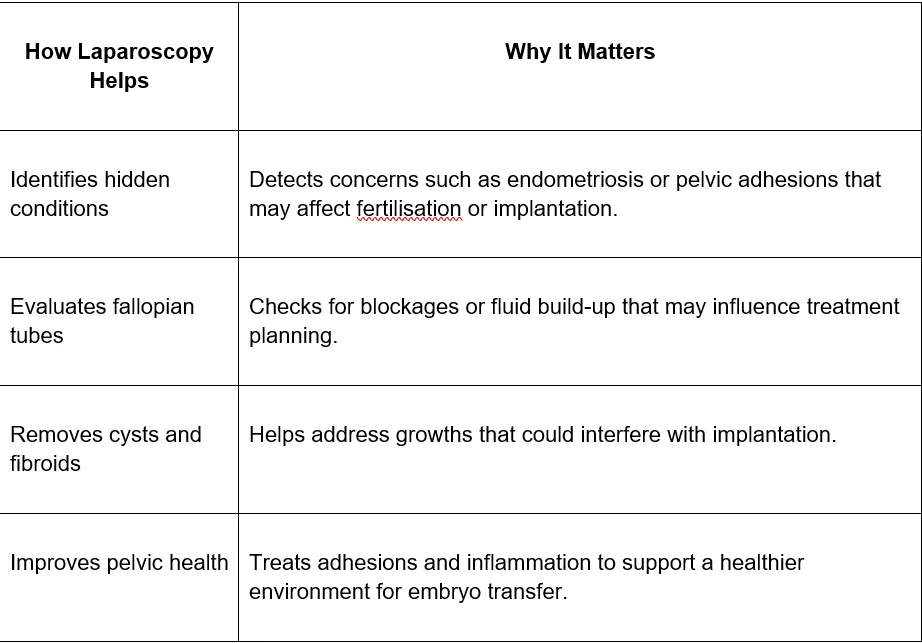
By providing clearer diagnosis and targeted treatment, laparoscopy can support better preparation for fertility treatment.
When Is Laparoscopy Recommended Before IVF
Not every patient requires a laparoscopy before IVF. However, doctors at the best IVF centre in Bangalore may recommend it in specific situations:
- Unexplained infertility despite normal test results
- Suspected endometriosis
- History of pelvic infections or surgeries
- Presence of ovarian cysts or fibroids
- Repeated IVF failures
In such cases, laparoscopy helps ensure that no underlying issue is overlooked before proceeding with IVF.
The Procedure And What To Expect
Laparoscopy is a minimally invasive procedure that allows doctors to examine and treat pelvic conditions in the same sitting.
- General Anaesthesia: The procedure is performed while the patient is asleep.
- Small Incision: A tiny cut is made near the navel to insert the laparoscope.
- Gas Inflation: Gas is introduced to improve the visibility of pelvic organs.
- Immediate Treatment: Issues like cysts or adhesions can be treated during the procedure.
- Short Stay: Most patients are discharged the same or the next day.
- Quick Recovery: Normal activities usually resume within a few days.
This combined diagnostic and treatment approach helps streamline fertility care and recovery.
How Laparoscopy Improves IVF Outcomes
The success of IVF depends on multiple factors, including embryo quality, uterine health, and hormonal balance. Laparoscopy directly contributes to improving several of these factors.
Improved Implantation Rates
By removing fibroids or adhesions, the uterine environment becomes more receptive to embryo implantation. A healthier uterine lining improves the chances of the embryo attaching and developing successfully.
Better Ovarian Response
Treating conditions such as ovarian cysts or endometriosis can support improved ovarian function during stimulation. This may help produce better-quality eggs and support a more predictable response to medication.
Reduced Risk Of Complications
Managing issues like hydrosalpinx helps lower the chances of IVF failure. Removing or treating fluid-filled tubes can prevent harmful fluid from affecting embryo implantation.
Increased Overall Success Rates
Addressing underlying conditions before treatment can support better pregnancy outcomes. A well-prepared reproductive environment allows the IVF process to progress with fewer medical barriers.
Balancing Laparoscopy and IVF
A common question couples ask is whether laparoscopy or IVF is the better option. The answer depends on the cause of infertility. Laparoscopy is ideal when there is a correctable structural issue. IVF is recommended when natural conception is unlikely, such as in severe male infertility or low ovarian reserve. In many cases, the two approaches work together. Laparoscopy is performed first to correct the issue, followed by IVF to maximise the chances of success.
Benefits Of Laparoscopy In Fertility Care
Laparoscopy offers several advantages that make it an important part of modern fertility treatment:
- Minimally invasive with small incisions
- Faster recovery compared to open surgery
- Accurate diagnosis through direct visualisation
- Ability to diagnose and treat in one procedure
- Improved chances of natural conception and IVF success
These benefits make it a preferred choice for both patients and fertility specialists
Risks And Considerations
Laparoscopy is generally considered a safe and commonly performed procedure in fertility care.
- Mild Pain: Temporary discomfort around the incision area may occur after the procedure.
- Infection Risk: As with any surgery, there is a small chance of infection, which is usually manageable.
- Anaesthesia Effects: Some patients may experience short-term nausea or fatigue after anaesthesia.
Doctors recommend laparoscopy only after careful evaluation to ensure the potential benefits outweigh the risks.
The Role Of Expertise In Successful Outcomes
The effectiveness of laparoscopy depends greatly on the expertise of the medical team. Skilled specialists can accurately identify and treat even subtle abnormalities, ensuring patients receive the most appropriate care. Fertility centres that combine advanced technology with experienced professionals can integrate laparoscopy with IVF as part of a comprehensive approach, with the aim of improving outcomes while reducing physical and emotional strain for couples.
Conclusion
Laparoscopy plays an important role in modern fertility care by helping identify and treat conditions that may affect IVF success. Improving the overall reproductive environment, it supports better preparation before treatment begins. At the best IVF centre in Bangalore, laparoscopy is used as part of a structured approach to diagnosis and care. With advanced techniques and personalised planning help fertility treatment can move forward with greater clarity.
( Disclaimer: The views expressed by the author are personal and not of the publication)