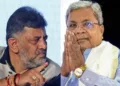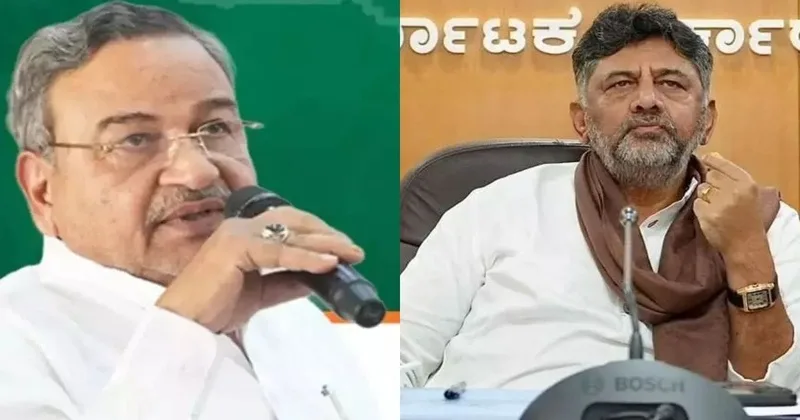
Bengaluru: The ongoing political turmoil within the Indian National Congress in Karnataka has escalated into a full-blown internal crisis, with open dissidence and factionalism coming to the fore following the suspension of MLC Abdul Jabbar. What began as discontent over the Davanagere by-election ticket distribution has now snowballed into a larger power struggle, exposing deep divisions among senior leaders and minority representatives within the party.
The suspension order issued by KPCC President DK Shivakumar against Jabbar for alleged anti-party activities has triggered sharp reactions, not just from the leader himself but also from sections within the party who view the move as selective and politically motivated. Jabbar’s removal from the party’s primary membership, following his earlier exit as Minority Wing president, is being seen as part of a broader crackdown on dissenting voices.
The developments have also put the spotlight on the growing factional divide between camps loyal to Chief Minister Siddaramaiah and those aligned with other influential leaders, including Minister Zameer Ahmed Khan. The summoning of Zameer by the Chief Minister for a closed-door meeting, reportedly lasting over two hours, has further fuelled speculation about internal mistrust and blame games within the leadership.
Adding to the turbulence, the removal of Nasir Ahmed from his role as political secretary to the Chief Minister has reinforced perceptions of a purge targeting specific leaders from the minority community. Political observers note that these back-to-back actions have created unease among Muslim leaders, who have traditionally been a strong support base for the Congress in the state.
At the heart of the crisis lies the Davanagere South by-election, which has turned into a prestige battle for the party. Allegations of leaders working at cross purposes, internal sabotage, and lack of coordination have raised serious questions about the party’s preparedness and unity. Sources within the party suggest that multiple factions were lobbying for influence in ticket allocation, leading to resentment when decisions did not favour certain groups.
Jabbar’s open rebellion has further intensified the situation. In a defiant stance, he has publicly challenged the party leadership to produce evidence supporting the allegations against him. His remarks accusing the party of “selective justice” and internal bias have struck a chord with other disgruntled leaders, potentially emboldening more voices to speak out.
“I have not received any official communication. If the party has proof, let it be made public. Otherwise, these are baseless allegations meant to target me,” Jabbar said, indicating that he is unlikely to back down. His assertion that he voluntarily resigned from his previous post due to lack of engagement by party leaders highlights the communication breakdown within the organisation.
The crisis has also revived concerns about the Congress’s internal management in Karnataka, where factional rivalries have historically posed challenges. While the party came to power with a strong mandate, sustaining unity among its diverse leadership has remained a delicate balancing act. The current developments suggest that underlying tensions are resurfacing at a critical juncture.