BENGALURU: Even as the dust settles on the Davanagere South by-election, the Congress party in Karnataka finds itself battling a fresh wave of internal dissidence, particularly among its Muslim leadership. What was simmering beneath the surface during the campaign has now burst into the open, exposing sharp factional divides and allegations of sabotage within the party ranks.
The by-election, instead of uniting leaders, has intensified mistrust. Senior Muslim leaders within the Congress have accused Housing Minister Zameer Ahmed Khan of working at cross purposes during the crucial electoral battle. Complaints have reportedly been escalated to AICC general secretary Randeep Singh Surjewala, underlining the seriousness of the crisis.
Open rebellion against Zameer Ahmed Khan
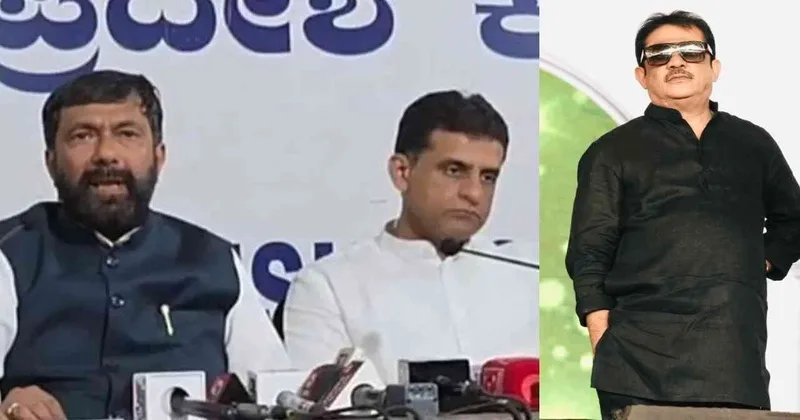
In a rare and coordinated show of defiance, prominent leaders including MLA Rizwan Arshad, MLC Salim Ahmed, Yasin Khan Pathan and Bilkis Banu addressed a joint press conference, airing what they described as “explosive details” about internal functioning during the bypoll.
Without naming him directly at first, the leaders took veiled but sharp digs at Zameer Ahmed Khan’s leadership style, accusing him of running a “one-man show” and sidelining other minority leaders. They demanded that those who worked for the party during the by-election be compensated and acknowledged, hinting at deep resentment over both organisational and financial issues.
Rizwan Arshad stated that while several leaders worked collectively as per party directions, “some individuals failed to contribute despite holding responsibility.” The absence of Zameer’s name in the list of leaders who actively campaigned has further fueled speculation of deliberate disengagement.
Allegations of sabotage and conspiracy
The dissident leaders went a step further, alleging that certain party insiders had conspired with opposition elements to weaken the Congress candidate. Though no direct evidence was presented, the accusations indicate a serious breakdown of trust within the party’s minority leadership.
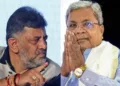
According to sources, when internal tensions escalated during the campaign, Rizwan Arshad and Salim Ahmed were tasked on the instructions of Chief Minister Siddaramaiah and Deputy Chief Minister DK. Shivakumar, with pacifying disgruntled leaders, including persuading another faction leader to fall in line. While a temporary calm was achieved, the underlying discontent remained unresolved. Now, with the election over, those suppressed differences have erupted into a full-blown confrontation.
Ticket controversy triggers factional divide
The roots of the current dissidence can be traced back to the ticket allocation process for the Davanagere South bypoll. Zameer Ahmed Khan had reportedly assured that a Muslim candidate would be fielded, projecting himself as a key decision-maker for minority representation in the state.
However, when the ticket was ultimately denied to a Muslim aspirant, frustration began to build. Leaders who had placed their trust in Zameer felt betrayed, which widened the rift. His subsequent distancing from the constituency only aggravated the situation.
Several minority leaders now allege that Zameer not only failed to secure the ticket but also withdrew from active campaigning, leaving others to manage the fallout.
Absence during the campaign raises eyebrows
Adding to the controversy is Zameer Ahmed Khan’s limited presence in Davanagere during the campaign. After the ticket announcement, he reportedly stayed away from the constituency, citing commitments related to elections in Kerala.
Amid mounting pressure from local leaders and party workers, he eventually made a brief visit to Davanagere, reportedly at the insistence of the CM and Deputy CM. However, his visit was low-key—marked by a private meeting and a quick exit —further raising doubts about his commitment to the campaign.
Interestingly, while he remained largely absent from Davanagere, Zameer actively campaigned in other districts, including Bagalkot, a move that has not gone unnoticed by party insiders.
Outcome may decide future course
With the bypoll results still politically unsettled, Congress leaders acknowledge that the outcome could play a vital role in shaping the party’s internal dynamics. If the party manages a comfortable victory, efforts may be made to downplay the dissidence and maintain a façade of unity.
However, a defeat could trigger a far more serious crisis. Dissident leaders are already preparing to escalate their complaints, and there are indications that the backlash may not remain confined to Muslim leaders alone. Leaders from other communities, including Lingayat representatives, are also believed to be closely watching developments and may join the chorus of criticism.
Congress faces deepening factionalism
The unfolding episode highlights a broader challenge for the Congress in Karnataka—managing competing ambitions and ensuring cohesive leadership across communities. The emergence of two clear factions among Muslim leaders signals a worrying trend that could impact the party’s electoral prospects beyond a single by-election.
For now, the party leadership faces the difficult task of damage control. Whether it can bridge the widening divide or whether the dissidence will spiral into a larger organisational crisis remains to be seen.