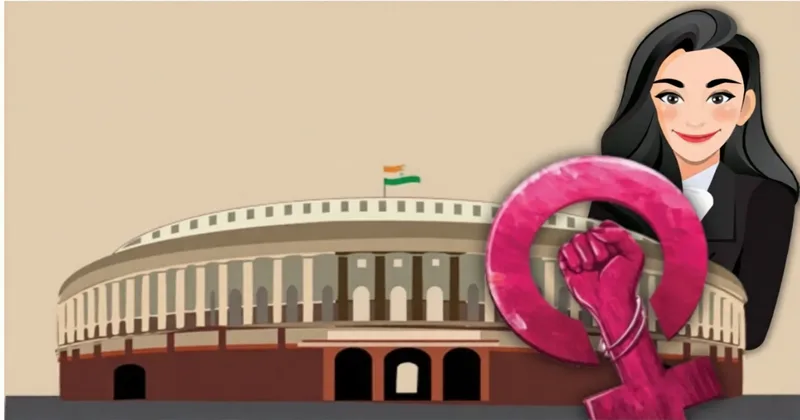
The passage of the Women’s Reservation Bill marks a historic and transformative moment in the evolution of Indian democracy. It reflects a long-awaited recognition of the need to ensure equitable representation of women in political institutions, particularly in legislative bodies where decisions shaping the nation’s future are made. For decades, women in India have played critical roles in social, economic, and cultural spheres, yet their participation in formal political power structures has remained disproportionately low. This bill, which reserves a significant percentage of seats for women in the Parliament and State Assemblies, is not merely a legislative reform but a powerful statement about the direction in which India as a nation is moving toward inclusivity, equality, and progressive governance.
At its core, the Women’s Reservation Bill is a corrective mechanism designed to address systemic barriers that have historically limited women’s access to politics. Despite constitutional guarantees of equality, societal norms, gender biases, and structural disadvantages have hindered women’s political participation. By mandating reservations, the bill creates space for women to enter political arenas that have traditionally been male-dominated. This is crucial because representation is not just about numbers; it is about ensuring that diverse perspectives are included in decision-making processes. When women are present in legislative bodies, issues that directly affect them such as healthcare, education, safety, and employment are more likely to receive the attention they deserve.
The positive effects of this bill on Indian politics are likely to be far-reaching. One of the most immediate outcomes will be an increase in the number of women lawmakers, which in turn will help normalize women’s leadership in public life. This normalisation is essential for breaking stereotypes that view politics as an unsuitable field for women. Over time, as more women occupy positions of power, younger generations will grow up seeing female leadership as a natural and integral part of governance. This shift in perception can have a cascading effect, encouraging more women to pursue careers in politics and public service.
Moreover, the presence of women in legislative bodies has been shown to improve the quality of governance. Studies from various parts of the world have indicated that women leaders often prioritize issues such as social welfare, education, and community development. In the Indian context, this could translate into more inclusive and people-centric policies. Women legislators are also more likely to engage with grassroots issues and bring attention to marginalized communities. Their lived experiences often provide them with unique insights into the challenges faced by different sections of society, enabling them to advocate for more effective and empathetic solutions.
The Women’s Reservation Bill also represents a significant step in strengthening democratic ideals in India. Democracy thrives when it is participatory and representative, and the inclusion of women enhances both these aspects. By ensuring that half the population has a fair chance to participate in governance, the bill reinforces the principle that democracy must reflect the diversity of the society it serves. This inclusivity not only makes governance more legitimate but also fosters greater trust in political institutions.
In addition to its impact on politics, the bill has the potential to empower women across multiple sectors. Political empowerment often serves as a catalyst for broader social and economic empowerment. When women gain visibility and authority in politics, it challenges traditional gender roles and opens up opportunities in other fields such as business, education, and technology. For instance, increased representation of women in politics can lead to policies that support women’s entrepreneurship, improve access to education for girls, and enhance workplace equality. These changes can create a more enabling environment for women to thrive in various domains.
The ripple effects of the bill can also be seen in the realm of social attitudes. In many parts of India, deep-rooted patriarchal norms continue to restrict women’s choices and opportunities. The elevation of women to positions of power can help challenge these norms and inspire societal change. When communities witness women effectively leading and making decisions, it can alter perceptions about gender roles and capabilities. This cultural shift is essential for achieving long-term gender equality.
Furthermore, the Women’s Reservation Bill underscores India’s commitment to progressiveness on the global stage. As one of the world’s largest democracies, India’s policies and actions carry significant weight in shaping international discourse. By taking a decisive step toward gender equality in political representation, India sends a strong message about its dedication to inclusive development. This move aligns with global efforts to promote women’s empowerment and gender parity, reinforcing India’s position as a forward-thinking nation.
It is also important to recognize that the bill builds upon the success of reservations for women at the local governance level. In Panchayati Raj institutions, the reservation of seats for women has led to increased participation and has demonstrated that women can effectively lead and govern. Many women leaders at the grassroots level have brought about meaningful changes in their communities, addressing issues such as sanitation, education, and healthcare. The extension of similar provisions to higher levels of governance is a logical and necessary progression.
Critics of the bill have raised concerns about its implementation and the possibility of tokenism. However, these concerns should not overshadow the transformative potential of the legislation. While challenges may arise, they can be addressed through effective policy design, capacity-building initiatives, and continuous evaluation. The focus should remain on creating an enabling environment where women can not only enter politics but also succeed and make meaningful contributions.
Another important aspect of the bill is its potential to foster collaboration and consensus-building in politics. Women leaders are often associated with more collaborative and inclusive approaches to decision-making. Their presence in legislative bodies can help reduce adversarial politics and promote dialogue and cooperation. This can lead to more balanced and well-considered policies that take into account the needs and perspectives of different stakeholders.
The Women’s Reservation Bill is not just about empowering women; it is about strengthening the fabric of Indian society as a whole. When women are empowered, families, communities, and the nation benefit. Empowered women are more likely to invest in education, healthcare, and the well-being of their families, creating a positive cycle of development. By enabling women to participate fully in politics, the bill contributes to building a more equitable and prosperous society.
In conclusion, the Women’s Reservation Bill represents a bold and progressive step toward achieving gender equality in Indian politics. It addresses long-standing disparities, enhances democratic representation, and has the potential to bring about transformative changes across multiple sectors. By empowering women and promoting inclusivity, the bill not only strengthens the political system but also paves the way for a more just and equitable society. It is a testament to India’s commitment to progress and its determination to build a future where every citizen, regardless of gender, has an equal opportunity to contribute to the nation’s growth and development.