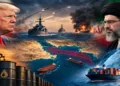

On February 28, 2026, a war between Iran and the US started, almost a year after the US bombed Iran’s nuclear facilities. For almost 40 long days, Iran’s war against the US and Israel has endured, with Iran getting severely hammered through aerial bombings that saw its top political and military leadership being neutralised. In retaliation, Iran unleashed missile and drone attacks on not just Israel, but also many of the Arab states in West Asia that are home to US military bases. This horizontal escalation of the conflict by Iran, apart from blocking the Strait of Hormuz, caused massive damage to West Asia’s critical energy infrastructure.
The impact of the Iranian strikes on energy infrastructure, primarily through Shahed drones and ballistic missiles, has led not only to a rise in global crude oil prices but also to a severe shortage of industrial gases, LPG, and other key chemicals, including fertilisers. Even though a temporary fortnightly truce has been announced by both sides, its fragility is so profound that no one is ready to feel a sigh of relief yet.
The Economic Impact of Global Upheavals
Since 2020, one thing that has remained constant for the world has been sudden, massive and apocalyptic supply chain shocks. What started with Covid-induced massive supply side shocks due to global lockdown, especially in China, tensions in the Taiwan Strait, and India’s own face-off with China in Galwan, was followed by the Ukraine-Russia war, which saw another round of global supply chain upheavals, even before countries could barely recover from the Covid-related economic shocks.
As if the Ukraine-Russia war, and its resultant impact on prices of oil, shortage of foodgrains (both Russia and Ukraine being major baskets of foodgrain production), fertilisers, and other essential commodities, was not enough, the Western sanctions on Russia exacerbated the matters even further, leading to major tensions between West, and countries like India and China.
How West Asia Crisis Amplified Global Turbulence
Even as the Russia-Ukraine conflict continued, the tariff war unleashed by US President Donald Trump added to a new round of global uncertainties, followed by the US getting involved in coordinated aerial strikes over Iran earlier this year. When Iran blocked the Strait of Hormuz and even threatened to block the Bab Al-Mandab Strait, it did not surprise India. It was the usual supply chain uncertainties that has been leaving its hallmarks on the world over the past decade, and telling to, especially, the developing world, as to how vulnerable it can be to rely on external dependence of critical commodities, especially when threats of sanctions and blockades rule the world.
The Indian Template of Defiance & Self-Reliance
From the time of the Covid crisis, India, even while dealing with the crises, has been slowly imbibing the critical lessons it learnt into its decision-making process. From development of resilient supply chains within the country, to diversifying the sourcing matrix of critical commodities across the world, to remaining defiant on India’s core interests on international affairs, and refusing to either capitulate to tariff threats of US or sanctions threats, while continuing to procure oil from Russia at concessional rates, India has put into practice hard-learnt lessons of what it takes to survive in this world where developing countries are always meant to remain subservient followers and aye-sayers to what the Western power blocks decide for the world.
Be it the Covid crisis, the Ukraine-Russia War, the tariff and sanctions threats of the US Administration, or the ongoing Middle East conflict, most of the nations, especially the small, fragile and vulnerable economies of the world, are the ones who have suffered the most, and still continue to suffer.
India’s Helping Hand for the Smaller Nations
In the middle of all this, apart from being defiant, India consistently lent a helping hand to those who asked for it. From supplying Covid vaccines and other medical equipment to more than 100 countries during the peak of the Covid crisis, to providing all kinds of essential commodities to Sri Lanka when it was on the verge of economic collapse in the post-Covid phase, to continuously supplying foodgrains and essential medicines to sanction-crippled Afghanistan, India has done it all. Now, in the middle of the Middle East conflict, where India remains one of the few countries to use its diplomatic heft to have its crude oil tankers get secure passage through the volatile waters of the Strait of Hormuz, India is now ensuring that the supply of essential fuel to its neighbouring countries is addressed.
In March 2026 alone, India supplied an estimated 20,000 MT of diesel and nearly 18,000 MT of petrol to Sri Lanka, which was facing a critical fuel shortage due to the Middle East crisis. Likewise, India is poised to supply Bangladesh with 50,000 tons of diesel. Additionally, Bangladesh has asked India to supply it with a larger quantity of fertilisers, whose global supply has been severely impacted by the ongoing wars in Eastern Europe and West Asia. In the case of Nepal, India’s responsibility is even more profound since India has literally been the primary supplier of essential energy needs of Nepal for many years now.
India’s Energy Leverage
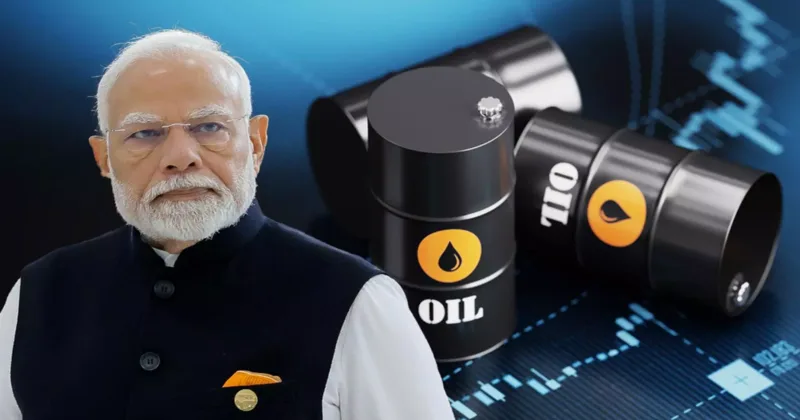
Even though India is not a major producer of crude oil, its gigantic refining capacity serves as a critical intermediary in the global oil product supply chain. Even at the peak of the Russian crisis, India not only procured crude oil from Russia for its own requirements, but also refined and exported to many European countries that were otherwise allergic to buying Russian oil directly. In the midst of the West Asia conflict, India has likewise seized opportunities to resume crude procurement from Iran, as it has massively increased its energy imports from Russia to reduce exposure to West Asia.
Putting ‘Neighbourhood First’ Policy into Practice
India’s pivotal policy paradigm to act as the Last-Mile-Help-Provider for countries in the neighbourhood, as part of India’s ‘Neighbourhood First’ Policy, is not for earning goodwill. It is based on the premise of ensuring that the region around India remains in tranquillity. India’s quest for a $5 trillion economy by 2035 pivots not just on India’s own economic innovations and perseverance, but also on ensuring that the neighbourhood remains relatively peaceful, free from anarchy or instability. Already, in the past few years, one could witness how efforts have been made to destabilise the Indian sub-continent through allegedly externally orchestrated political and social mayhem. Pakistan of course, does not fall in this bracket of ‘Countries of Concern’ for India, since it is a perpetual headache in any case.
Against this backdrop, an enormous amount of effort has been made by the Modi Government to ensure that the agenda of India’s adversaries to set India’s neighbourhood on fire is neutralised. With patience and diplomacy, the situation in many of the above -mentioned countries is now far better than it was even a year back.
Global geopolitics is undergoing an incredible amount of churn. It is highly unlikely that the situation in either the Middle East or Eastern Europe, two of the major theatres of conflict now, will improve in the near future.
In such a scenario, for smaller countries, surviving the relentless tsunamis of global supply chain shocks and economic upheavals may not be easy. India would thus have to go the extra mile to ensure that the bare minimum necessities of its neighbourhood is taken care of. This, India would have to do for her own future stability, as the destiny of India and its neighbours, sans Pakistan, is deeply intertwined.