
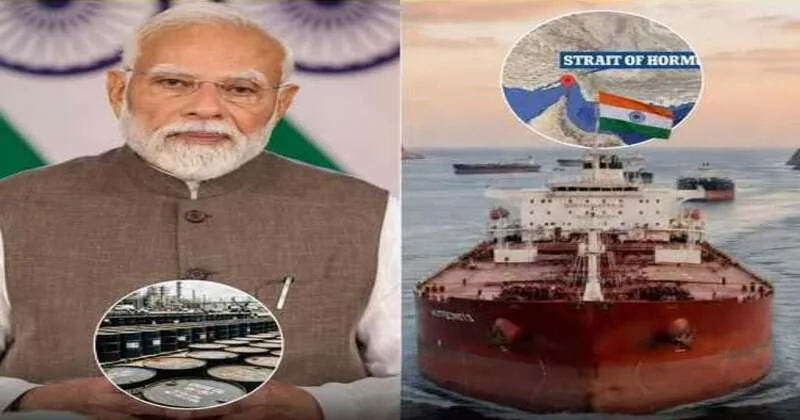
The reported closure of the Strait of Hormuz for commercial shipping for an extended period has once again exposed the fragility of the global energy architecture. The narrow waterway, through which a substantial portion of the world’s oil and liquefied natural gas passes, has long been recognized as one of the most strategically important maritime chokepoints on the planet. Yet, despite repeated warnings from geopolitical analysts, major economies have continued to operate under the assumption that the free flow of energy through the Gulf would remain uninterrupted. That assumption is now under severe strain.
Iran’s threat to simultaneously disrupt the Bab-el-Mandeb Strait through its regional allies has transformed a regional confrontation into a global economic challenge. If both routes face prolonged disruption, the consequences will extend far beyond West Asia. Energy markets, shipping networks, manufacturing supply chains and financial systems will all feel the shockwaves. For India, the implications are particularly serious.
As the world’s third-largest consumer and importer of crude oil, India remains heavily dependent on energy supplies originating in the Gulf region. A significant share of these imports travels through the Strait of Hormuz. Any prolonged disruption therefore strikes at the heart of India’s economic engine.
The arithmetic is straightforward. Higher oil prices increase the country’s import bill, widen the current account deficit, put pressure on the rupee and fuel domestic inflation. Every rise in crude prices eventually finds its way into transportation costs, industrial production expenses and consumer prices. The effects are not limited to fuel stations; they ripple across the entire economy.
India’s growth story over the past decade has been built upon a combination of economic reforms, infrastructure expansion, digital transformation and relative energy affordability. A sustained oil shock threatens to undermine many of these gains. Manufacturing costs rise. Logistics become more expensive. Airlines face increased operating expenses. Fertilizer production becomes costlier. Food inflation begins to climb. The burden ultimately falls on ordinary citizens. The strategic challenge is equally significant.
For decades, India’s energy security policy has focused on diversifying suppliers while maintaining strong relationships with Gulf producers. This strategy has largely succeeded in ensuring reliable supplies during periods of regional turbulence. However, diversification of suppliers does not necessarily solve the problem of maritime chokepoints. Even if crude originates from different countries, much of it still depends on vulnerable sea routes.
The current crisis demonstrates that energy security can no longer be viewed solely through the lens of supplier diversity. Route security is just as important. India must therefore accelerate efforts to reduce its exposure to geopolitical disruptions. Strategic petroleum reserves, while valuable, can only provide temporary relief. The country needs larger reserves capable of cushioning prolonged crises. Expanding storage capacity should become a national priority rather than an occasional policy discussion triggered by emergencies.
Simultaneously, India must intensify investments in alternative energy sources. Solar power, wind energy, green hydrogen, nuclear energy and biofuels are often discussed in the context of climate commitments. The Hormuz crisis illustrates that they are also national security assets. Every unit of domestically generated energy reduces vulnerability to external shocks.
There is another lesson that policymakers should not ignore. India’s Act East Policy, maritime strategy and Indo-Pacific vision are often discussed in terms of trade, connectivity and regional influence. Yet maritime security remains the foundation upon which all these ambitions rest. A nation aspiring to become a leading global power cannot remain dependent on insecure sea lanes controlled by external actors or vulnerable to distant conflicts.
The Indian Navy has steadily expanded its capabilities over the past two decades, but emerging realities demand even greater focus on sea-lane security. From the Arabian Sea to the western Indian Ocean, India must work closely with like-minded partners to ensure freedom of navigation and safeguard critical maritime routes.
This does not imply military adventurism. Rather, it requires sustained naval modernization, enhanced surveillance capabilities, stronger partnerships with regional states and greater participation in maritime security frameworks. Economic power and maritime power have always been closely linked. History repeatedly demonstrates that nations that neglect the latter eventually compromise the former. The crisis also carries important diplomatic implications.
India has traditionally maintained balanced relations across West Asia, engaging with Iran, Saudi Arabia, the United Arab Emirates, Israel and other regional actors simultaneously. This pragmatic approach has served New Delhi well. In the present environment, India must continue using its diplomatic credibility to advocate de-escalation while protecting its own national interests.
Unlike some Western powers, India is not viewed primarily through the prism of military intervention. This gives New Delhi a unique opportunity to engage multiple stakeholders and encourage stability. While India alone cannot resolve regional conflicts, it can contribute to diplomatic efforts aimed at preventing further escalation.
The broader global response should also prompt reflection. The world economy remains astonishingly dependent on a handful of strategic chokepoints. Whether it is the Strait of Hormuz, Bab-el-Mandeb, the Suez Canal or the South China Sea, disruptions in narrow maritime corridors can trigger worldwide economic consequences. Globalization has created prosperity, but it has also concentrated risk.
For India, the message is unmistakable. The Hormuz crisis is not a distant geopolitical drama unfolding on television screens. It is a reminder that national security in the twenty-first century extends beyond borders and battlefields. Energy supplies, shipping routes, supply chains and maritime infrastructure are now integral components of strategic resilience.
The immediate challenge is managing the economic fallout. The long-term challenge is building a nation less vulnerable to such disruptions. India cannot control events in the Gulf. It can, however, prepare for them. The countries that emerge strongest from geopolitical crises are not those that avoid shocks altogether, but those that build the capacity to absorb them. The Strait of Hormuz crisis should therefore be treated not merely as an external threat, but as a strategic wake-up call one that compels India to strengthen its energy security, maritime capabilities and economic resilience before the next disruption arrives.