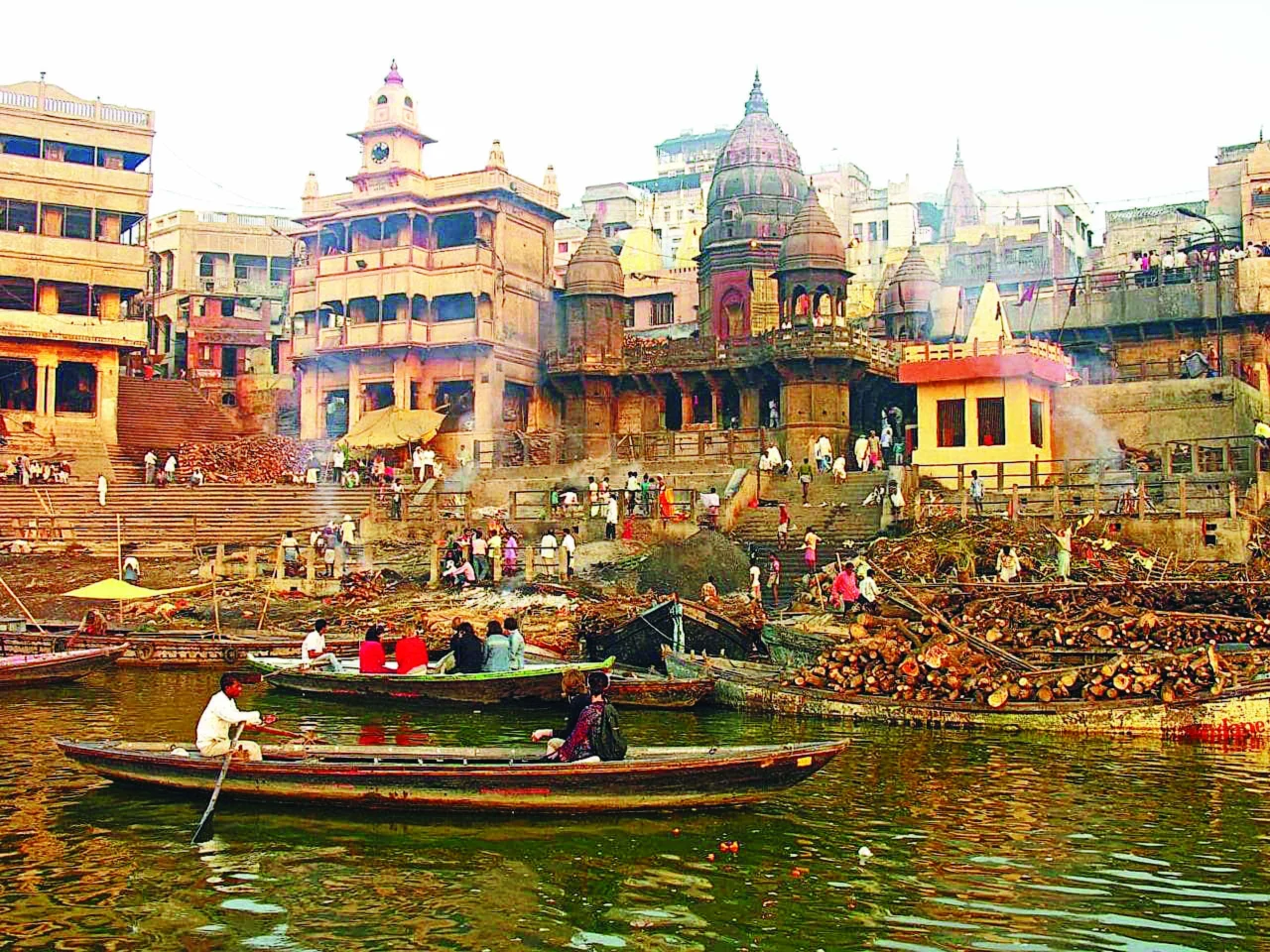
Manakarnika Ghat of Varanasi is the holiest cremation Ghats of Bharat. Located within the old part of the city; it is surrounded by residential, commercial, educational, and, most importantly, religious spaces. Amidst the busy streets and crowded built-up mass of varied types of buildings there are hundreds of temples, with their spires contributing to the spiritual skyline of the city. Even within the Manikarnika Ghat site, there is a temple dedicated to Bhagwan Shiva called the Bhoothnath Mandir.
The ghat is named after the earrings of Sati, a Hindu Goddess, which Hindus believe fell there. The shakti of Manikarnika is addressed as Vishalakshi & Manikarni. Varanasi attracts tourists as a spiritual hub and some tourists, especially from out of India, visit this place to witness the rituals of cremation. They are fascinated with the concept and beliefs associated with the entire process of cremation. It is believed that if a person is cremated at this Ghat, he will attain salvation.
As the place is meant for the cremation rituals the mourners of the deceased and tourists wanting to experience the rituals are the users of the Ghat. Architecture for the dead is a peculiar topic of design. The steps of the Ghat leading to the waters of Ganga are meant for many activities coherent to ritual and tourists. Doms play a significant role in the rituals. Doms are the fire keepers, and they give the fire to light the pyre during the cremation. Wood prepared and given by a Dom is considered auspicious. Doms crack the skull (Kapal-kriya) towards the end of the cremation, symbolising the soul’s release from the body. Architecture for the dead are the places for cremation. Since time immemorial men have been evolving the designs for these places. These are the places for mourning; therefore the designers have been attempting to enhance the emotional balance as well as provide comfort in the activities. It is fascinating to note that our traditions not only have the solutions but directives for the design for places of cremation.
Architectural design intervention can improve infrastructure and enhance safety, accessibility and protect the environment as well as help keep Maa Ganga clean. The Ghat is not just a sacred site but it is also an important historical landmark. It represents the rich traditional heritage of India. We need to conserve it for our next generation.
