West Bengal is not merely a geographical entity, it is a living civilisational consciousness that once reflected the finest ideals of Bharatiya thought. This is a land where intellect was not separated from ethics, where reform was rooted in compassion, and where cultural confidence shaped social transformation. The legacy of Rabindranath Tagore, Ishwar Chandra Vidyasagar and Swami Vivekananda was not confined to literature, reform, or spirituality, it represented a deeper vision of society where knowledge, character, and moral responsibility were inseparable from public life.
In that vision, the question of women’s dignity was never peripheral. It was central to the idea of a just and evolved society. Swami Vivekananda had imagined a Bharat where women would not merely be “empowered” through policies, but would naturally stand as equal participants in shaping the nation’s destiny: confident, self-reliant, and rooted in self-respect. His idea of progress was not transactional; it was transformational. In the Bharatiya ethos, a woman is not reduced to a statistic, a vote bank, or a beneficiary of schemes. She is Shakti, the sustaining force of family, society, and civilisation itself. Her dignity is not granted by the state, it is intrinsic to the cultural fabric of the nation. It is precisely against this civilisational benchmark that the present reality appears deeply disquieting.
Because what we witness today is not merely a political shift or administrative challenge, it is a gradual disconnect from that very moral and cultural foundation. When violence against women becomes a recurring headline, when justice appears delayed or selective, when institutions meant to protect dignity seem to falter, it raises a question far more serious than governance failure.
It compels us to confront an uncomfortable truth: Has Bengal, in the course of its political evolution, begun to drift away from its own civilisational conscience? And if that drift is real, then the issue is not just about policy correction, it is about restoring a deeper sense of responsibility, where the dignity of women is not negotiated through power structures, but upheld as a non-negotiable civilisational value.
Left Rule: Decline of Bengal
For over many decades, West Bengal remained under Left rule, a period that began with promise but gradually revealed the limitations of prolonged ideological dominance. When other States were industrialising, attracting investment and creating employment opportunities, Bengal, instead of repositioning itself, appeared hesitant and often resistant to this transition. The consequences became visible across sectors. Industrial stagnation was not merely a statistical concern, it was a lived reality. The gradual closure of jute mills, paper factories, and other manufacturing units did not just signify economic decline, it disrupted entire ecosystems of livelihoods. Generations of workers found themselves displaced, with limited avenues for rehabilitation. Migration became not a choice, but a compulsion.
Education, the very foundation upon which any progressive society must stand, experienced a more subtle yet profound erosion. The decision to remove English from the early years of schooling reintroducing it only after Class V had long-term implications. At a time when English was increasingly becoming a bridge to higher education, global opportunities, and technological engagement, this policy created a structural disadvantage for students from the state.
Healthcare infrastructure struggled to expand proportionately with population needs. Agricultural growth, though initially strengthened by land reforms, faced stagnation due to lack of modernisation and investment. Infrastructure development did not keep pace with emerging economic realities.
Misrule Under Mamata
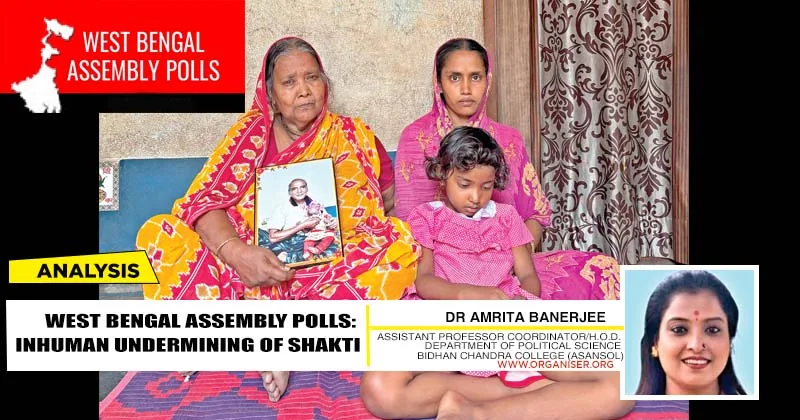
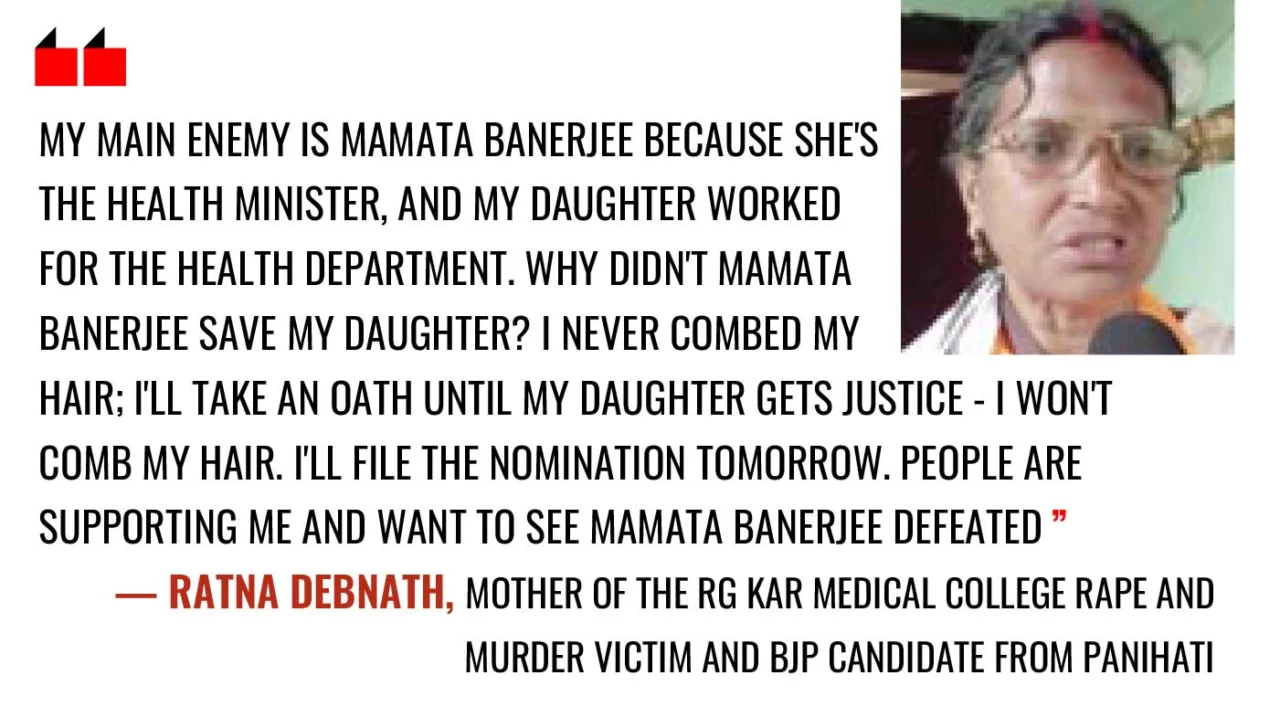
The democratic transition that followed, leading to the rise of the Trinamool Congress, was an outcome of accumulated aspirations, a collective expression of hope that governance would become more responsive, that development would be more visible, and that the State would reclaim its position as a leader in growth, opportunity, and social justice. However, incidents such as Sandeshkhali and RG Kar Medical College episode have shaken public conscience, not merely because of their immediate brutality, but because of what they reveal beneath the surface. These are not isolated breakdowns of law and order, they point toward a deeper crisis of accountability, institutional integrity, and sensitivity toward women’s dignity. Cases such as the Kamduni rape and murder case, the Park Street rape case, or recurring reports of trafficking from border districts like North and South 24 Parganas and Murshidabad, indicate that the issue is neither episodic nor confined to a single geography. The uncomfortable truth, therefore, is this: violence against women is not new but the persistence of delayed or denied justice is what deepens the crisis.
Questioning Testimonies
To understand this fully, one must move beyond the surface of individual incidents and examine the systemic context. Violence operates not only through physical acts but also through silence, delay, and normalisation. When survivors struggle for recognition, when their testimonies are questioned, when legal processes become prolonged, or when political narratives overshadow human suffering, the impact extends far beyond a single case. It sends a message subtle yet powerful about whose voices matter and whose do not.
It is often argued that such crimes existed in earlier decades as well. That is undeniably true. However, what distinguishes the present moment is the scale of visibility. With the expansion of digital media, social platforms, and 24-hour news cycles, incidents that once remained confined to local awareness now reach a national audience within hours. Visibility has increased but accountability has not always kept pace.
For women, this normalisation carries a profound psychological burden. Safety becomes conditional. Trust in institutions becomes fragile. The idea of justice shifts from being a right to being an uncertainty. At the same time, there is another dimension that often remains under-examined: the intersection of power and vulnerability. In several cases, allegations emerge not only against individuals but against networks of influence that complicate the pursuit of justice. Whether real or perceived, such associations erode public confidence. When power appears to shield accountability, the consequences are not limited to governance; they affect the very moral credibility of institutions.
The issue, therefore, is not merely about crime statistics or isolated failures. It is about the credibility of systems, the consistency of justice, and the assurance that dignity is protected irrespective of circumstance. In the Bharatiya understanding, Shakti represents not only strength but also balance, creation, and collective upliftment. It is a force that nurtures, protects, and sustains. When empowerment becomes selective and limited to those with access, influence, or proximity, it loses this essential character. Instead of creating cohesion, it produces division. Instead of enabling shared progress, it reinforces layered hierarchies within the same group. Fragmentation, therefore, is not merely the absence of unity; it is the presence of unequal alignment within a shared space.
The implications of this are far-reaching. When solidarity becomes conditional, the possibility of building fair and transparent institutions diminishes. Those who lack access to power remain vulnerable, while those within its orbit remain insulated. The gap between the two widens not only materially, but psychologically.
For students and younger generations observing these dynamics, the message becomes equally concerning. They learn that success may depend less on competence and more on positioning. They begin to see collaboration as selective and fairness as negotiable. In this way, fragmentation is not contained, it is transmitted.
The consequence of such fragmentation is not only political instability but a gradual erosion of trust between communities, within institutions, and even among individuals. Public discourse becomes polarised, cooperation becomes conditional, and long-term developmental goals are overshadowed by short-term identity-based mobilisation. In this context, the challenge before Bengal cannot be viewed as merely a question of governance or electoral change. Political transitions can alter leadership, but they do not automatically restore social cohesion or moral direction. The deeper challenge is civilisational.
It involves reclaiming a value system where diversity does not lead to division, where identity does not overshadow integrity, and where public life is guided not by fragmentation but by a shared sense of responsibility. It requires a return to the foundational ideals that once defined Bengal’s role in shaping thought, reform, and national consciousness. Women’s empowerment cannot remain confined to symbolic gestures, policy announcements, or annual commemorations. Such expressions, while important, often risk becoming ceremonial if they are not reflected in everyday realities. True empowerment must be experienced in homes, workplaces, institutions, and public spaces. It must be visible in the safety a woman feels while walking freely, in the fairness with which she is treated in professional environments, and in the dignity with which her voice is heard and respected.
Swami Vivekananda’s Take on Women
It is in this broader context that the words of Swami Vivekananda acquire enduring relevance. When he asserted that the progress of a nation is measured by the condition of its women, he was not offering a rhetorical statement, he was defining a civilisational benchmark. The status of women reflects the moral health of society, the fairness of its institutions, and the sincerity of its governance. If women feel unsafe, unheard, or undervalued, it is not merely a gender issue it is an indicator of systemic imbalance.
Therefore, the question before Bengal is not one of capacity. History has already demonstrated its intellectual strength, cultural depth, and reformist spirit. The question is one of direction and intent.
Can Bengal realign itself with the values that once defined it? Can it move beyond symbolic change towards structural transformation? Because ultimately, the issue is not whether change is possible: it always is. The real question is whether there is a collective willingness to introspect, to correct, and to return to that deeper moral compass. And in that sense, the challenge before Bengal is not just to move forward but to rediscover its own soul, and to ensure that in that rediscovery, the dignity of its women stands at the very centre of its progress.