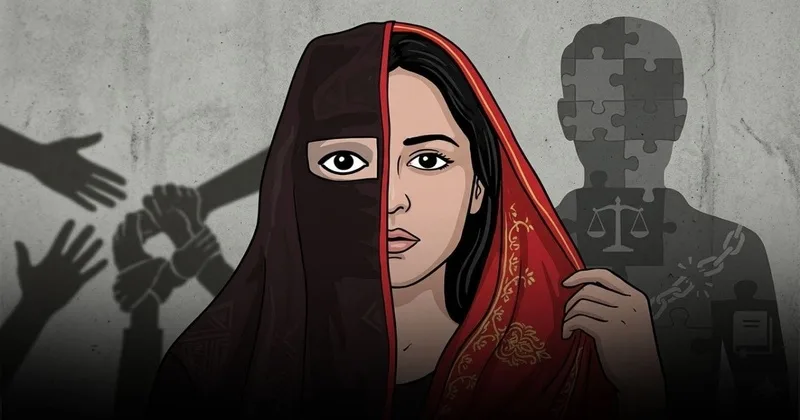
Hubballi: A series of “love jihad” allegations reported in Hubballi and Dharwad over the past two months has triggered intense debate, public concern, and political reactions. With at least four such cases surfacing recently, questions are being raised whether these incidents are isolated interfaith relationships or part of a larger, organised pattern aimed at religious conversion.
The term “love jihad” is often used to describe allegations where women, particularly from Hindu communities, are reportedly lured into relationships and later pressured to convert to another religion. However, it is important to note that the term lacks a clear legal definition, and its use remains controversial, with differing interpretations across social and political groups.
In the twin cities, four recent cases have intensified the discourse. The first involved a college student who allegedly faced threats from a youth she had befriended. Her family later filed a complaint, suspecting coercion and raising the “love jihad” angle. Police registered a case and initiated an inquiry, but have not confirmed any organised conspiracy so far.
The second case pertains to a gym trainer, identified as Sameer, against whom allegations were made by a young woman’s family. They claimed that he had established a relationship under false pretences and attempted to influence her religious beliefs. The incident drew attention on social media, with various groups demanding strict action.
In another incident, a case involving an individual named Mufiz Miyanavar surfaced, where a college girl reportedly complained of harassment and intimidation. Although the complaint primarily focused on threats, certain organisations labelled it as a “love jihad” attempt, further fueling the narrative.
The fourth case involved a young woman allegedly eloping with a man from another community. Her mother filed a missing persons complaint, claiming that her daughter had been misled. While the police traced the woman and stated that she had left voluntarily, the family continued to insist on a deeper investigation, alleging religious conversion motives.
These four cases within a short span have created anxiety among sections of the public. Some organisations argue that these incidents indicate a systematic pattern targeting vulnerable women, while others maintain that such claims are often exaggerated and risk communal polarisation.
The debate has also revived memories of earlier incidents, including the high-profile murder of Neha Hiremath in 2024, which had sparked statewide outrage. Although that case was primarily linked to personal reasons, it contributed to the growing perception and discourse around “love jihad” in the region.
Reacting to the recent developments, N Shashi Kumar, Police Commissioner of Hubballi-Dharwad, clarified that all complaints received are being taken seriously. “We have registered cases wherever complaints have been filed. Investigations are underway, and only after a thorough probe can we determine the nature of each case,” he said.
Police officials have urged the public not to jump to conclusions and to allow the process to establish facts. They emphasized that each case must be examined individually, based on evidence rather than assumptions or social media narratives.
Legal experts also caution against the indiscriminate use of the term, noting that it can complicate investigations and influence public perception prematurely. They stress the importance of distinguishing between consensual relationships and cases involving coercion or criminal intent.
As investigations continue, the situation in Hubballi-Dharwad remains sensitive. Authorities are closely monitoring developments, while appealing for calm and responsible discourse.
The coming weeks are likely to be crucial in determining whether these cases point to a broader pattern or remain isolated incidents. Until then, the focus remains on ensuring justice, safeguarding individuals, and maintaining communal harmony.