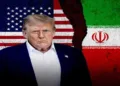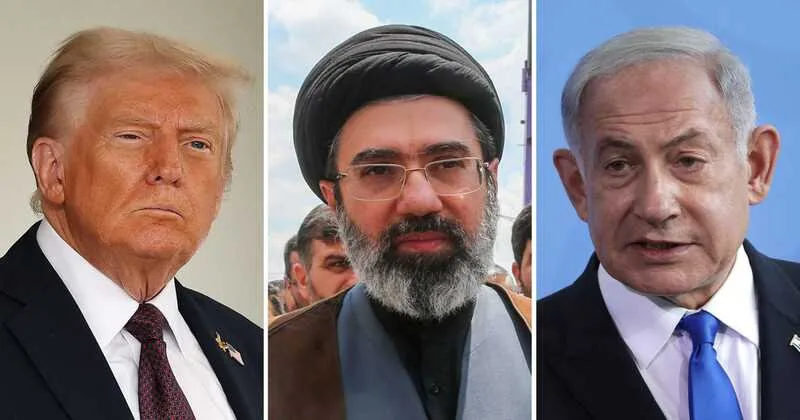
Tehran/Washington: US President Donald Trump has agreed to a proposed two-week ceasefire between the United States and Iran, on the condition that global shipping traffic is allowed to move freely through the strategically crucial Strait of Hormuz. The announcement marks a significant pause in escalating hostilities, even as both sides project the outcome as a victory. Iranian Foreign Minister Abbas Araghchi stated that Tehran would agree to halt the fighting if all attacks against Iran were immediately stopped. His remarks signal conditional acceptance, tying Iran’s commitment to a broader cessation of hostilities.
Israel, meanwhile, has expressed support for Trump’s decision to suspend strikes on Iran. However, it clarified that the proposed two-week ceasefire does not extend to Lebanon, indicating that regional tensions may persist beyond the immediate US-Iran framework. Earlier, Trump had set a firm deadline of 20:00 EDT (01:00 BST) for reaching an agreement, warning of catastrophic consequences if a deal was not achieved. The urgency of that deadline appears to have accelerated diplomatic engagement.
Competing claims of victory
Despite the ceasefire announcement, both the United States and Iran have claimed victory in the conflict. Iran’s Supreme National Security Council declared that the opposing side had suffered a historic and crushing defeat in what it described as an illegal war against the Iranian people. The council asserted that Iran had secured a major strategic victory and compelled the United States to accept its conditions for ending the conflict. The council further stated that Iran would only formally agree to end the war if its ten conditions were accepted through negotiations. It congratulated the Iranian public on what it termed a national victory and urged patience as the details are finalised. The statement also called for unity and solidarity among citizens during the negotiation phase.
According to Iranian authorities, talks on these conditions are scheduled to begin in Islamabad on April 11. The ceasefire period could be extended depending on the progress of negotiations.
On the American side, Trump acknowledged that Iran had presented a proposal comprising ten conditions and confirmed that future negotiations would be based on this framework. However, he did not elaborate on the specifics of those conditions at the time.
Iran’s ten conditions for ending the war
Iran has publicly outlined its demands as part of the ceasefire framework:
1) The United States must guarantee that there will be no further attacks on Iran.
2) Iran must retain control over the Strait of Hormuz.
3) Iran’s right to enrich nuclear energy must be formally recognised.
4) All primary US sanctions against Iran must be lifted.
5) All secondary sanctions must also be removed.
6) United Nations Security Council resolutions targeting Iran must be terminated.
7) Resolutions by the International Atomic Energy Agency’s Board of Governors against Iran must be ended.
8) Iran must receive compensation for losses incurred during the war.
9) US military forces must be withdrawn from the region.
10) Hostilities must cease across all fronts, including Lebanon.
It remains unclear whether Washington will accept these demands in full or in part.
US and Israeli position on ceasefire
The White House has framed the ceasefire as a decisive success for the United States. Trump stated that Iran’s uranium would remain fully preserved under the ceasefire arrangement, suggesting that nuclear concerns remain central to the negotiations.
White House Press Secretary Carolyn Leavitt described the ceasefire as a victory achieved through military strength and strategic pressure. She noted that the operation, referred to as Operation Epic Fury, had initially been envisioned as a four-to-six-week campaign but achieved its key objectives in just 38 days. According to her, sustained military pressure enabled the United States to enter negotiations from a position of strength, thereby paving the way for a diplomatic resolution and potential long-term peace.
She also credited Trump with reopening the Strait of Hormuz and advancing US interests while creating conditions for stability in the region. Israel, in its official response, reiterated its support for the US decision to pause military operations against Iran for two weeks, provided Iran immediately opens the Strait of Hormuz and halts all attacks against the United States, Israel, and other regional countries. It also expressed backing for US-led efforts to ensure that Iran no longer poses a nuclear, missile, or terror threat to Israel, the United States, and neighbouring Arab nations.
At the same time, Israel emphasised that the ceasefire arrangement does not apply to Lebanon, underscoring the complexity of the broader regional conflict and the likelihood that tensions may continue in parallel theatres.
As negotiations prepare to begin in Islamabad, the fragile ceasefire represents both a pause in active conflict and a test of diplomatic resolve. While both sides claim success, the path to a lasting settlement will depend on whether the competing conditions and expectations can be reconciled in the days ahead.