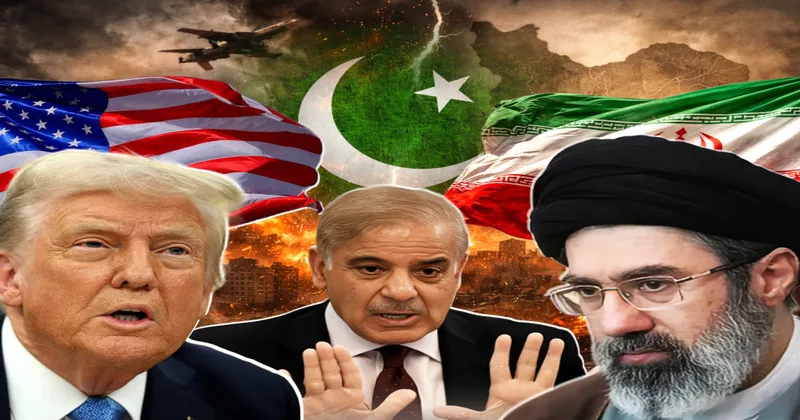
On June 17, 2026, the remote signing of the Islamabad Memorandum of Understanding (MOU) by US President Donald Trump and Iranian President Masoud Pezeshkian was hailed as a breakthrough that might finally pull the Middle East back from the precipice. Intended to establish a 60-day framework to permanently resolve the devastating 2026 Iran War—a conflict ignited by the dramatic assassination of Supreme Leader Ali Khamenei during Operation Epic Fury—the MOU promised an orderly cessation of hostilities, conditional sanctions relief, and the vital reopening of the Strait of Hormuz.
Yet, less than a month later, the agreement is teetering on absolute collapse. On July 7, 2026, President Trump declared the truce effectively following a barrage of fresh military exchanges. As the US attempts to dictate terms from a position of assumed dominance despite lacking a decisive military victory, Tehran’s compliance has fragmented. At the heart of this breakdown is a dangerous reality: Iran is failing to honour the core maritime protocols of the MOU, driven largely by a chaotic, multi-headed division between its political leadership and a headless, deeply uncoordinated Islamic Revolutionary Guard Corps (IRGC).
With a return to full-fledged war looming, analysing the structural, political, and economic cracks in the Islamabad Memorandum reveals why this peace initiative was likely doomed from the start. One of the main reasons for the diplomatic friction is the disconnect between Washington’s heavy-handed rhetoric and the actual strategic reality on the ground. Throughout the 2026 conflict, the United States utilized devastating air power, targeting hundreds of Iranian air defences, missile sites and command structures. However, air campaigns rarely yield absolute capitulation, and the current administration’s insistence on treating the MOU as a tool for “unconditional surrender” misreads Iran’s residual defensive capacity.
Because the US did not achieve a clear-cut, boots-on-the-ground military victory, its attempts to act as an aggressive, “bossy” hegemon have severely backfired. Washington has approached the technical talks in Bürgenstock with an uncompromising posture, expecting Tehran to comply as a defeated state.
This aggressive oversight ignores the fact that while Iran’s conventional command structure was heavily fractured by the loss of Khamenei, its asymmetric capabilities remain robust. When the US acts from a posture of absolute dominance without total victory, it leaves the Iranian regime with a stark political choice: capitulate completely and face domestic collapse, or resist aggressively to maintain an illusion of sovereignty.
The most visible manifestation of the MOU’s failure is occurring in the Strait of Hormuz, the world’s most critical maritime energy corridor. The major hallmark of the June agreement was the immediate, unhindered reopening of the strait to restore global oil and liquefied natural gas (LNG) flows, which had been choked off since February.
Instead of compliance, Iran has used the post-MOU environment to assert aggressive, unilateral control over the waterway. Rather than allowing free transit, Iranian forces have demanded that international commercial vessels follow strictly designated, Tehran-approved routes, attempting to collect transit fees and coerce shipping companies into recognizing Iranian hegemony over the Gulf, while the MOU clearly laid down a period of 60 days before any such decision is taken.
This maritime brinkmanship reached a breaking point on July 6–7, 2026, when three commercial tankers—the Marshall Islands-flagged M/T Al Rekayyat, the Saudi-flagged M/T Wedyan, and the Liberian-flagged M/T Cyprus Prosperity—were targeted and fired upon for allegedly ignoring Iranian warnings and utilizing Omani shipping lanes backed by US Navy escorts. By explicitly violating the freedom of navigation clauses inherent to the MOU, Iran forced a massive US military retaliation, effectively invalidating the ceasefire.
While the international community often views Iran as a monolith, the collapse of the MOU exposes a profound, chaotic chasm between Iran’s formal political leadership under President Pezeshkian and the Islamic Revolutionary Guard Corps (IRGC).
Following the targeted kinetic strikes of early 2026, the IRGC’s top-tier command structure was effectively decapitated. Today, the IRGC operates as a largely headless power centre. Without a singular, unifying authority like Khamenei or a deeply entrenched chief commander to align military actions with state diplomacy, a highly decentralized vacuum has emerged. Too many regional commanders, localized naval chiefs, and hardcore elements are passing independent, contradictory orders.
This has resulted in a critical lack of understanding and coordination between the diplomatic corps in Tehran and the forces operating the fast-attack boats along the coast. The reality on the ground is that while President Pezeshkian and Foreign Minister Abbas Araghchi view the MOU as a necessary lifeline to secure conditional sanctions relief and unfreeze billions in stranded assets to stabilize a collapsing domestic economy, Localized IRGC commanders view any concession to American naval vessels as a betrayal of the revolution and a threat to their institutional survival.
Consequently, while politicians sign agreements in European diplomatic hubs, unchecked IRGC commanders order strikes on international tankers in the Gulf. This internal misalignment makes it impossible for Iran to honour its international commitments, as the political leadership lacks the domestic enforcement mechanisms to control its own parallel military.
Beyond the immediate crisis in the Strait of Hormuz and the internal chaos of the IRGC, several broader compounding factors are actively pushing the US and Iran back toward a state of total war which rest of the world fears since it has global ripples.
The regional military theatre remains highly volatile. In response to the July shipping attacks, US Central Command (CENTCOM) on July 7 & 8 launched a massive aerial campaign, striking more than 170 Iranian military targets, including coastal radar installations, air defence networks, and over 60 IRGC fast-attack boats. In immediate retaliation, the IRGC executed joint drone and missile operations targeting 85 US military facilities across Bahrain and Kuwait, triggering widespread missile alerts.
This cyclical, high-intensity kinetic exchange demonstrates that both militaries are fully mobilized and psychologically primed for escalation, leaving virtually no room for diplomatic de-escalation. On the night of July 8-9, US Airforce heavily damaged strategic rail bridges in northern Iran disabling connectivity to China and Russia. Many analysts consider it as a move to facilitate a land campaign.
The economic pillars of the MOU have entirely disintegrated. Following the maritime provocations, Washington swiftly revoked the temporary licenses that had briefly permitted Iran to export limited quantities of crude oil. By restoring draconian oil sanctions and locking down frozen assets, the US has stripped Pezeshkian’s government of the primary incentive required to justify the MOU to domestic hardliners. The hardcore Iranian leaders boast “the era of bullying and extortion is over” thus signalling that Iran will choose economic resistance over diplomatic concessions.
Politically, both administrations face intense domestic pressures that disincentivize compromise. In the US, the political establishment faces immense pressure to project absolute strength and avoid looking weak against an adversary that is actively targeting global shipping and American bases. In Iran, the regime is reeling from severe internal instability and widespread domestic protests. For the surviving clerical and military elite, projecting a fierce, unyielding anti-American stance is viewed as a vital mechanism to retain nationalistic legitimacy and maintain domestic control.
Given these intersecting crises, the chances of the Islamabad Memorandum surviving are virtually non-existent. The agreement has transformed from a roadmap for peace into a catalyst for renewed conflict. The fundamental components required for a sustainable diplomatic resolution—centralized command and control within Iran, a willingness by the US to negotiate on equal geopolitical footing, and a shared consensus on maritime law—are entirely absent.
We are no longer looking at a peaceful implementation of the 60-day framework. Instead, the region has transitioned back into an active game of brinkmanship that could easily spiral out of control. While both leaderships have occasionally signalled a desire to avoid a prolonged, multi-year ground war, the current trajectory points toward a sustained, high-intensity air, sea, and missile war with USA preparing for a ground invasion as well, in case required.
To sum up, the US–Iran peace memorandum of understanding (MoU) is already in a phase of de facto collapse, and the probability that it unravels completely and slides back into large-scale war is high unless there is rapid, coherent course correction on both sides, particularly in Tehran’s political–IRGC interface and over the Strait of Hormuz. Without an internal purge or structural realignment within Iran that forces the IRGC to submit to executive political control, any future memorandum will suffer the same fate. The Islamabad MOU is dead in all but name, and the Middle East is once again facing the reality of an uncontained, full-fledged war, a scenario the global community dreads after it felt its shockwaves from February to mid-June with a small breather in the interim that is almost snapped.